Compare commits
1 Commits
1.0.0-cli
...
1.0.0-beta
| Author | SHA1 | Date | |
|---|---|---|---|

|
f176521e0e |
24
.github/workflows/finalise-release.yml
vendored
@@ -62,7 +62,6 @@ jobs:
|
||||
VERSION: ${{ inputs.version }}
|
||||
EXPECTED_HEAD_SHA: ${{ inputs.expected_head_sha }}
|
||||
PRERELEASE: ${{ inputs.prerelease }}
|
||||
PUBLISH_CLI: ${{ inputs.publish_cli }}
|
||||
run: |
|
||||
set -euo pipefail
|
||||
ACTUAL_HEAD_SHA="$(git rev-parse HEAD)"
|
||||
@@ -74,10 +73,6 @@ jobs:
|
||||
echo "Version ${VERSION} is a pre-release version, but prerelease was not enabled." >&2
|
||||
exit 1
|
||||
fi
|
||||
if [[ "${VERSION}" != *-* && "${PRERELEASE}" == "true" && "${PUBLISH_CLI}" == "true" ]]; then
|
||||
echo "A stable version staged as a pre-release must use publish_cli=false so that the CLI latest and major-minor image tags do not advance before BRAT validation." >&2
|
||||
exit 1
|
||||
fi
|
||||
node utils/release-notes.mjs validate "${VERSION}"
|
||||
|
||||
- name: Ensure and push release tags
|
||||
@@ -101,15 +96,8 @@ jobs:
|
||||
GH_TOKEN: ${{ github.token }}
|
||||
VERSION: ${{ inputs.version }}
|
||||
PRERELEASE: ${{ inputs.prerelease }}
|
||||
PUBLISH_CLI: ${{ inputs.publish_cli }}
|
||||
run: |
|
||||
set -euo pipefail
|
||||
if [[ "${PUBLISH_CLI}" == "true" ]]; then
|
||||
gh workflow run cli-docker.yml \
|
||||
--ref "${VERSION}-cli" \
|
||||
--field dry_run=false \
|
||||
--field force=false
|
||||
fi
|
||||
gh workflow run release.yml \
|
||||
--ref "${VERSION}" \
|
||||
--field tag="${VERSION}" \
|
||||
@@ -125,21 +113,15 @@ jobs:
|
||||
{
|
||||
echo "Ensured the plug-in tag \`${VERSION}\` points to the reviewed release commit."
|
||||
if [[ "${PUBLISH_CLI}" == "true" ]]; then
|
||||
echo "The CLI tag \`${VERSION}-cli\` was also created, and finalisation explicitly dispatched the CLI container workflow."
|
||||
echo "The CLI tag \`${VERSION}-cli\` was also created; its tag event starts the container workflow."
|
||||
else
|
||||
echo "CLI publication was omitted."
|
||||
fi
|
||||
echo ""
|
||||
echo "Dispatched the plug-in release workflow for \`${VERSION}\`. After approval for the release environment, it creates a draft GitHub Release."
|
||||
echo ""
|
||||
if [[ "${VERSION}" == *-* ]]; then
|
||||
echo "Publish the draft as a pre-release without replacing the latest stable release."
|
||||
echo "Keep the release pull request in draft and unmerged after BRAT validation; close it only through a separate maintainer action."
|
||||
elif [[ "${PRERELEASE}" == "true" ]]; then
|
||||
echo "Publish the draft initially as a pre-release without replacing the latest stable release."
|
||||
echo "After BRAT validation, merge the release pull request into its reviewed base branch and integrate the exact release commit into the default branch."
|
||||
echo "Only after the default branch contains the exact release metadata, remove the pre-release designation and make this exact release the latest stable release."
|
||||
echo "Create the stable CLI tag and publish its latest and major-minor image tags through a separate maintainer gate."
|
||||
if [[ "${PRERELEASE}" == "true" ]]; then
|
||||
echo "Publish the draft as a pre-release, keep the release pull request in draft, and merge only after BRAT validation succeeds."
|
||||
else
|
||||
echo "Publish the draft as the latest stable release, keep the release pull request in draft, and merge only after BRAT validation succeeds."
|
||||
fi
|
||||
|
||||
@@ -38,11 +38,6 @@ Before submitting a pull request, you must run verification scripts locally to e
|
||||
```bash
|
||||
npm run test:unit
|
||||
```
|
||||
- When changing the troubleshooting or recovery guides, inspect their current English UI labels and local references:
|
||||
```bash
|
||||
npm run inspect:troubleshooting
|
||||
```
|
||||
This read-only Inspector prints JSON containing `ok`, `checkedFiles`, `checkedLocalReferences`, and `errors`, and exits unsuccessfully when a contract is stale.
|
||||
|
||||
If you have the capability and a suitable environment (such as Linux and Docker), running the CLI End-to-End (E2E) tests is also highly appreciated. Instructions are detailed in [devs.md](devs.md). If you cannot run E2E tests locally, please explicitly ask to run the tests on the CI by stating 'Please run CI tests' in your pull request description.
|
||||
|
||||
|
||||
21
README.md
@@ -4,7 +4,7 @@
|
||||
|
||||
Self-hosted LiveSync is a community-developed synchronisation plug-in available on all Obsidian-compatible platforms. It leverages robust server solutions such as CouchDB or object storage systems (e.g., MinIO, S3, R2, etc.) to ensure reliable data synchronisation.
|
||||
|
||||
Additionally, it supports peer-to-peer synchronisation using WebRTC, enabling devices to exchange notes without a central data-storage server. A signalling relay is still required for peer discovery. See [How peer-to-peer synchronisation works](./docs/p2p.md).
|
||||
Additionally, it supports peer-to-peer synchronisation using WebRTC, enabling you to synchronise your notes directly between devices without relying on a server. Documentation is available for [Peer-to-Peer Synchronisation](./docs/p2p_sync_updates_2026.md).
|
||||
|
||||
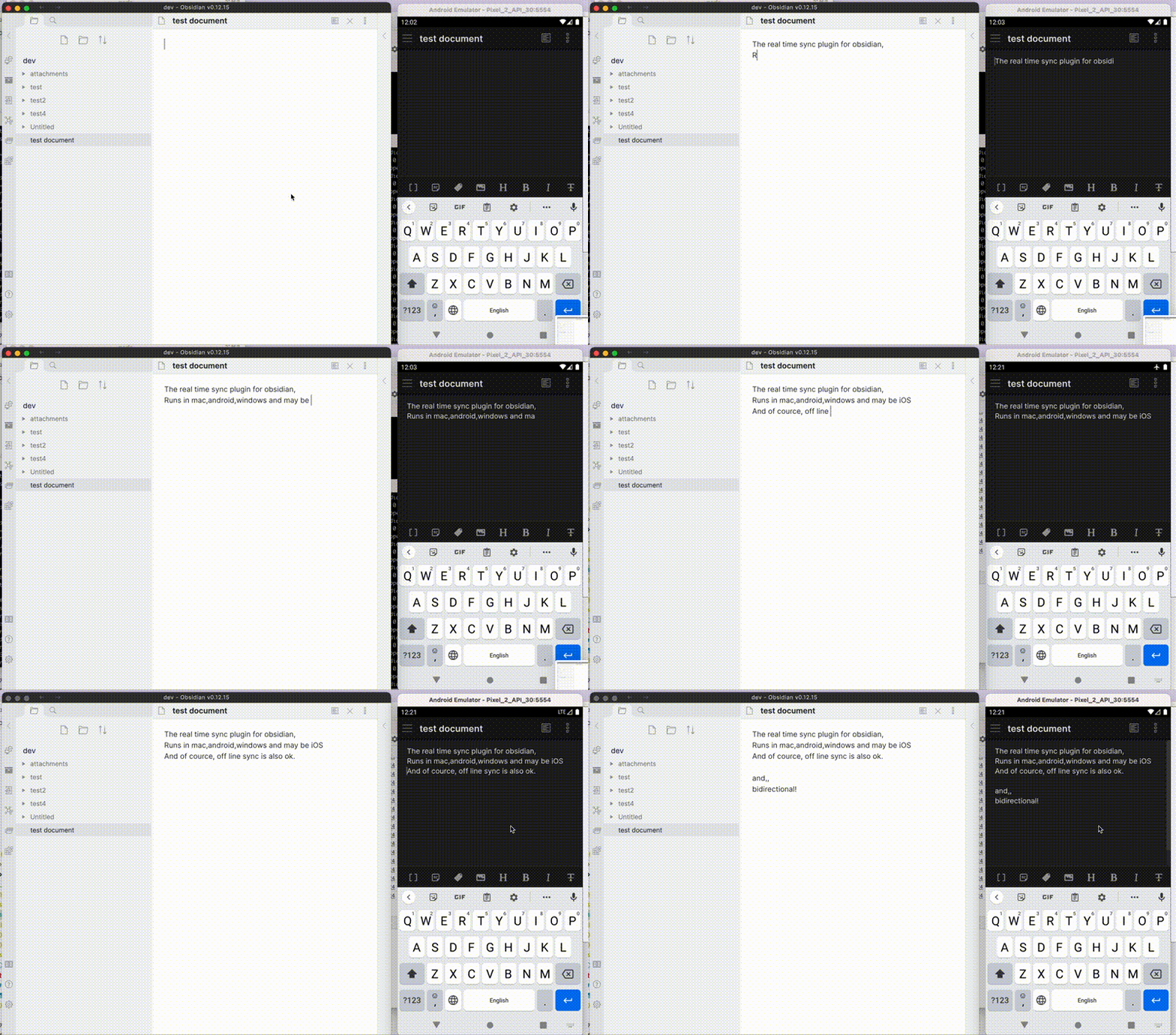
|
||||
|
||||
@@ -19,10 +19,14 @@ Additionally, it supports peer-to-peer synchronisation using WebRTC, enabling de
|
||||
- Compatible solutions are supported.
|
||||
- Support end-to-end encryption.
|
||||
- Synchronise settings, snippets, themes, and plug-ins via [Customisation Sync (Beta)](docs/settings.md#6-customisation-sync-advanced) or [Hidden File Sync](docs/tips/hidden-file-sync.md).
|
||||
- Enable supported, opt-in WebRTC peer-to-peer synchronisation.
|
||||
- No central data-storage server is required, but a signalling relay is still required for peer discovery.
|
||||
- At least one device containing the required data must be online while another device synchronises.
|
||||
- Follow the [Peer-to-Peer Setup](docs/setup_p2p.md) after reviewing the [P2P communication model](docs/p2p.md).
|
||||
- Enable WebRTC peer-to-peer synchronisation without requiring a `host` (Experimental).
|
||||
- This feature is still in the experimental stage. Please exercise caution when using it.
|
||||
- WebRTC is a peer-to-peer synchronisation method, so **at least one device must be online to synchronise**.
|
||||
- Instead of keeping your device online as a stable peer, you can use two pseudo-peers:
|
||||
- [livesync-serverpeer](https://github.com/vrtmrz/livesync-serverpeer): A pseudo-client running on the server for receiving and sending data between devices.
|
||||
- [webpeer](https://github.com/vrtmrz/obsidian-livesync/tree/main/src/apps/webpeer): A pseudo-client for receiving and sending data between devices.
|
||||
- A pre-built instance is available at [fancy-syncing.vrtmrz.net/webpeer](https://fancy-syncing.vrtmrz.net/webpeer/) (hosted on the vrtmrz's blog site). This is also peer-to-peer. Feel free to use it.
|
||||
- For more information, refer to the [English explanatory article](https://fancy-syncing.vrtmrz.net/blog/0034-p2p-sync-en.html) or the [Japanese explanatory article](https://fancy-syncing.vrtmrz.net/blog/0034-p2p-sync).
|
||||
|
||||
This plug-in may be particularly useful for researchers, engineers, and developers who need to keep their notes fully self-hosted for security reasons. It is also suitable for anyone seeking the peace of mind that comes with knowing their notes remain entirely private.
|
||||
|
||||
@@ -55,14 +59,14 @@ Choose a synchronisation method, prepare its server where required, then follow
|
||||
1. Prepare the server. A maintained MinIO server installation guide is not currently available here, so set up an S3-compatible service or server of your choice.
|
||||
2. Configure the clients by following [Object Storage Setup](docs/setup_object_storage.md).
|
||||
3. Peer-to-Peer
|
||||
1. No central data-storage server is required. The project's public signalling relay requires no server provisioning; controlled deployments can provide another compatible relay.
|
||||
1. No server setup is required.
|
||||
2. Configure the clients by following [Peer-to-Peer Setup](docs/setup_p2p.md).
|
||||
|
||||
Each workflow establishes ordinary note synchronisation on the first device, generates a Setup URI for each additional device from that working device, and verifies synchronisation in both directions.
|
||||
Each workflow establishes ordinary note synchronisation on the first device, generates the additional-device Setup URI from that working device, and verifies synchronisation in both directions.
|
||||
|
||||
> [!TIP]
|
||||
> Fly.io is no longer free. Fortunately, we can still use IBM Cloudant despite some limitations. Refer to [Set up IBM Cloudant](docs/setup_cloudant.md).
|
||||
> We can also use peer-to-peer synchronisation without a central data-storage server; a signalling relay is still used for peer discovery. Alternatively, cheap object storage like Cloudflare R2 can be used for free.
|
||||
> We can also use peer-to-peer synchronisation without a server. Alternatively, cheap object storage like Cloudflare R2 can be used for free.
|
||||
> However, most importantly, we can use a server that we trust. Therefore, please set up your own server.
|
||||
> CouchDB can also be run on a Raspberry Pi (please be mindful of your server's security).
|
||||
|
||||
@@ -98,7 +102,6 @@ To prevent file and database corruption, please avoid closing Obsidian until all
|
||||
## Tips and Troubleshooting
|
||||
- If you want a faster and simpler initial replication when setting up subsequent devices, see the [Fast Setup Guide](docs/tips/fast-setup.md).
|
||||
- Configure [Hidden File Sync](docs/tips/hidden-file-sync.md) only after ordinary note synchronisation works.
|
||||
- If Obsidian or LiveSync cannot start normally, use [Recovery and flag files](docs/recovery.md) before changing or resetting a remote database.
|
||||
- Self-hosted LiveSync 1.0 requires Obsidian 1.7.2 or later. If you need to use 1.0 on an earlier Obsidian version, please [open an issue](https://github.com/vrtmrz/obsidian-livesync/issues/new?template=issue-report.md) with your version, platform, and reason for remaining on it so that we can assess whether extending support is practical. The standard Community Plugins installer otherwise selects an older compatible plug-in release.
|
||||
- If you are having problems getting the plug-in working, see [Tips and Troubleshooting](docs/troubleshooting.md).
|
||||
|
||||
|
||||
@@ -1,12 +1,11 @@
|
||||
import { writeFileSync } from "fs";
|
||||
import { allMessages } from "../src/common/messages/combinedMessages.dev.ts";
|
||||
|
||||
const { writeFileSync } = process.getBuiltinModule("node:fs");
|
||||
const path = process.getBuiltinModule("node:path");
|
||||
import path from "path";
|
||||
const __dirname = import.meta.dirname;
|
||||
const currentPath = __dirname;
|
||||
const outDir = path.resolve(currentPath, "../src/common/messages/combinedMessages.prod.ts");
|
||||
|
||||
process.stdout.write(`Writing to ${outDir}\n`);
|
||||
console.log(`Writing to ${outDir}`);
|
||||
writeFileSync(
|
||||
outDir,
|
||||
`export const allMessages: Readonly<Record<string, Readonly<Record<string, string>>>> = ${JSON.stringify(allMessages, null, 4)};`
|
||||
|
||||
@@ -1,14 +1,14 @@
|
||||
import { readFile } from "fs/promises";
|
||||
import { join, resolve } from "path";
|
||||
import { glob } from "tinyglobby";
|
||||
import { parse } from "yaml";
|
||||
import { objectToDotted } from "./messagelib.ts";
|
||||
|
||||
const fsPromises = process.getBuiltinModule("node:fs/promises");
|
||||
const path = process.getBuiltinModule("node:path");
|
||||
const __dirname = import.meta.dirname;
|
||||
const targetDir = path.resolve(path.join(__dirname, "../src/common/messagesYAML/"));
|
||||
const targetDir = resolve(join(__dirname, "../src/common/messagesYAML/"));
|
||||
const files = (await glob(`*.yaml`, { expandDirectories: false, absolute: true, cwd: targetDir })).sort();
|
||||
|
||||
function flattenMessages(src: unknown) {
|
||||
function flattenMessages(src: Record<string, unknown>) {
|
||||
return Object.fromEntries(
|
||||
Object.entries(objectToDotted(src))
|
||||
.map(([key, value]) => [key.endsWith("._value") ? key.slice(0, -7) : key, value] as const)
|
||||
@@ -20,14 +20,9 @@ function flattenMessages(src: unknown) {
|
||||
const localeData = new Map<string, Record<string, string>>();
|
||||
for (const file of files) {
|
||||
const segments = file.split(/[/\\]/);
|
||||
const localeFilename = segments[segments.length - 1];
|
||||
if (localeFilename === undefined) {
|
||||
throw new Error(`Could not determine the locale name for ${file}`);
|
||||
}
|
||||
const locale = localeFilename.replace(/\.yaml$/, "");
|
||||
const content = await fsPromises.readFile(file, "utf-8");
|
||||
const parsed: unknown = parse(content);
|
||||
localeData.set(locale, flattenMessages(parsed ?? {}));
|
||||
const locale = segments[segments.length - 1]!.replace(/\.yaml$/, "");
|
||||
const content = await readFile(file, "utf-8");
|
||||
localeData.set(locale, flattenMessages(parse(content) ?? {}));
|
||||
}
|
||||
|
||||
const baseLocale = "en";
|
||||
@@ -60,4 +55,4 @@ const report = Object.fromEntries(
|
||||
})
|
||||
);
|
||||
|
||||
process.stdout.write(`${JSON.stringify(report, null, 2)}\n`);
|
||||
console.log(JSON.stringify(report, null, 2));
|
||||
|
||||
@@ -1,8 +1,9 @@
|
||||
import { writeFileSync } from "fs";
|
||||
|
||||
import { SUPPORTED_I18N_LANGS, type I18N_LANGS } from "../src/common/rosetta";
|
||||
import { allMessages } from "../src/common/messages/combinedMessages.dev.ts";
|
||||
|
||||
const { writeFileSync } = process.getBuiltinModule("node:fs");
|
||||
const path = process.getBuiltinModule("node:path");
|
||||
import path from "path";
|
||||
const thisFileDir = __dirname;
|
||||
const outDir = path.join(thisFileDir, "i18n");
|
||||
|
||||
|
||||
@@ -1,17 +1,26 @@
|
||||
import { writeFileSync } from "fs";
|
||||
|
||||
import { allMessages } from "../src/common/messages/combinedMessages.prod.ts";
|
||||
const __dirname = import.meta.dirname;
|
||||
|
||||
const { writeFileSync } = process.getBuiltinModule("node:fs");
|
||||
const path = process.getBuiltinModule("node:path");
|
||||
import path from "path";
|
||||
const thisFileDir = __dirname;
|
||||
const outDir = path.resolve(thisFileDir, "../src/common/messagesJson");
|
||||
|
||||
const out = {} as Record<string, { [key: string]: string | undefined }>;
|
||||
|
||||
for (const [key, value] of Object.entries(allMessages)) {
|
||||
for (const [lang, langValue] of Object.entries(value)) {
|
||||
//@ts-ignore
|
||||
for (const [lang, langValue] of Object.entries(allMessages[key])) {
|
||||
if (!out[lang]) out[lang] = {};
|
||||
out[lang][key] = langValue;
|
||||
if (lang in value) {
|
||||
out[lang][key] = langValue as string;
|
||||
} else {
|
||||
if (lang === "def") {
|
||||
out[lang][key] = key;
|
||||
} else {
|
||||
out[lang][key] = undefined;
|
||||
}
|
||||
}
|
||||
}
|
||||
}
|
||||
|
||||
|
||||
@@ -1,137 +0,0 @@
|
||||
const fsPromises = process.getBuiltinModule("node:fs/promises");
|
||||
const path = process.getBuiltinModule("node:path");
|
||||
const url = process.getBuiltinModule("node:url");
|
||||
|
||||
type InspectionError = {
|
||||
check: "current-label" | "local-reference" | "retired-label";
|
||||
file: string;
|
||||
detail: string;
|
||||
};
|
||||
|
||||
export type TroubleshootingDocsInspection = {
|
||||
ok: boolean;
|
||||
checkedFiles: string[];
|
||||
checkedLocalReferences: number;
|
||||
errors: InspectionError[];
|
||||
};
|
||||
|
||||
const guidePaths = ["docs/troubleshooting.md", "docs/recovery.md", "docs/tips/p2p-sync-tips.md"] as const;
|
||||
const messageCataloguePath = "src/common/messagesJson/en.json";
|
||||
const markdownLinkPattern = /!?\[[^\]]*\]\(([^)\s]+)(?:\s+["'][^)]*["'])?\)/gu;
|
||||
|
||||
function repositoryRootFromThisFile(): string {
|
||||
return path.resolve(path.dirname(url.fileURLToPath(import.meta.url)), "..");
|
||||
}
|
||||
|
||||
function normaliseReferenceTarget(rawTarget: string): string {
|
||||
const withoutAngles = rawTarget.startsWith("<") && rawTarget.endsWith(">") ? rawTarget.slice(1, -1) : rawTarget;
|
||||
return decodeURIComponent(withoutAngles);
|
||||
}
|
||||
|
||||
function isExternalReference(target: string): boolean {
|
||||
return /^(?:https?:|mailto:|obsidian:)/u.test(target);
|
||||
}
|
||||
|
||||
async function inspectLocalReferences(
|
||||
repositoryRoot: string,
|
||||
documentPath: string,
|
||||
document: string,
|
||||
errors: InspectionError[]
|
||||
): Promise<number> {
|
||||
let checked = 0;
|
||||
for (const match of document.matchAll(markdownLinkPattern)) {
|
||||
const rawTarget = match[1];
|
||||
if (!rawTarget) continue;
|
||||
const target = normaliseReferenceTarget(rawTarget);
|
||||
if (isExternalReference(target) || target.startsWith("#")) continue;
|
||||
|
||||
const [pathPart] = target.split("#", 1);
|
||||
if (!pathPart) continue;
|
||||
checked++;
|
||||
const referencedPath = path.resolve(repositoryRoot, path.dirname(documentPath), pathPart);
|
||||
try {
|
||||
await fsPromises.access(referencedPath);
|
||||
} catch {
|
||||
errors.push({
|
||||
check: "local-reference",
|
||||
file: documentPath,
|
||||
detail: `Missing local reference: ${path.relative(repositoryRoot, referencedPath)}`,
|
||||
});
|
||||
}
|
||||
}
|
||||
return checked;
|
||||
}
|
||||
|
||||
export async function inspectTroubleshootingDocs(
|
||||
repositoryRoot = repositoryRootFromThisFile()
|
||||
): Promise<TroubleshootingDocsInspection> {
|
||||
const errors: InspectionError[] = [];
|
||||
const documents = new Map<string, string>();
|
||||
for (const guidePath of guidePaths) {
|
||||
documents.set(guidePath, await fsPromises.readFile(path.resolve(repositoryRoot, guidePath), "utf8"));
|
||||
}
|
||||
|
||||
const troubleshooting = documents.get("docs/troubleshooting.md")!;
|
||||
const catalogue = JSON.parse(
|
||||
await fsPromises.readFile(path.resolve(repositoryRoot, messageCataloguePath), "utf8")
|
||||
) as Record<string, string>;
|
||||
const requiredMessageKeys = [
|
||||
"TweakMismatchResolve.Action.UseConfigured",
|
||||
"TweakMismatchResolve.Action.UseMine",
|
||||
"TweakMismatchResolve.Action.UseRemote",
|
||||
"TweakMismatchResolve.Action.Dismiss",
|
||||
"obsidianLiveSyncSettingTab.titleSyncSettingsViaMarkdown",
|
||||
] as const;
|
||||
|
||||
for (const messageKey of requiredMessageKeys) {
|
||||
const label = catalogue[messageKey];
|
||||
if (!label) {
|
||||
errors.push({
|
||||
check: "current-label",
|
||||
file: messageCataloguePath,
|
||||
detail: `The English message catalogue does not define ${messageKey}.`,
|
||||
});
|
||||
continue;
|
||||
}
|
||||
if (!troubleshooting.includes(label)) {
|
||||
errors.push({
|
||||
check: "current-label",
|
||||
file: "docs/troubleshooting.md",
|
||||
detail: `The guide does not include the current UI label '${label}'.`,
|
||||
});
|
||||
}
|
||||
}
|
||||
|
||||
for (const retiredLabel of ["`Update with mine`", "`Use configured`", "`Sync settings via Markdown files`"]) {
|
||||
if (troubleshooting.includes(retiredLabel)) {
|
||||
errors.push({
|
||||
check: "retired-label",
|
||||
file: "docs/troubleshooting.md",
|
||||
detail: `The guide still includes the retired label ${retiredLabel}.`,
|
||||
});
|
||||
}
|
||||
}
|
||||
|
||||
let checkedLocalReferences = 0;
|
||||
for (const [guidePath, document] of documents) {
|
||||
checkedLocalReferences += await inspectLocalReferences(repositoryRoot, guidePath, document, errors);
|
||||
}
|
||||
|
||||
return {
|
||||
ok: errors.length === 0,
|
||||
checkedFiles: [...guidePaths],
|
||||
checkedLocalReferences,
|
||||
errors,
|
||||
};
|
||||
}
|
||||
|
||||
async function runCli(): Promise<void> {
|
||||
const result = await inspectTroubleshootingDocs();
|
||||
process.stdout.write(`${JSON.stringify(result, null, 2)}\n`);
|
||||
if (!result.ok) process.exitCode = 1;
|
||||
}
|
||||
|
||||
const invokedPath = process.argv[1] ? url.pathToFileURL(path.resolve(process.argv[1])).href : undefined;
|
||||
if (invokedPath === import.meta.url) {
|
||||
await runCli();
|
||||
}
|
||||
@@ -1,17 +0,0 @@
|
||||
import { describe, expect, it } from "vitest";
|
||||
import { inspectTroubleshootingDocs } from "./inspect-troubleshooting-docs";
|
||||
|
||||
describe("troubleshooting documentation contract", () => {
|
||||
it("uses current English UI labels and resolves every local guide reference", async () => {
|
||||
const result = await inspectTroubleshootingDocs();
|
||||
|
||||
expect(result.checkedFiles).toEqual([
|
||||
"docs/troubleshooting.md",
|
||||
"docs/recovery.md",
|
||||
"docs/tips/p2p-sync-tips.md",
|
||||
]);
|
||||
expect(result.checkedLocalReferences).toBeGreaterThan(0);
|
||||
expect(result.errors).toEqual([]);
|
||||
expect(result.ok).toBe(true);
|
||||
});
|
||||
});
|
||||
@@ -1,31 +1,27 @@
|
||||
// Convert Application convenient Message Resources (JSON) to Human-Editable format (YAML)
|
||||
import { readFile, writeFile } from "fs/promises";
|
||||
import { join, resolve } from "path";
|
||||
import { stringify } from "yaml";
|
||||
import { glob } from "tinyglobby";
|
||||
import { dottedToObject } from "./messagelib";
|
||||
|
||||
const fsPromises = process.getBuiltinModule("node:fs/promises");
|
||||
const path = process.getBuiltinModule("node:path");
|
||||
const __dirname = import.meta.dirname;
|
||||
|
||||
const targetDir = path.resolve(path.join(__dirname, "../src/common/messagesJson/"));
|
||||
process.stdout.write(`Target directory: ${targetDir}\n`);
|
||||
const targetDir = resolve(join(__dirname, "../src/common/messagesJson/"));
|
||||
console.log(`Target directory: ${targetDir}`);
|
||||
const files = await glob(`*.json`, { expandDirectories: false, absolute: true, cwd: targetDir });
|
||||
for (const file of files) {
|
||||
const filePath = path.resolve(file);
|
||||
process.stdout.write(`Processing file: ${filePath}\n`);
|
||||
const content = await fsPromises.readFile(filePath, "utf-8");
|
||||
const jsonDataSrc: unknown = JSON.parse(content);
|
||||
if (typeof jsonDataSrc !== "object" || jsonDataSrc === null || Array.isArray(jsonDataSrc)) {
|
||||
throw new TypeError(`Expected ${filePath} to contain a JSON object`);
|
||||
}
|
||||
const filePath = resolve(file);
|
||||
console.log(`Processing file: ${filePath}`);
|
||||
const content = await readFile(filePath, "utf-8");
|
||||
const jsonDataSrc = JSON.parse(content);
|
||||
const jsonDataD2 = Object.fromEntries(
|
||||
Object.entries(jsonDataSrc).sort(([keyA], [keyB]) => keyA.localeCompare(keyB))
|
||||
);
|
||||
const jsonData = dottedToObject(jsonDataD2);
|
||||
const yamlData = stringify(jsonData, { indent: 2 });
|
||||
const yamlFilePath = filePath.replace(/\.json$/, ".yaml").replace("Json", "YAML");
|
||||
await fsPromises.writeFile(yamlFilePath, yamlData, "utf-8");
|
||||
process.stdout.write(`Converted ${filePath} to ${yamlFilePath}\n`);
|
||||
await writeFile(yamlFilePath, yamlData, "utf-8");
|
||||
console.log(`Converted ${filePath} to ${yamlFilePath}`);
|
||||
}
|
||||
|
||||
// console.dir(files, { depth: 0 });
|
||||
|
||||
@@ -1,49 +1,38 @@
|
||||
function isRecord(value: unknown): value is Record<string, unknown> {
|
||||
return typeof value === "object" && value !== null && !Array.isArray(value);
|
||||
}
|
||||
|
||||
export function objectToDotted(obj: unknown, prefix = ""): Record<string, unknown> {
|
||||
if (!isRecord(obj)) {
|
||||
throw new TypeError("Expected a message catalogue object");
|
||||
}
|
||||
const flattened: Record<string, unknown> = {};
|
||||
for (const [key, value] of Object.entries(obj)) {
|
||||
const newKey = prefix ? `${prefix}.${key}` : key;
|
||||
if (isRecord(value)) {
|
||||
Object.assign(flattened, objectToDotted(value, newKey));
|
||||
} else {
|
||||
flattened[newKey] = value;
|
||||
}
|
||||
}
|
||||
return flattened;
|
||||
}
|
||||
|
||||
export function dottedToObject(obj: unknown): Record<string, unknown> {
|
||||
if (!isRecord(obj)) {
|
||||
throw new TypeError("Expected a dotted message catalogue object");
|
||||
}
|
||||
const nestedResult: Record<string, unknown> = {};
|
||||
for (const [key, value] of Object.entries(obj)) {
|
||||
if (key.includes(" ")) {
|
||||
nestedResult[key] = value;
|
||||
continue;
|
||||
}
|
||||
const keys = key.split(".");
|
||||
let nested = nestedResult;
|
||||
for (const [index, currentKey] of keys.entries()) {
|
||||
if (index === keys.length - 1) {
|
||||
nested[currentKey] = value;
|
||||
continue;
|
||||
export function objectToDotted(obj: any, prefix = ""): Record<string, any> {
|
||||
return Object.entries(obj).reduce(
|
||||
(acc, [key, value]) => {
|
||||
const newKey = prefix ? `${prefix}.${key}` : key;
|
||||
if (typeof value === "object" && value !== null && !Array.isArray(value)) {
|
||||
Object.assign(acc, objectToDotted(value, newKey));
|
||||
} else {
|
||||
acc[newKey] = value;
|
||||
}
|
||||
const currentValue = nested[currentKey];
|
||||
if (isRecord(currentValue)) {
|
||||
nested = currentValue;
|
||||
continue;
|
||||
}
|
||||
const replacement = currentValue === undefined || currentValue === null ? {} : { _value: currentValue };
|
||||
nested[currentKey] = replacement;
|
||||
nested = replacement;
|
||||
}
|
||||
}
|
||||
return nestedResult;
|
||||
return acc;
|
||||
},
|
||||
{} as Record<string, any>
|
||||
);
|
||||
}
|
||||
export function dottedToObject(obj: Record<string, any>): Record<string, any> {
|
||||
return Object.entries(obj).reduce(
|
||||
(acc, [key, value]) => {
|
||||
if (key.includes(" ")) {
|
||||
// Return as is.
|
||||
return { ...acc, [key]: value }; // Skip keys with spaces
|
||||
}
|
||||
const keys = key.split(".");
|
||||
keys.reduce((nestedAcc, currKey, index) => {
|
||||
if (currKey in nestedAcc && typeof nestedAcc[currKey] !== "object") {
|
||||
nestedAcc[currKey] = { _value: nestedAcc[currKey] }; // Convert to object if not already
|
||||
}
|
||||
if (index === keys.length - 1) {
|
||||
nestedAcc[currKey] = value;
|
||||
} else {
|
||||
nestedAcc[currKey] = nestedAcc[currKey] || {};
|
||||
}
|
||||
return nestedAcc[currKey];
|
||||
}, acc);
|
||||
return acc;
|
||||
},
|
||||
{} as Record<string, any>
|
||||
);
|
||||
}
|
||||
|
||||
@@ -1,41 +0,0 @@
|
||||
import { describe, expect, it } from "vitest";
|
||||
import { dottedToObject, objectToDotted } from "./messagelib";
|
||||
|
||||
describe("message catalogue conversion", () => {
|
||||
it("flattens nested objects while preserving leaf values", () => {
|
||||
expect(
|
||||
objectToDotted({
|
||||
dialogue: {
|
||||
title: "Title",
|
||||
options: ["first", "second"],
|
||||
},
|
||||
"literal key": "Literal",
|
||||
})
|
||||
).toEqual({
|
||||
"dialogue.title": "Title",
|
||||
"dialogue.options": ["first", "second"],
|
||||
"literal key": "Literal",
|
||||
});
|
||||
});
|
||||
|
||||
it("preserves an existing leaf under _value when a dotted child follows it", () => {
|
||||
expect(
|
||||
dottedToObject({
|
||||
section: "Base value",
|
||||
"section.child": "Child value",
|
||||
"literal key": "Literal",
|
||||
})
|
||||
).toEqual({
|
||||
section: {
|
||||
_value: "Base value",
|
||||
child: "Child value",
|
||||
},
|
||||
"literal key": "Literal",
|
||||
});
|
||||
});
|
||||
|
||||
it("rejects non-object catalogue roots", () => {
|
||||
expect(() => objectToDotted("not an object")).toThrow("Expected a message catalogue object");
|
||||
expect(() => dottedToObject(["not", "an", "object"])).toThrow("Expected a dotted message catalogue object");
|
||||
});
|
||||
});
|
||||
@@ -1,30 +1,29 @@
|
||||
// Convert Human-Editable format (YAML) to Application convenient Message Resources (JSON)
|
||||
|
||||
import { readFile, writeFile } from "fs/promises";
|
||||
import { join, resolve } from "path";
|
||||
import { parse } from "yaml";
|
||||
import { glob } from "tinyglobby";
|
||||
import { objectToDotted } from "./messagelib";
|
||||
|
||||
const fsPromises = process.getBuiltinModule("node:fs/promises");
|
||||
const path = process.getBuiltinModule("node:path");
|
||||
const __dirname = import.meta.dirname;
|
||||
|
||||
const targetDir = path.resolve(path.join(__dirname, "../src/common/messagesYAML/"));
|
||||
process.stdout.write(`Target directory: ${targetDir}\n`);
|
||||
const targetDir = resolve(join(__dirname, "../src/common/messagesYAML/"));
|
||||
console.log(`Target directory: ${targetDir}`);
|
||||
const files = await glob(`*.yaml`, { expandDirectories: false, absolute: true, cwd: targetDir });
|
||||
for (const file of files) {
|
||||
const filePath = path.resolve(file);
|
||||
const content = await fsPromises.readFile(filePath, "utf-8");
|
||||
const jsonDataSrc: unknown = parse(content);
|
||||
const filePath = resolve(file);
|
||||
const content = await readFile(filePath, "utf-8");
|
||||
const jsonDataSrc = parse(content);
|
||||
const jsonDataD2 = objectToDotted(jsonDataSrc);
|
||||
const jsonData = Object.fromEntries(
|
||||
Object.entries(jsonDataD2)
|
||||
.map(([key, value]): [string, unknown] => [key.endsWith("._value") ? key.slice(0, -7) : key, value])
|
||||
.map(([key, value]) => [key.endsWith("._value") ? key.slice(0, -7) : key, value])
|
||||
.sort(([keyA], [keyB]) => keyA.localeCompare(keyB))
|
||||
);
|
||||
const yamlData = JSON.stringify(jsonData, null, 4) + "\n";
|
||||
const yamlFilePath = filePath.replace(/\.yaml$/, ".json").replace("YAML", "Json");
|
||||
await fsPromises.writeFile(yamlFilePath, yamlData, "utf-8");
|
||||
process.stdout.write(`Converted ${filePath} to ${yamlFilePath}\n`);
|
||||
await writeFile(yamlFilePath, yamlData, "utf-8");
|
||||
console.log(`Converted ${filePath} to ${yamlFilePath}`);
|
||||
}
|
||||
|
||||
// console.dir(files, { depth: 0 });
|
||||
|
||||
41
devs.md
@@ -60,14 +60,13 @@ To facilitate development and testing, the build process can automatically copy
|
||||
|
||||
### Testing Infrastructure
|
||||
|
||||
- ~~**Deno Tests**: Unit tests for platform-independent code (e.g., `HashManager.test.ts`)~~
|
||||
- This is now obsolete, migrated to vitest.
|
||||
- **Vitest**:
|
||||
- **Unit Tests** (`vitest.config.unit.ts`): Unit tests run in Node.js (excluding harnesses and integration tests). Unit tests should be `*.unit.spec.ts` and placed alongside the implementation file (e.g., `ChunkFetcher.unit.spec.ts`). Executed via `npm run test:unit`.
|
||||
- **Integration Tests** (`vitest.config.integration.ts`): Tests run in Node.js against a real CouchDB instance. Integration tests should be `*.integration.spec.ts` or `*.integration.test.ts` and placed alongside the implementation file (e.g., `StreamingFetch.integration.spec.ts`). Executed via `npm run test:integration`.
|
||||
- If you add a feature that interacts with the remote database (e.g., replication changes, custom changes feed parameters, or custom HTTP queries), you are strongly expected to write an integration test to verify the behaviour against a real CouchDB server.
|
||||
- If you add a feature that interacts with the remote database (e.g., replication changes, custom changes feed parameters, or custom HTTP queries), you strongly expected to write an integration test to verify the behaviour against a real CouchDB server.
|
||||
- **Commonlib Tests**: Commonlib owns unit and package tests for shared RPC, storage, replication, and platform contracts. LiveSync CI verifies the exact packed dependency as a downstream consumer.
|
||||
|
||||
Regression tests remain beside the implementation which owns their contract. Prefix a case or group with `compatibility:` when it protects a persisted input or state which current releases still accept, and with `retirement guard:` when it prevents a removed setting, control, or notification from returning. Remove or replace a compatibility case only when the corresponding input is no longer accepted or an equivalent maintained case preserves the contract. Remove a retirement guard only when another current contract makes the old behaviour unreachable. Do not preserve a disconnected historical test as an executable specification when no maintained runner invokes it; Git history is the reference for retired test infrastructure.
|
||||
|
||||
- **CLI E2E** (`src/apps/cli/testdeno/`): Host-independent consumer workflows. The canonical Compose P2P suite covers ordinary two-peer synchronisation, replacement of the current replicator followed by transfer with the same peer, and explicit relay disconnection followed by paused and resumed reconnection. Its lifecycle entry point is included only in the Docker test build and does not add a public CLI command. Run `npm run test:e2e:cli` for the ordinary suite or `npm run test:e2e:cli:p2p` for P2P validation.
|
||||
- **Self-hosted setup tools** (`utils/couchdb/`, `utils/setup/`, and `utils/flyio/`): Deno contract tests consume the exact locked Commonlib registry package, verify current CouchDB, Object Storage, and random-room P2P Setup URI defaults and remote profiles, and keep CouchDB administration separate from package-owned LiveSync database-version negotiation. `unit-ci` also provisions a real temporary CouchDB database and verifies its version document against the installed Commonlib package. Run `npm run test:setup-tools` for the local contract gate.
|
||||
- **Real Obsidian E2E** (`test/e2e-obsidian/`): Local-first scripts that launch real Obsidian with temporary vaults and the built Self-hosted LiveSync plug-in. Use these for boot-up sequence, vault reflection, RedFlag flows, Fast Setup (Simple Fetch), settings dialogues, restart-sensitive workflows, Object Storage regressions, and other behaviour that depends on Obsidian itself. Run focused scripts such as `npm run test:e2e:obsidian:two-vault-sync`, or use `npm run test:e2e:obsidian:local-suite:services` to run the broader local suite with CouchDB and MinIO fixtures managed by the wrapper.
|
||||
@@ -244,10 +243,7 @@ export class ModuleExample extends AbstractObsidianModule {
|
||||
- Use SemVer beta identifiers such as `1.0.0-beta.0` for immutable integration previews. Increment the beta number when a published preview needs a correction. Reserve `1.0.0-rc.0` for the first feature- and contract-frozen release candidate. Historical `-patchedN` releases remain unchanged in the release history.
|
||||
- Publish a pre-release from an immutable reviewed tag, mark its GitHub Release as a pre-release, and do not replace the latest stable release.
|
||||
- A plug-in review release may omit the CLI image when the CLI artefact is not part of the required validation. When a pre-release CLI image is published, it receives immutable version and SHA-qualified tags only; it must not advance `latest` or a stable major-minor tag.
|
||||
- Keep a hyphenated pre-release's release pull request in draft and unmerged after BRAT validation. Reconcile the published version's metadata into its base branch through a reviewed metadata-only commit, then close the release pull request only through a separate maintainer action.
|
||||
- Stage a stable version for BRAT by publishing its exact `x.y.z` tag initially as a GitHub pre-release with `prerelease=true` and `publish_cli=false`. The stable manifest version would otherwise make the CLI workflow advance `latest` and the major-minor image tag before validation.
|
||||
- After a staged stable version passes BRAT validation, merge its exact release commit into the reviewed base branch and integrate it through the reviewed branch chain into the repository's default branch. Promote the GitHub Release only after the default branch contains the exact stable metadata; publish stable CLI tags through a separate maintainer gate.
|
||||
- If validation fails, leave every published tag unchanged and prepare the next pre-release or patch version.
|
||||
- Keep the release pull request in draft until the exact published plug-in has passed BRAT validation. If validation fails, prepare the next pre-release version rather than moving the existing tag.
|
||||
|
||||
## Release Notes
|
||||
|
||||
@@ -265,17 +261,15 @@ The `Finalise Release Tags` and `Release Obsidian Plugin` workflows use the `rel
|
||||
|
||||
- Run the `Prepare Release PR` workflow with the target version and selected base branch. It creates the release branch, updates versions, confirms that Commonlib is locked to an immutable package version, moves the `## Unreleased` notes to the target version, commits the release preparation, pushes the branch, and opens a draft release PR. The base branch may already select the target development version; the workflow still runs the version lifecycle so that release-only metadata such as `versions.json` is recorded in the release commit.
|
||||
- Do not tag the release branch when the PR is first created. Polish the release PR first, especially `updates.md`.
|
||||
- Once the release PR head is fixed, run the `Finalise Release Tags` workflow with its full head commit SHA. It validates the release branch, ensures that the plug-in tag points to that commit, optionally creates the corresponding CLI tag, and explicitly dispatches the selected plug-in and CLI release workflows. The finalisation workflow can be retried when existing tags already point to the reviewed commit, but stops if a selected tag points elsewhere.
|
||||
- The plug-in publishing workflow is intentionally dispatch-only. Pushing a plug-in tag directly does not publish a GitHub Release; use `Finalise Release Tags`, or dispatch `Release Obsidian Plugin` explicitly for recovery or a pre-release. When CLI publication is selected, finalisation dispatches the CLI Docker workflow against the reviewed CLI tag instead of relying on a tag created by `GITHUB_TOKEN` to start another workflow.
|
||||
- For a hyphenated pre-release, run finalisation with `prerelease=true`; CLI publication remains optional. For a stable version awaiting BRAT validation, use `prerelease=true` and `publish_cli=false`.
|
||||
- Approve the `Release Obsidian Plugin` workflow for the `release` environment, then inspect the generated draft GitHub Release. When a hyphenated pre-release includes the CLI, confirm that it received only its immutable version and SHA-qualified image tags.
|
||||
- Publish the draft as a GitHub pre-release without replacing the latest stable release. Keep its release pull request in draft and leave its base branch unchanged throughout BRAT validation. Record that state in the pull request.
|
||||
- Once the release PR head is fixed, run the `Finalise Release Tags` workflow with its full head commit SHA. It validates the release branch, ensures that the plug-in tag points to that commit, optionally creates the corresponding CLI tag, and dispatches the plug-in release workflow. A CLI tag starts its own container workflow. The finalisation workflow can be retried when existing tags already point to the reviewed commit, but stops if a selected tag points elsewhere.
|
||||
- The plug-in publishing workflow is intentionally dispatch-only. Pushing a plug-in tag directly does not publish a GitHub Release; use `Finalise Release Tags`, or dispatch `Release Obsidian Plugin` explicitly for recovery or a pre-release. The CLI Docker workflow retains its documented branch, tag, and manual triggers.
|
||||
- Approve the `Release Obsidian Plugin` workflow for the `release` environment, then inspect the generated draft GitHub Release. For a selected CLI publication, confirm the image tags appropriate to a stable or pre-release version.
|
||||
- Publish a stable draft as the latest release, or publish a pre-release draft without replacing the latest stable release. In either case, keep the release PR in draft and leave its base branch unchanged until BRAT validation succeeds. Record that state in the PR.
|
||||
- Validate the published release through BRAT. Confirm start-up, ordinary bidirectional synchronisation, and any regression scenario relevant to the release.
|
||||
- After a hyphenated pre-release passes, keep its release pull request unmerged. Add a reviewed metadata-only commit to the selected base branch which records the published version in `versions.json` and moves its exact tagged release notes out of `## Unreleased`, then close the release pull request only through a separate maintainer action.
|
||||
- After a stable version passes, mark its release pull request ready and merge the exact release commit into the selected base branch with a merge commit. Integrate that exact commit through the reviewed branch chain into the repository's default branch. Only after the default branch contains the matching stable metadata, remove the GitHub pre-release designation and make that exact release the latest stable release. Create the stable CLI tag and publish its `latest` and major-minor image tags, if selected, through a separate maintainer gate.
|
||||
- After BRAT validation succeeds, mark the release PR ready and merge it into the selected base branch with a merge commit. This keeps the tagged release commit in that branch's history.
|
||||
- If BRAT validation fails, keep the release PR in draft and do not move published tags. Before preparing the next version, add a reviewed metadata-only commit to the selected base branch which records the published version in `versions.json` and moves its exact tagged release notes out of `## Unreleased`. Keep only changes made after that tag under `## Unreleased`. Compare the historical section with `git show <tag>:updates.md`; do not merge the failed release PR or describe it as validated. The next release PR can then rotate only the correction notes while preserving the immutable release history.
|
||||
- Prepare and publish the next patch or pre-release version from that reconciled base. Leave the failed release PR draft until it is deliberately closed as superseded under a separate maintainer action.
|
||||
- A hyphenated version is rejected unless `prerelease=true`. A stable version staged with `prerelease=true` is rejected unless `publish_cli=false`.
|
||||
- For a pre-release, set `prerelease=true` in `Finalise Release Tags`. A hyphenated version is rejected unless that input is enabled.
|
||||
|
||||
### Release Cheat Sheet
|
||||
|
||||
@@ -295,16 +289,15 @@ The `Finalise Release Tags` and `Release Obsidian Plugin` workflows use the `rel
|
||||
- `version`: the same target version.
|
||||
- `release_branch`: leave blank unless the release branch used a custom name.
|
||||
- `expected_head_sha`: the full head commit SHA reviewed in the release PR.
|
||||
- `prerelease`: enable for a version such as `1.0.0-rc.0`, and also when staging a stable version for BRAT.
|
||||
- `publish_cli`: optional for a hyphenated pre-release, but disable it when staging a stable version.
|
||||
- `prerelease`: enable for a version such as `1.0.0-rc.0`.
|
||||
- `publish_cli`: disable when the reviewed release is plug-in-only.
|
||||
5. Approve the `Release Obsidian Plugin` workflow for the `release` environment, then check the generated draft GitHub Release.
|
||||
6. If a hyphenated pre-release includes the CLI, confirm that the explicitly dispatched CLI workflow published only immutable version and SHA-qualified image tags.
|
||||
7. Publish the draft as a GitHub pre-release without replacing the latest stable release, but keep the release PR in draft and leave its base branch unchanged.
|
||||
8. Update the PR state message to describe the published pre-release and state that merging remains on hold.
|
||||
6. If CLI publication was selected, confirm that the CLI tag event published the expected image tags.
|
||||
7. Publish the draft as a stable release or pre-release as selected, but keep the release PR in draft and leave its base branch unchanged.
|
||||
8. Update the PR state message to describe the published release and state that merging remains on hold until BRAT validation is complete.
|
||||
9. Validate the published release through BRAT, including start-up, ordinary bidirectional synchronisation, and any release-specific regression scenario.
|
||||
10. After a hyphenated pre-release passes, keep its release PR unmerged, reconcile its `versions.json` entry and exact release-note section into the selected base branch as metadata only, then close the PR through a separate maintainer action.
|
||||
11. After a stable version passes, mark the release PR ready and merge the exact release commit into the selected base branch. Integrate that commit through the reviewed branch chain into the repository's default branch. Once the default branch contains the matching stable metadata, remove the pre-release designation, make the exact release the latest stable release, and publish stable CLI tags through a separate maintainer gate if selected.
|
||||
12. If validation fails, leave the PR in draft and do not move the published tags. Reconcile the published version's `updates.md` section and `versions.json` entry into the base branch as metadata only, then prepare the next patch or pre-release version from the remaining `## Unreleased` entries.
|
||||
10. After BRAT validation succeeds, mark the release PR ready and merge it into the selected base branch with a merge commit.
|
||||
11. If validation fails, leave the PR in draft and do not move the published tags. Reconcile the published version's `updates.md` section and `versions.json` entry into the base branch as metadata only, then prepare the next patch or pre-release version from the remaining `## Unreleased` entries.
|
||||
|
||||
## Contribution Guidelines
|
||||
|
||||
|
||||
@@ -200,7 +200,7 @@ Current implementation status:
|
||||
Current implementation status:
|
||||
|
||||
- The mocked Vitest browser suites, their P2P runner, their root-level relay helpers, and the manual `harness-ci` workflow have been removed after maintained suites covered the critical flows.
|
||||
- Headless CouchDB and Object Storage combinations, with and without encryption, remain owned by the CLI two-Vault matrix. P2P transport replacement and relay lifecycle remain owned by the CLI Compose E2E suite. Real Obsidian owns the visible CouchDB, Object Storage, and P2P Setup URI workflows, including URI generation on the first device, import on the second device, and two-way Vault synchronisation.
|
||||
- Headless CouchDB and Object Storage combinations, with and without encryption, remain owned by the CLI two-Vault matrix. P2P transport replacement and relay lifecycle remain owned by the CLI Compose E2E suite. Real Obsidian owns the visible CouchDB, Object Storage, and P2P Setup URI workflows, including first-device URI generation, second-device import, and two-way Vault synchronisation.
|
||||
- The Obsidian compatibility implementation still needed by the Webapp has moved to `src/apps/webapp/obsidianMock.ts`; it is not a retained browser E2E Harness.
|
||||
- Remaining high-value scenarios, including RedFlag and Fast Setup (Simple Fetch) variants, should be added according to their owning integration boundary rather than copied line by line from the retired suite.
|
||||
|
||||
|
||||
@@ -65,7 +65,7 @@ The special meaning would duplicate `activeConfigurationId`, make a user-visible
|
||||
|
||||
### Add profile naming and full list editing to onboarding
|
||||
|
||||
That would make the first-run path longer and duplicate the established Saved connections interface. Automatic descriptive names and later renaming keep this change limited to data integrity and consistent selection.
|
||||
That would make the first-run path longer and duplicate the established Remote Databases interface. Automatic descriptive names and later renaming keep this change limited to data integrity and consistent selection.
|
||||
|
||||
### Replace the compatibility fields immediately
|
||||
|
||||
@@ -77,11 +77,11 @@ Commonlib unit tests cover preserving existing profiles, opaque-ID insertion, ge
|
||||
|
||||
Self-hosted LiveSync unit tests cover preserving modern Setup URI profiles and their active selection, retaining legacy Setup URI and QR migration, adding CouchDB and Object Storage profiles beside an existing profile, independent P2P selection, fresh P2P selection as both main and P2P remote, and cancellation without mutation.
|
||||
|
||||
The real-Obsidian onboarding E2E owns the invitation, dialogue presentation, safe-area and touch-target checks, cancellation, and reopening from the Setup pane. It does not contact a remote or submit credentials. Remote connection correctness remains owned by the CouchDB, Object Storage, P2P, and two-Vault suites. The end-to-end Setup URI and provisioning acceptance workflow remains a separate release gate.
|
||||
The real-Obsidian onboarding E2E owns the invitation, dialogue presentation, safe-area and touch-target checks, cancellation, and command reopening. It does not contact a remote or submit credentials. Remote connection correctness remains owned by the CouchDB, Object Storage, P2P, and two-Vault suites. The end-to-end Setup URI and provisioning acceptance workflow remains a separate release gate.
|
||||
|
||||
## Consequences
|
||||
|
||||
- Manual onboarding and the Saved connections list share one Commonlib profile contract.
|
||||
- Manual onboarding and the Remote Databases pane share one Commonlib profile contract.
|
||||
- Existing profiles survive reconfiguration, and a newly configured connection becomes explicitly selectable.
|
||||
- Modern imports retain user-assigned profile identity and names.
|
||||
- Legacy Setup URIs continue to work through an isolated compatibility boundary.
|
||||
|
||||
@@ -46,7 +46,7 @@ Lifecycle operations on one `LiveSyncTrysteroReplicator` are serialised. A close
|
||||
|
||||
Relay sockets retain their Trystero-provided close handlers. LiveSync pauses relay reconnection, closes the sockets, and later resumes reconnection through Trystero's public functions. It does not replace `socket.onclose`, because Trystero uses that handler to retire and recreate shared relay clients correctly.
|
||||
|
||||
P2P setup follows the transport's actual ownership model. Initialising the first device resets and scans the local database, but does not attempt to lock, reset, or upload to a non-existent central remote database. Its confirmation dialogues therefore describe preparing this device and do not present warnings about overwriting a central server or an option to fetch its configuration. An additional device selects a peer once, performs Fetch once, then resumes database and Vault reflection. The generic second convergence pass remains reserved for central remote types because repeating it for P2P would ask the user to select the same peer twice.
|
||||
P2P setup follows the transport's actual ownership model. First-device initialisation resets and scans the local database, but does not attempt to lock, reset, or upload to a non-existent central remote database. Its confirmation dialogues therefore describe preparing this device and do not present the central-server overwrite warnings or remote-configuration option. An additional device performs one explicit peer-selection and finite Fetch pass, then resumes database and Vault reflection. The generic second convergence pass remains reserved for central remote types because repeating it for P2P would ask the user to select the same peer twice.
|
||||
|
||||
## Ownership
|
||||
|
||||
@@ -74,7 +74,7 @@ This interferes with Trystero's shared relay clients. The public pause and resum
|
||||
|
||||
## Verification
|
||||
|
||||
Commonlib unit tests prove that normal P2P host closure calls `room.leave()` without directly closing Trystero-owned peer connections. Additional package tests cover the action API, replaceable peer-event subscriptions, multiple RPC transport disposers, serialised open and close operations, initialisation of the first device without a central remote, and Fetch running once for an additional device.
|
||||
Commonlib unit tests prove that normal P2P host closure calls `room.leave()` without directly closing Trystero-owned peer connections. Additional package tests cover the action API, replaceable peer-event subscriptions, multiple RPC transport disposers, serialised open and close operations, local-only first-device initialisation, and one-pass additional-device Fetch.
|
||||
|
||||
Self-hosted LiveSync unit tests prove that settings and database replacement leave panes on the current replicator, and that an explicit P2P rebuild bypasses the policy intended for ordinary replication.
|
||||
|
||||
|
||||
@@ -60,7 +60,7 @@ Keep configured-state inference separate from new-Vault initialisation. If an ex
|
||||
|
||||
### Onboarding activation and initialisation
|
||||
|
||||
- Keep an unconfigured Vault outside database initialisation, offline scanning, and configured-only checks. Offer setup through the long-lived onboarding Notice, and allow the wizard to be reopened from the Setup pane instead of opening a competing dialogue automatically.
|
||||
- Keep an unconfigured Vault outside database initialisation, offline scanning, and configured-only checks. Offer setup through the long-lived onboarding Notice and the permanent command instead of opening a competing dialogue automatically.
|
||||
- For new-device onboarding, reserve Rebuild before enabling and saving the accepted settings.
|
||||
- For an unconfigured existing device, reserve Fetch before enabling and saving imported or manually confirmed settings.
|
||||
- Suspend the current runtime after the flag has been written, apply the accepted settings through the scheduler's preparation callback, and request restart only after that callback succeeds.
|
||||
|
||||
98
docs/p2p.md
@@ -1,98 +0,0 @@
|
||||
# How peer-to-peer synchronisation works
|
||||
|
||||
Peer-to-peer (P2P) synchronisation transfers Vault data between LiveSync devices through WebRTC. It does not require a central database containing a copy of the Vault. It does require a signalling relay so that devices can discover one another and establish a connection.
|
||||
|
||||
For the procedure for the first and additional devices, see [Set up peer-to-peer synchronisation](setup_p2p.md). For connection problems, see [Peer-to-Peer Synchronisation Tips](tips/p2p-sync-tips.md).
|
||||
|
||||
## Connection model
|
||||
|
||||
```mermaid
|
||||
flowchart LR
|
||||
A["Device A"] <-->|"Discovery and connection signalling"| S["Signalling relay"]
|
||||
S <-->|"Discovery and connection signalling"| B["Device B"]
|
||||
A <-->|"Encrypted Vault synchronisation"| B
|
||||
A -.->|"Fallback encrypted WebRTC traffic"| T["TURN server"]
|
||||
T -.-> B
|
||||
```
|
||||
|
||||
The signalling relay and TURN server have different roles:
|
||||
|
||||
- The **signalling relay** is required for peer discovery and connection negotiation. LiveSync uses Nostr-compatible WebSocket relays for this role. The relay does not store or transfer Vault contents.
|
||||
- A **TURN server** is an optional fallback. WebRTC uses it to relay the encrypted peer connection only when the devices cannot establish a direct path through their networks.
|
||||
|
||||
## The project's public signalling relay
|
||||
|
||||
The project author operates a public signalling relay as a best-effort convenience. Selecting **Use the project's public signalling relay** means that no signalling server needs to be provisioned for an ordinary setup.
|
||||
|
||||
The public relay:
|
||||
|
||||
- is not a Vault storage service;
|
||||
- may observe signalling metadata, such as connection timing and network addresses;
|
||||
- has no availability or log-retention guarantee; and
|
||||
- can be replaced with another compatible relay at any time by updating every device in the P2P group.
|
||||
|
||||
Use a signalling relay which is acceptable for your privacy and availability requirements. A controlled deployment may use its own Nostr-compatible relay.
|
||||
|
||||
## Signalling relay and TURN server
|
||||
|
||||
Both settings contain server addresses, but they are not interchangeable.
|
||||
|
||||
| Setting | Required | Carries Vault contents | Purpose |
|
||||
| --- | --- | --- | --- |
|
||||
| **Signalling relay URLs** | Yes | No | Finds peers and exchanges the information needed to establish WebRTC connections. |
|
||||
| **TURN server URLs** | Only when direct WebRTC connectivity fails | Encrypted WebRTC traffic | Relays traffic between peers when NAT or firewall rules prevent a direct path. |
|
||||
|
||||
A TURN provider cannot read LiveSync's encrypted Vault contents, but it can observe connection metadata and traffic volume. Use a provider you trust. The project does not operate an official TURN service.
|
||||
|
||||
## P2P Status
|
||||
|
||||
The **P2P Status** pane is the current Obsidian interface for P2P connections.
|
||||
|
||||
- After a P2P configuration exists, the command **Self-hosted LiveSync: P2P Sync : Open P2P Status** is available from the command palette.
|
||||
- The P2P ribbon icon appears only after a P2P configuration exists.
|
||||
- LiveSync does not open the pane merely because Obsidian has started. If the pane was already part of the saved Obsidian workspace, Obsidian may restore it.
|
||||
- Workspaces containing the retired P2P pane are migrated to the current status pane. The retired command is no longer exposed.
|
||||
|
||||
The active P2P remote is selected independently from the main CouchDB or Object Storage remote. Devices can therefore use P2P alongside their main remote without replacing it.
|
||||
|
||||

|
||||
|
||||

|
||||
|
||||
**Open connection** joins the signalling room and makes the device available for discovery. **Disconnect** leaves the LiveSync room, stops its P2P replication service, and closes the signalling connections. It does not delete the saved P2P profile.
|
||||
|
||||
Every participating device must use the same signalling relay set, Group ID, and P2P passphrase. Each device should have a distinct device name. A peer which joins after another device is already connected is advertised to that device; use **Refresh**, or reconnect the device which should be discovered, if a peer is not yet listed.
|
||||
|
||||
## Manual and automatic data movement
|
||||
|
||||
**Replicate now** performs an explicit bidirectional synchronisation with the selected peer. This is the clearest option when proving a new configuration.
|
||||
|
||||
**Announce changes** and **Follow changes** provide a more continuous experience:
|
||||
|
||||
- The source device must enable **Announce changes** before it dispatches change notifications.
|
||||
- A receiving device must enable **Follow changes** for that peer before it fetches in response to those notifications.
|
||||
- A notification contains no Vault data. It only asks the following peer to fetch through the encrypted P2P connection.
|
||||
- Missing a notification does not make an explicit later synchronisation unsafe; **Replicate now** still compares the available data.
|
||||
|
||||
The peer's **More actions** menu can save these choices for that device:
|
||||
|
||||
- **Synchronise when this device connects** runs one synchronisation when that named peer is discovered.
|
||||
- **Follow whenever this device connects** restores following for that named peer.
|
||||
- **Include in the P2P synchronisation command** includes that peer when the command for registered targets is run.
|
||||
|
||||

|
||||
|
||||
Configure these only after a manual round trip has succeeded. Device names used by persistent rules should remain unique and stable.
|
||||
|
||||
## Approval and privacy
|
||||
|
||||
A device must approve a peer before serving its data. Permanent approval is stored; session approval lasts only for the current Obsidian session. Check the displayed device name before approving a request.
|
||||
|
||||
The encrypted Setup URI contains the shared P2P configuration but deliberately omits the device-specific name. Store the Setup URI and its passphrase separately, and generate a Setup URI for another device from a first device which has completed setup.
|
||||
|
||||
## Operational limits
|
||||
|
||||
- At least one device which already has the required data must be online while another device fetches it.
|
||||
- P2P does not provide the continuously available central copy offered by CouchDB or Object Storage. Keep independent backups.
|
||||
- Mobile operating systems may pause Obsidian in the background. Keep Obsidian visible and the device awake during initial transfer, rebuild, or a large synchronisation.
|
||||
- Changing from CouchDB to P2P is not a repair operation for a stopped CouchDB setup. Diagnose the existing transport first.
|
||||
@@ -1,7 +1,62 @@
|
||||
# Peer-to-peer synchronisation
|
||||
# User Guide: Peer-to-Peer Synchronisation (2026 Edition)
|
||||
|
||||
This address is retained for links to an earlier P2P guide. The time-specific interface description has been replaced by stable documentation:
|
||||
Peer-to-Peer (P2P) synchronisation has evolved significantly. This guide covers the essential setup and the new features introduced in the 2026 updates.
|
||||
|
||||
- [Set up peer-to-peer synchronisation](setup_p2p.md) for configuring the first device, generating a Setup URI for another device, approving the connection, and verifying synchronisation in both directions.
|
||||
- [How peer-to-peer synchronisation works](p2p.md) for signalling, TURN, privacy, the P2P Status pane, and automatic behaviour.
|
||||
- [Peer-to-Peer Synchronisation Tips](tips/p2p-sync-tips.md) for connection troubleshooting.
|
||||
## 1. Core Concept: Server-less Freedom
|
||||
P2P synchronisation allows your devices to talk directly to each other using WebRTC. A central server is not required for data storage, ensuring maximum privacy and "freedom."
|
||||
|
||||
## 2. Setting Up via P2P Status Pane
|
||||
You no longer need to navigate through complex menus. Simply open the **P2P Status** (via the ribbon icon or command palette) and click the **⚙ (Cog)** icon.
|
||||
|
||||
This opens the **P2P Setup** dialogue where you can configure the essentials:
|
||||
- **Room ID:** A unique identifier for your synchronisation group.
|
||||
- **Passphrase:** Your encryption key. Ensure all your devices use the exact same passphrase.
|
||||
- **Device Name:** A recognisable name for the current device (e.g., `iphone-16`).
|
||||
|
||||
Once you have saved the settings, return to the **P2P Status Pane** and click the **Connect** button to join the network.
|
||||
|
||||
*Tip: You can also toggle **Auto Connect** in the setup dialogue to automatically join the network whenever Obsidian starts.*
|
||||
|
||||
## 3. Real-time Control
|
||||
The status pane in the right sidebar provides granular control over your synchronisation:
|
||||
|
||||
- **Active P2P Remote (new):** P2P now has its own active remote selection, separate from the normal active remote for database replication. Use the combo box next to the cog icon to choose which P2P remote configuration is active for P2P features.
|
||||
- **Create P2P Remote (new):** Use the **+** button to open the P2P setup dialogue and create a dedicated P2P remote configuration. This is recommended when no P2P active remote has been selected yet.
|
||||
- **Selection required (new):** If no P2P active remote is selected, the pane asks for selection before P2P target-related changes are saved.
|
||||
|
||||
- **Signalling Status:** Shows if you are connected to the relay (🟢 Online).
|
||||
- **Live-push (Broadcast):** Toggle "Broadcast changes" to notify other peers whenever you make an edit.
|
||||
- **Replicate now (🔄):** Start immediate bidirectional replication with a visible peer (Pull, then Push).
|
||||
- **Watch (🔔/🔕):** Enable "Watch" on specific peers to automatically pull changes when they broadcast. This creates a "LiveSync-like" experience.
|
||||
- **Sync target (🔗/⛓️💥):** Mark specific peers as **sync targets**. Peers marked here will be included when you run the **"P2P: Sync with targets"** command (see section 5). Click the button next to a peer to toggle it on (🔗, highlighted) or off (⛓️💥). This setting is persisted in your configuration.
|
||||
|
||||
## 4. Replication Dialogue
|
||||
If you want to synchronise with a specific peer manually, use the **Replication** command or button. This opens the **Replication Dialogue** listing available devices.
|
||||
|
||||
Inside the dialogue, the **Server Status** card at the top confirms you are still connected while performing the sync.
|
||||
The status card now shows a stable **Room ID suffix** above **Peer ID**. The Room ID suffix is better for identifying your P2P group, while Peer ID may change between connections.
|
||||
|
||||
Two actions are available per peer:
|
||||
|
||||
- **Sync** — Starts a bidirectional synchronisation (Pull then Push) and keeps the dialogue open so you can monitor progress or sync with additional peers.
|
||||
- **Start Sync & Close** — Runs the same bidirectional synchronisation, waits for it to settle, then closes the dialogue. After a successful synchronisation, it also closes the signalling connection.
|
||||
|
||||
On supported mobile and desktop devices, LiveSync keeps the screen awake while this peer-selection dialogue is open and while its synchronisations finish. This is intentional: display sleep can interrupt peer discovery or connection establishment and require detection to start again. Wake Lock support remains best effort, does not keep a hidden application running in the background, and does not override operating-system sleep or suspension.
|
||||
|
||||
During a P2P rebuild, peer discovery and selection remain protected after the rebuild has started. Keep Obsidian visible until a peer is selected and the transfer finishes, because mobile platform restrictions can still pause or terminate a hidden application.
|
||||
|
||||
## 5. Syncing with Registered Targets via Command Palette
|
||||
|
||||
You can now trigger a synchronisation with all your pre-registered target peers in one step, without opening any UI.
|
||||
|
||||
1. Open the **Command Palette** (`Ctrl/Cmd + P`).
|
||||
2. Run **"P2P: Sync with targets"**.
|
||||
|
||||
This command synchronises with every peer whose **SYNC** toggle is enabled in the **Detected Peers** list. If no targets are registered, or if the P2P server is not running, the command will notify you accordingly.
|
||||
|
||||
*Tip: Pair this command with a hotkey for a quick, keyboard-driven sync workflow.*
|
||||
|
||||
## 6. Technical Improvements in 2026
|
||||
- **Decoupled Architecture:** The UI is now strictly separated from the core logic, making the plug-in more stable across different platforms (Mobile, Desktop, and Web).
|
||||
- **Svelte 5 UI:** The interface has been rebuilt for better responsiveness and clearer status indicators.
|
||||
- **Security:** All data remains end-to-end encrypted. Even the signalling relay never sees your actual notes.
|
||||
|
||||
@@ -50,13 +50,13 @@ Create an ordinary test note and allow it to upload before adding another device
|
||||
|
||||
## Create a Setup URI for another device
|
||||
|
||||
Generate a Setup URI for another device from the working first device. This captures the settings which that device is actually using, rather than asking another device to reuse the Setup URI produced during server provisioning.
|
||||
Generate the additional-device Setup URI from the working first device. This captures the settings which that device is actually using, rather than asking another device to reuse the bootstrap URI produced during server provisioning.
|
||||
|
||||
1. Open the Obsidian command palette on the first device.
|
||||
2. Run `Self-hosted LiveSync: Copy settings as a new Setup URI`.
|
||||
3. Enter a new passphrase which will protect this Setup URI, then select `OK`.
|
||||
|
||||

|
||||

|
||||
|
||||
4. Copy the resulting Setup URI, then select `OK`.
|
||||
|
||||
@@ -75,7 +75,7 @@ Start with a new or separately backed-up Vault. Do not use a production Vault co
|
||||
5. Paste the new Setup URI generated by the first device, enter its Setup URI passphrase, and select `Test Settings and Continue`.
|
||||
6. Review `Setup Complete: Preparing to Fetch Synchronisation Data`, then select `Restart and Fetch Data`.
|
||||
|
||||

|
||||

|
||||
|
||||
7. For a new or empty Vault, select `Overwrite all with remote files`. For a Vault with local work, stop and choose the appropriate strategy from the [Fast Setup guide](./tips/fast-setup.md).
|
||||
|
||||
@@ -83,7 +83,7 @@ Start with a new or separately backed-up Vault. Do not use a production Vault co
|
||||
|
||||
8. When asked how to handle extra local files, the conservative choice is `Keep local files even if not on remote`. Select the delete option only when the local Vault is disposable and an exact remote copy is intended.
|
||||
|
||||

|
||||

|
||||
|
||||
9. Allow retrieval, file reflection, and any requested restart to finish. Keep Obsidian open until the LiveSync progress indicators have cleared.
|
||||
|
||||
@@ -100,41 +100,6 @@ Add optional features separately so that their ownership and initialisation dire
|
||||
|
||||
Do not enable both features for the same files.
|
||||
|
||||
## Configure CouchDB manually on the first device
|
||||
## Manual configuration
|
||||
|
||||
Use this path when CouchDB is ready but a Setup URI is unavailable. It configures one first device through the visible onboarding dialogue; it does not provision or repair the CouchDB server. Add later devices with a Setup URI generated by this working first device instead of entering the credentials again.
|
||||
|
||||
1. Install and enable Self-hosted LiveSync in the intended Vault.
|
||||
2. Select the `Welcome to Self-hosted LiveSync` Notice, choose `I am setting this up for the first time`, then confirm that you want to set up a new synchronisation.
|
||||
3. On `Connection Method`, select `Configure a remote manually`, then select `Proceed with manual configuration`.
|
||||
|
||||

|
||||
|
||||
4. On `End-to-End Encryption`, decide how the synchronised data will be protected.
|
||||
- For an ordinary new Vault, enable `End-to-End Encryption` and enter a strong Vault encryption passphrase.
|
||||
- Enable `Obfuscate Properties` if remote document properties should also be concealed.
|
||||
- Store the Vault encryption passphrase securely. It is separate from the passphrase used to protect a Setup URI.
|
||||
|
||||

|
||||
|
||||
5. On `Choose a synchronisation remote`, select `CouchDB`, then select `Continue to CouchDB setup`.
|
||||
|
||||

|
||||
|
||||
6. Enter the complete CouchDB URL, username, password, and database name.
|
||||
- Obsidian Mobile requires HTTPS. Plain HTTP is suitable only for a trusted local connection from a desktop device.
|
||||
- Use credentials which are allowed to connect to the selected database and, when configuring the first device, create it if it does not exist.
|
||||
|
||||

|
||||
|
||||
7. `Check server requirements` is optional. It sends the displayed credentials to the configured server through Obsidian's internal request API, and some checks require CouchDB administrator access. The initial check is read-only. If it offers a server change, review and confirm that individual change separately.
|
||||
|
||||

|
||||
|
||||
8. Select `Create or connect to database and continue`. Onboarding requires this connection test to succeed.
|
||||
9. Review `Setup Complete: Preparing to Initialise Server`, then select `Restart and Initialise Server`.
|
||||
10. Read the final overwrite warning. Select `I Understand, Overwrite Server` only when this device is intentionally the source of truth and a current backup exists.
|
||||
11. A newly created database can show `Fetch Remote Configuration Failed` because it does not yet contain a saved preferred configuration. Select `Skip and proceed` only for this known new database.
|
||||
12. Acknowledge `All optional features are disabled`, then keep Obsidian open until the initialisation progress has cleared.
|
||||
|
||||
Create and synchronise an ordinary test note. Once it has reached CouchDB, follow [Create a Setup URI for another device](#create-a-setup-uri-for-another-device), then [Add another device](#add-another-device). This keeps the second device aligned with the remote profile and encryption settings which the first device actually applied.
|
||||
If a Setup URI is unavailable, choose `Enter the server information manually` during onboarding. Manual configuration is an advanced path: verify the connection, encryption, remote profile, and synchronisation preset before initialising either side. After the first device works, use `Copy settings as a new Setup URI` from the command palette to add later devices through the recommended path.
|
||||
|
||||
120
docs/recovery.md
@@ -1,120 +0,0 @@
|
||||
# Recovery and flag files
|
||||
|
||||
This guide covers emergency suspension, local database recovery, and deliberate remote reconstruction. These operations are not ordinary synchronisation.
|
||||
|
||||
> [!IMPORTANT]
|
||||
> Back up every available Vault before recovery. If a central remote is involved, back up that database or bucket as well. Stop or suspend other LiveSync devices until you have chosen the authoritative copy.
|
||||
|
||||
If Obsidian will not start normally, do not give up. Flag files can be created or removed with the operating system's file manager while Obsidian is closed. They are the only supported way to intervene before the ordinary LiveSync boot-up sequence reaches its database and synchronisation work.
|
||||
|
||||
## First choose the authoritative copy
|
||||
|
||||
Use the least destructive operation which matches the evidence:
|
||||
|
||||
- If the correct data is uncertain, suspend all work with `redflag.md`, preserve every copy, and inspect them before proceeding.
|
||||
- If the central remote is healthy and should win, use **Reset Synchronisation on This Device** or `flag_fetch.md`.
|
||||
- If this device's Vault is healthy and should replace a damaged or unwanted central remote, use **Overwrite Server Data with This Device's Files** or `flag_rebuild.md`.
|
||||
- If both the Vault and local database are healthy and the only concern is unused storage, Garbage Collection may be appropriate. It does not repair a damaged database.
|
||||
|
||||
Do not switch transport, enable P2P, or run Garbage Collection as a substitute for diagnosing a stopped CouchDB or Object Storage setup.
|
||||
|
||||
## Suspend before diagnosis
|
||||
|
||||
Close Obsidian completely, then create an empty file or directory named `redflag.md` at the root of the Vault. On the next start, LiveSync enters its emergency suspension state before ordinary database, file-watching, and synchronisation work continues.
|
||||
|
||||
While suspended:
|
||||
|
||||
1. Back up the Vault and any available remote data.
|
||||
2. Check which device or remote contains the intended files.
|
||||
3. Correct only the identified configuration or storage problem.
|
||||
4. Remove `redflag.md`.
|
||||
5. Start Obsidian and review the remaining suspension controls under `Hatch` -> `Scram Switches`.
|
||||
|
||||
The flag deliberately enables file logging, which may affect performance. Remove it after the emergency has been understood.
|
||||
|
||||
## Recover a conflicted or mismatched file
|
||||
|
||||
Use this workflow when one file, or a small number of known files, has conflicts, missing chunks, or a difference between the current Vault file and the local LiveSync database. The inspection is device-local: it does not query a remote database or prove that another device has the same chunks.
|
||||
|
||||
The `Hatch` recovery controls are ordered by escalation. Running **Recreate chunks for current Vault files** again with unchanged chunk settings and file contents produces the same chunks, and does not alter the revision tree. **Inspect conflicts and file/database differences** then provides actions for exact revisions. **Resolve All conflicted files by the newer one** is last because it applies a modification-time policy in bulk and logically deletes every other live version.
|
||||
|
||||
1. Stop editing the affected file, pause replication on the participating devices, and keep a separate copy of every readable version.
|
||||
2. If another device or backup has the intended content, preserve that copy before changing any revision.
|
||||
3. If the current Vault file is readable, select **Recreate current chunks**. This can restore only chunks derived from the current Vault contents; it cannot reconstruct unique bytes from an unavailable historical or conflict revision.
|
||||
4. Select **Inspect conflicts and file/database differences** → **Begin inspection**.
|
||||
5. Review the database winner, every conflict revision, and any unavailable shared ancestor separately. Revision identifiers, `Δsize`, `Δtime`, and chunk availability are diagnostic evidence; they do not decide which content is correct.
|
||||
6. Use the wrench menu on the exact revision:
|
||||
- **Compare with Vault** opens a read-only comparison for readable text.
|
||||
- **Apply this revision to Vault** replaces the Vault file with that readable database revision.
|
||||
- **Mark this revision as the Vault version** records an exact byte-for-byte match without creating a child revision.
|
||||
- **Store Vault file as a child of this revision** preserves the current Vault bytes on that selected branch.
|
||||
- **Retry reading revision** retries configured chunk retrieval without changing the revision tree.
|
||||
- **Apply logical deletion to Vault**, **Discard this branch**, and **Discard unreadable revision** are destructive decisions. Use them only after preserving every version which may still be needed.
|
||||
7. Synchronise the healthy source if chunks were restored, scan again, and confirm that the expected conflict or difference has disappeared before resuming ordinary editing.
|
||||
|
||||
An absent Vault file and a logical-deletion winner already agree and do not require a repair card unless another live branch remains. If the scan reports many unrelated files, or the local database itself is incomplete or corrupt, stop the per-file workflow and use [Reset synchronisation on this device](#reset-synchronisation-on-this-device) from a trusted remote. If the central remote must instead be reconstructed from an authoritative Vault, use [Overwrite server data with this device's files](#overwrite-server-data-with-this-devices-files).
|
||||
|
||||
## Reset synchronisation on this device
|
||||
|
||||
Use this when the remote copy is trusted but this device's local LiveSync database is incomplete, corrupt, or no longer aligned with it.
|
||||
|
||||
The readable flag is `flag_fetch.md`; the legacy name `redflag3.md` remains accepted.
|
||||
|
||||
On the next start, LiveSync:
|
||||
|
||||
1. pauses ordinary start-up work;
|
||||
2. asks which remote to use when more than one remote profile exists;
|
||||
3. asks how to treat existing Vault files;
|
||||
4. discards and reconstructs the local LiveSync database from the selected remote; and
|
||||
5. resumes only after the scheduled operation has completed or been cancelled safely.
|
||||
|
||||
For P2P, a source peer must be online, discovered, and selected in `P2P Rebuild`. Merely opening an empty signalling room does not complete Fetch. Closing the rebuild dialogue without selecting a peer reports failure and does not treat the local database as restored.
|
||||
|
||||
Review the [Fast Setup guide](tips/fast-setup.md) before using this operation on a Vault which contains unsynchronised local work.
|
||||
|
||||
## Overwrite server data with this device's files
|
||||
|
||||
Use this only when this device's Vault is the authoritative copy and the central remote should be reconstructed from it.
|
||||
|
||||
The readable flag is `flag_rebuild.md`; the legacy name `redflag2.md` remains accepted.
|
||||
|
||||
For CouchDB and Object Storage, this is destructive to the selected remote state. Other devices may still contain revisions or files which are not present in the authoritative Vault, so keep them stopped until the new remote has been verified and then reset them from that remote.
|
||||
|
||||
For a P2P-only setup, there is no central remote database to overwrite. Preparing the first device instead rebuilds its local LiveSync database from its Vault.
|
||||
|
||||
## Garbage Collection is not Rebuild
|
||||
|
||||
Garbage Collection removes unreferenced chunks while preserving the current database and its revision model. Use it only when:
|
||||
|
||||
- the Vault is healthy;
|
||||
- the local LiveSync database is healthy;
|
||||
- all relevant devices have synchronised; and
|
||||
- the remaining historical and deletion state is understood.
|
||||
|
||||
Deleted documents, tombstones, live conflicts, and retained metadata are not free. Live conflict branches keep the chunks needed for review, while an ordinary superseded linear revision does not protect its former chunks. Garbage Collection can therefore make old content unreadable and cannot promise the smallest possible remote. Review the [Garbage Collection V3 specification](specs_garbage_collection.md) before using it.
|
||||
|
||||
Rebuild is a different operation. It reconstructs the database from a chosen authoritative state and is the more certain way to remove unwanted history or repair a damaged remote, but it is also more disruptive and can discard changes which exist only elsewhere.
|
||||
|
||||
## Flag-file reference
|
||||
|
||||
Create only the flag required for the chosen operation.
|
||||
|
||||
| File at the Vault root | Effect |
|
||||
| --- | --- |
|
||||
| `redflag.md` | Suspend ordinary LiveSync work for diagnosis. It remains until removed manually. |
|
||||
| `flag_fetch.md` or `redflag3.md` | Schedule **Reset Synchronisation on This Device** from the selected remote. |
|
||||
| `flag_rebuild.md` or `redflag2.md` | Schedule **Overwrite Server Data with This Device's Files**, or local P2P preparation when no central remote exists. |
|
||||
|
||||
Flag files themselves are excluded from synchronisation. Fetch and rebuild flags are removed by the scheduled workflow after completion or cancellation; `redflag.md` is a manual emergency stop.
|
||||
|
||||
## When the warning continues
|
||||
|
||||
If LiveSync still reports emergency suspension after a recovery dialogue has closed:
|
||||
|
||||
1. close Obsidian completely;
|
||||
2. inspect the Vault root for every name in the table above;
|
||||
3. remove only flags whose intended operation has finished or been abandoned;
|
||||
4. restart Obsidian; and
|
||||
5. check `Hatch` -> `Scram Switches` for remaining suspended file watching or database reflection.
|
||||
|
||||
If the intended authoritative copy is still uncertain, leave synchronisation suspended and collect a [full report](troubleshooting.md#collect-a-report) before changing the databases again.
|
||||
@@ -1,161 +0,0 @@
|
||||
# 1.0 preview release history
|
||||
|
||||
This document records the opt-in beta and release-candidate builds published before 1.0.0. Most users upgrading from 0.25.83 only need the consolidated [1.0.0 release notes](../../updates.md).
|
||||
|
||||
The prepared `1.0.0-rc.0` tag was not published as a plug-in release and is therefore omitted.
|
||||
|
||||
## 1.0.0-rc.1
|
||||
|
||||
27th July, 2026
|
||||
|
||||
The work towards 1.0 has become so substantial that I have written [an article about it](https://fancy-syncing.vrtmrz.net/blog/0036-livesync-1_0_0-en.html) (linked again here).
|
||||
|
||||
### Important
|
||||
|
||||
- This candidate retains the plug-in behaviour prepared for rc.0. The version was advanced because release tags are immutable; rc.0 was stopped during CLI validation before a plug-in release was published.
|
||||
- This remains an opt-in pre-release for BRAT validation and does not replace the latest stable release. The exact rc.1 plug-in and CLI artefacts will be validated separately after publication.
|
||||
|
||||
### CLI and release validation
|
||||
|
||||
- CLI release validation now generates Setup URIs through the supported ESM package interface, allowing the Docker test to reach the CLI container instead of stopping during test preparation.
|
||||
- The CLI Docker image now assigns its entrypoint permissions explicitly, so non-root execution does not depend on permissions inherited from the source checkout.
|
||||
- Release finalisation now explicitly dispatches the CLI container workflow when CLI publication is selected, rather than relying on a workflow-created tag to start another workflow.
|
||||
- Focused regression tests guard the ESM execution mode and deterministic container entrypoint permissions, while the existing release-workflow tests now require explicit CLI dispatch with non-dry-run, immutable-tag inputs.
|
||||
|
||||
### Testing
|
||||
|
||||
- The native CLI setup, put, cat, list, information, deletion, conflict-resolution, and revision-retrieval scenario completed with the packaged Commonlib dependency.
|
||||
- The same scenario completed through the rebuilt non-root Docker image.
|
||||
- The focused CLI and release-workflow unit tests passed after first demonstrating all three regressions against the unmodified implementation.
|
||||
|
||||
## 1.0.0-beta.5
|
||||
|
||||
26th July, 2026
|
||||
|
||||
### Improved
|
||||
|
||||
- **Inspect conflicts and file/database differences** now compares the current Vault file with the database winner and every live conflict revision. Compact, mobile-friendly indicators show missing chunks, `Δsize`, `Δtime`, whether the Vault matches the winner, and whether conflict branches remain.
|
||||
- Each reported file and live revision now has a compact wrench menu. Its available actions can compare readable text, apply the selected revision to the Vault, record an exact byte match, store the Vault content as a child of the selected branch, retry retrieving missing chunks without changing the revision tree, or discard only the selected live branch after confirmation.
|
||||
|
||||
### Fixed
|
||||
|
||||
- A winning logical deletion is no longer reported as a missing Vault file when the file is already absent.
|
||||
|
||||
### Testing
|
||||
|
||||
- Strengthened Real Obsidian coverage for start-up with an existing configuration, Security Seed readiness, failure diagnostics, and P2P status pane placement in separate desktop and mobile sessions.
|
||||
|
||||
## 1.0.0-beta.4
|
||||
|
||||
25th July, 2026
|
||||
|
||||
### Improved
|
||||
|
||||
- **Verify and repair all files** now reports the database winner, every conflict revision, missing chunks, and unavailable shared ancestors separately. It can retry an exact revision without changing the tree, while discarding an unreadable live revision requires explicit confirmation.
|
||||
- Command-palette actions now use clearer names and appear only when their feature and current context make them usable. Renamed commands keep their identifiers, so hotkeys already assigned to them continue to work. The onboarding wizard can be reopened from **Self-hosted LiveSync settings** → **Setup**.
|
||||
- Text in setup and review dialogues can now be selected for copying or translation.
|
||||
- When LiveSync adopts an available interface translation on first start-up, it now continues initialisation and leaves a persistent Notice from which the translation details can be opened, instead of waiting for an unsolicited dialogue.
|
||||
|
||||
### Fixed
|
||||
|
||||
- An unreadable conflict revision is no longer deleted automatically merely because its chunks are unavailable on the current device.
|
||||
- Garbage Collection V3 now protects chunks required by every live conflict branch and the available revision ancestry needed to review and merge conflicts, instead of considering only the database winner. The action is offered only for CouchDB because P2P has no central database to compact and does not provide the device inventory required by the workflow. Collection now stops when device progress cannot be verified, and a compaction timeout is no longer followed by a contradictory success message.
|
||||
|
||||
### Testing
|
||||
|
||||
- Added regressions for revision repair, command availability, selectable dialogues, conflict-aware chunk reachability, device-progress safeguards, and compaction timeouts.
|
||||
- Added a real CouchDB integration test for logical chunk deletion, shared and conflict chunk retention, compaction completion, downstream replication, and content-addressed chunk recreation.
|
||||
- Added a real Obsidian encrypted reconnect scenario which replaces the remote Security Seed while one client retains the previous value, verifies that synchronisation refreshes it without restoring the old value, and proves a bidirectional encrypted round-trip.
|
||||
|
||||
## 1.0.0-beta.3
|
||||
|
||||
24th July, 2026
|
||||
|
||||
### Improved
|
||||
|
||||
- Enabling Hidden File Sync now opens one progress Notice before its setting is saved and reuses that Notice throughout the initial file scan, instead of stacking separate phase and restart Notices.
|
||||
- P2P is now presented only after it has been configured: its status pane no longer opens at start-up, its ribbon icon remains hidden for CouchDB-only Vaults, and the retired P2P pane command has been removed. The current pane distinguishes announcing changes, following a peer, and persistent per-device actions. Setup and guidance now distinguish the required signalling relay from optional TURN, and describe the public signalling relay's privacy and availability limits.
|
||||
- First-device P2P setup now accepts a successfully opened signalling room without requiring another peer to be online. Additional-device Fetch still requires selecting a source peer and completing `P2P Rebuild`.
|
||||
- Manual CouchDB setup now distinguishes creating a first database from connecting an additional device to an existing one. Settings mode can save an unverified profile explicitly, while onboarding requires a successful connection, and each proposed server-configuration fix requires separate confirmation.
|
||||
- Differences limited to the chunk hash algorithm, chunk size, or splitter version are now aligned automatically by default. Existing content remains readable, while an explicit opt-out and any difference which also involves an incompatible setting retain manual review.
|
||||
|
||||
### Fixed
|
||||
|
||||
- Choosing **Apply settings to this device, and fetch again** for a compatible configuration mismatch now applies the remote settings before Fetch, instead of updating the remote database with this device's settings.
|
||||
- Accepted settings which control how new chunks are created now take effect before synchronisation is retried, rather than leaving the previous hash or splitter active until restart.
|
||||
|
||||
### Testing
|
||||
|
||||
- Added regressions for P2P configuration, the distinction between setting up the first device and using Fetch on an additional device, the P2P status pane, CouchDB setup policy, and mobile dialogues.
|
||||
|
||||
## 1.0.0-beta.2
|
||||
|
||||
23rd July, 2026
|
||||
|
||||
### Improved
|
||||
|
||||
- Choosing **Not now** on a merge conflict now postpones repeated dialogues for that conflict while the active file retains an unresolved-conflict warning. Three or more live versions show their current count and are reviewed one deterministic pair at a time; completed pairs remain resolved across restart. The existing conflict commands can reopen a postponed conflict explicitly, and a later conflict prompts again after the current one has been resolved.
|
||||
|
||||
### Fixed
|
||||
|
||||
- Answering or externally closing a merge dialogue immediately no longer leaves conflict processing waiting for a response which has already occurred.
|
||||
|
||||
### Testing
|
||||
|
||||
- Added revision-tree regressions and focused real-Obsidian scenarios for multiple-version review and restart between resolution stages.
|
||||
|
||||
## 1.0.0-beta.1
|
||||
|
||||
22nd July, 2026
|
||||
|
||||
### Important
|
||||
|
||||
- This corrected opt-in integration preview follows `1.0.0-beta.0` and does not replace the latest stable release. Update every participating device before resuming synchronisation, and continue to use a current backup while testing with an existing Vault.
|
||||
|
||||
### Fixed
|
||||
|
||||
- Conflict resolutions made on another device no longer recreate the same conflict when the receiving Vault still contains the exact content of the deleted losing revision. Automatic text and structured-data merge now uses the nearest revision actually shared by both branches instead of inferring ancestry from revision generation numbers.
|
||||
- Edits, deletions, and renames made while a file is conflicted now extend the exact revision displayed on that device. If LiveSync cannot prove the displayed branch, it preserves the affected branches for review instead of silently applying the operation to the database winner.
|
||||
|
||||
### Testing
|
||||
|
||||
- Added revision-tree regressions and focused real-Obsidian scenarios for propagated resolutions and file operations performed while a conflict remains active.
|
||||
|
||||
## 1.0.0-beta.0
|
||||
|
||||
22nd July, 2026
|
||||
|
||||
### Important
|
||||
|
||||
- This is an opt-in 1.0 integration preview for BRAT and testing with existing Vaults. It does not replace the latest stable release. Use it with a current backup, and update every participating device before resuming synchronisation.
|
||||
- An upgraded, copied, or restored Vault may pause replication for an explicit compatibility review. The review preserves the existing automatic synchronisation choices and resumes them only after the decision has been saved successfully.
|
||||
|
||||
### Improved
|
||||
|
||||
- An unconfigured installation now waits for you to start setup. A long-lived Notice offers the setup action, and **Open onboarding wizard** remains available from the command palette instead of the dialogue opening automatically.
|
||||
- The setup wizard now creates named remote profiles for CouchDB, Object Storage, and P2P. Current Setup URIs preserve their profile names and selections, and the wizard reserves Rebuild or Fetch before the ordinary start-up scan begins.
|
||||
- Peer-to-Peer Synchronisation (P2P) and Hidden File Sync are supported opt-in features. JWT authentication, ignore files, automatic newer-file conflict resolution, and Garbage Collection V3 remain previews. Customisation Sync remains a supported advanced workflow.
|
||||
- Data Compression remains available after measurement showed a modest, workload-dependent reduction in stored and transferred chunk data. Its benefits, costs, and reason for remaining disabled by default in 1.0 are described in the Data Compression specification.
|
||||
- Compatibility review now runs before Config Doctor without overlapping it. Existing Vaults retain their automatic synchronisation choices and explicit file-name case setting. For installations created by earlier releases, LiveSync preserves whether setup had been completed and saves a missing legacy case setting as case-insensitive.
|
||||
- P2P connections now restart reliably after settings are reapplied or the local database is reset. Setup on an additional device asks you to select the source device once. Disconnecting leaves the LiveSync room and closes its signalling relay connections so that reconnecting can establish a new room.
|
||||
- Action buttons are stacked vertically, long setup dialogues keep their controls reachable on mobile screens, and persistent Notices no longer cover close controls. Hidden File Sync reload and restart requests are grouped into one message, including the case reported in issue #555.
|
||||
- Warnings about estimated remote storage size now appear as long-lived clickable Notices instead of timed dialogues. Initial uploads and Rebuild operations no longer prompt to send every chunk in advance; ordinary replication completes the transfer.
|
||||
- Removed the obsolete **Use the trash bin** control and the setting for fixed chunk revisions. Remote deletion still follows Obsidian's preference, and chunk revisions remain content-derived. The Change Log remains available but no longer opens automatically or tracks unread versions.
|
||||
|
||||
### Fixed
|
||||
|
||||
- The optional Custom HTTP Handler used by Object Storage now sends the correct byte range from binary request bodies and reports unsupported body types instead of silently sending an empty request.
|
||||
- When selectors, ignore files, size limits, modification-time limits, or file-name case settings are broadened, LiveSync now rechecks previously received files without requiring another remote update.
|
||||
- P2P setup on the first device no longer displays reset or upload steps for a central database, and Config Doctor now offers its chunk size recommendation for CouchDB only when a CouchDB remote profile is selected.
|
||||
|
||||
### Security
|
||||
|
||||
- Fly.io setup now generates CouchDB and Vault encryption secrets with cryptographically secure randomness. Dependency updates prevent excessive CPU use from specially crafted path patterns and `mailto:` links. The CLI rejects path traversal and symbolic-link components detected before Vault operations.
|
||||
|
||||
### Miscellaneous
|
||||
|
||||
- Self-hosted LiveSync now owns its translation catalogue. Commonlib provides English messages to other applications, and translation contributions can be made directly to the Self-hosted LiveSync repository.
|
||||
|
||||
### Testing
|
||||
|
||||
- Expanded automated testing in Obsidian for upgrades, synchronisation between two devices, CouchDB, Object Storage, P2P, Hidden File Sync, mobile dialogues, and clean-up after failures.
|
||||
@@ -12,7 +12,7 @@ The following status applies to optional and compatibility features in the 1.0 l
|
||||
| -------------------- | ----------------------------------------------------------------------------------------------------------------------------------------------------- | ------------------------------------------------------------------------------------------------------------------------------------------------------------------------------- |
|
||||
| Supported, opt-in | Peer-to-Peer Synchronisation, Hidden File Sync, and Customisation Sync | Maintained and covered by focused real-runtime tests. Enable them only where their separate setup and operational constraints are acceptable. |
|
||||
| Maintained, advanced | Data Compression | Available as an explicit storage and bandwidth trade-off. It remains disabled by default because the measured processing and memory costs outweigh the mixed-dataset saving. |
|
||||
| Beta or experimental | JWT authentication, ignore files, automatic newer-file conflict resolution, and Garbage Collection V3 for CouchDB | Retained for explicit testing and specialised use. They remain disabled by default and are not part of the minimum supported setup. |
|
||||
| Beta or experimental | JWT authentication, ignore files, automatic newer-file conflict resolution, and Garbage Collection V3 | Retained for explicit testing and specialised use. They remain disabled by default and are not part of the minimum supported setup. |
|
||||
| Compatibility only | V1 dynamic iteration counts, the old IndexedDB adapter, non-current hash algorithms, Eden chunks, and the stored `doNotUseFixedRevisionForChunks` key | Existing settings and data remain readable. New Vaults use the current defaults, and compatibility controls are shown only where a migration or recovery path still needs them. |
|
||||
|
||||
| Icon | Description |
|
||||
@@ -40,7 +40,7 @@ Internal database or settings compatibility reviews use a separate safety dialog
|
||||
|
||||
This pane is used for setting up Self-hosted LiveSync. There are several options to set up Self-hosted LiveSync.
|
||||
|
||||
An unconfigured installation does not open the onboarding dialogue automatically or scan the Vault into the local database. A long-lived Notice offers the onboarding action. If the Notice is dismissed, open **Self-hosted LiveSync settings** → **Setup** → **Rerun Onboarding Wizard**.
|
||||
An unconfigured installation does not open the onboarding dialogue automatically or scan the Vault into the local database. A long-lived Notice offers the onboarding action, and **Open onboarding wizard** remains available from the command palette after that Notice closes.
|
||||
|
||||
Choose the new-device path when this device owns the files which should initialise synchronisation. Choose the existing-device path when it should receive an established remote state. The wizard reserves Rebuild or Fetch respectively before enabling the settings and requesting a restart, so the selected initialisation runs before the ordinary start-up scan.
|
||||
|
||||
@@ -169,9 +169,9 @@ Show verbose log. Please enable when you report the logs
|
||||
|
||||
## 3. Remote Configuration
|
||||
|
||||
### 1. Connection settings
|
||||
### 1. Remote Server
|
||||
|
||||
Self-hosted LiveSync stores multiple remote connection profiles under **Connection settings** → **Saved connections**. Each profile represents a CouchDB database, an Object Storage connection, or a P2P configuration, and several profiles can be kept in one Vault.
|
||||
Self-hosted LiveSync supports multiple remote connection profiles under **Remote Server** -> **Remote Databases**. This allows you to save and switch between multiple databases or bucket configurations in a single vault.
|
||||
|
||||
Each profile has an opaque identifier and a presentation name. The name does not need to be unique and is not used to select the profile. The main remote and the P2P remote are selected independently, so code and settings imports must preserve both selections rather than relying on a special identifier such as `default`.
|
||||
|
||||
@@ -185,7 +185,7 @@ Each profile has an opaque identifier and a presentation name. The name does not
|
||||
|
||||
Setting key: remoteType
|
||||
|
||||
The active connection type. This is automatically projected to the legacy configuration when you activate a connection profile.
|
||||
The active remote server type. This is automatically projected to the legacy configuration when you activate a connection profile.
|
||||
|
||||
### 2. Notification
|
||||
|
||||
@@ -314,7 +314,7 @@ These settings are configured within the CouchDB Setup dialogue when adding (`
|
||||
Setting key: couchDB_URI
|
||||
|
||||
The URI of the CouchDB server.
|
||||
Only secure HTTPS connections can be used on Obsidian Mobile. The setup dialogue accepts a complete HTTP or HTTPS URL and normalises it when the settings are applied.
|
||||
Note: Only Secure (HTTPS) connections can be used on Obsidian Mobile. The URI must not end with a trailing slash.
|
||||
|
||||
#### Username
|
||||
|
||||
@@ -332,13 +332,14 @@ The password used to authenticate with CouchDB.
|
||||
|
||||
Setting key: couchDB_DBNAME
|
||||
|
||||
The name of the database. It must not be empty. CouchDB validates the name when the connection is attempted; the setup dialogue does not apply a narrower client-side naming rule.
|
||||
The name of the database.
|
||||
Note: The database name cannot contain capital letters, spaces, or special characters other than `_$()+/-`, and cannot start with an underscore (`_`).
|
||||
|
||||
#### Use Request API to avoid inevitable CORS problem
|
||||
|
||||
Setting key: useRequestAPI
|
||||
|
||||
This option is labelled **Use Internal API** in the setup dialogue. If enabled, Obsidian's internal request API is used to bypass CORS restrictions. It sends the configured credentials to the CouchDB server through an Obsidian-owned API, so use it only with a server you trust. Configure CouchDB CORS correctly where possible; this compatibility workaround may change in future Obsidian versions.
|
||||
This option is labeled **Use Internal API** in the setup dialogue. If enabled, Obsidian's internal request API will be used to bypass CORS restrictions. This is a workaround that may not be compliant with web standards and is less secure. Note that this might break in future Obsidian versions.
|
||||
|
||||
#### Custom Headers
|
||||
|
||||
@@ -382,20 +383,13 @@ Setting key: jwtSub
|
||||
|
||||
The subject (`sub`) claim of the JWT, which should match your CouchDB username.
|
||||
|
||||
#### Connection and save actions
|
||||
#### Test Database Connection
|
||||
|
||||
The action depends on why the dialogue was opened:
|
||||
Open database connection. If the remote database is not found and you have permission to create a database, the database will be created.
|
||||
|
||||
- Onboarding for the first device uses **Create or connect to database and continue**. It may create the database when it does not exist and the supplied account has permission.
|
||||
- Onboarding for an additional device uses **Connect to existing database and continue**. It does not create a missing database.
|
||||
- Adding or editing a saved remote profile uses **Test connection and save**. It does not create a missing database.
|
||||
- Settings mode also offers **Save without connecting**. The existing profile is updated, but automatic synchronisation may fail until the connection is corrected.
|
||||
#### Validate Database Configuration
|
||||
|
||||
Onboarding requires a successful connection. It does not expose an unverified continuation action.
|
||||
|
||||
#### Check server requirements
|
||||
|
||||
This optional check reads the CouchDB server configuration through Obsidian's internal request API and sends the configured credentials to that server. Administrator access may be required. The initial check is read-only. Each offered fix names the exact CouchDB setting and proposed value, and requires separate confirmation before making that change.
|
||||
Checks and fixes any potential issues with the database config.
|
||||
|
||||
#### Apply Settings
|
||||
|
||||
@@ -407,11 +401,11 @@ Setting key: P2P_Enabled
|
||||
|
||||
Enable direct peer-to-peer synchronisation via WebRTC.
|
||||
|
||||
#### Signalling relay URLs
|
||||
#### Relay URL
|
||||
|
||||
Setting key: P2P_relays
|
||||
|
||||
The Nostr-compatible WebSocket relay URL or URLs used for peer discovery and WebRTC connection negotiation. Multiple URLs can be separated by commas. A signalling relay does not store or transfer Vault contents. See [How peer-to-peer synchronisation works](p2p.md).
|
||||
The WebSocket relay server URL(s) used for coordinating P2P connections via WebRTC. Multiple URLs can be separated by commas.
|
||||
|
||||
#### Group ID
|
||||
|
||||
@@ -441,17 +435,17 @@ This option is labeled **Auto Start P2P Connection** in the setup dialogue. If e
|
||||
|
||||
Closing a P2P connection leaves the LiveSync P2P room, stops its replication service, closes the signalling relay sockets, and pauses their automatic reconnection. An idle WebRTC connection may remain temporarily under the transport's ownership so that it can be reused, but it cannot carry traffic for the room which has been left. Connecting again resumes relay reconnection and joins a new LiveSync room.
|
||||
|
||||
#### Announce changes automatically after connecting
|
||||
#### Automatically broadcast changes to connected peers
|
||||
|
||||
Setting key: P2P_AutoBroadcast
|
||||
|
||||
When enabled, this device notifies connected peers after a local change. The notification contains no Vault data. A receiving peer fetches the change only when it follows this device.
|
||||
This option is labeled **Auto Broadcast Changes** in the setup dialogue. If enabled, changes will be automatically broadcasted to connected peers, requesting them to fetch the changes.
|
||||
|
||||
#### TURN Server URLs (comma-separated)
|
||||
|
||||
Setting key: P2P_turnServers
|
||||
|
||||
A comma-separated list of TURN server URLs. TURN is an optional fallback which relays encrypted WebRTC traffic when strict NAT or firewall rules prevent a direct peer connection. It is distinct from the required signalling relay. In most environments, this field can remain blank.
|
||||
A comma-separated list of TURN/STUN server URLs. Used to relay P2P connections when direct WebRTC connection fails due to strict NAT or firewalls. In most cases, these can be left blank.
|
||||
|
||||
#### TURN Username
|
||||
|
||||
@@ -698,12 +692,6 @@ Open the dialogue
|
||||
|
||||
#### Make report to inform the issue
|
||||
|
||||
#### Copy database information for a file
|
||||
|
||||
Select a file to copy its local database information. The command **Copy database information for the active file** performs the same inspection for the file open in the editor.
|
||||
|
||||
The report includes the Vault-relative path, document and chunk identifiers, local database revisions, conflicts, and local chunk availability. It does not query the remote or include file contents. Paths and identifiers can still be private metadata, so review the report before sharing it.
|
||||
|
||||
#### Write logs into the file
|
||||
|
||||
Setting key: writeLogToTheFile
|
||||
@@ -727,19 +715,17 @@ Stop reflecting database changes to storage files.
|
||||
|
||||
### 3. Recovery and Repair
|
||||
|
||||
#### Recreate chunks for current Vault files
|
||||
#### Recreate missing chunks for all files
|
||||
|
||||
Recreate chunks from files currently present in the Vault. This can repair missing chunks for those exact current contents after they have been confirmed as authoritative. It cannot reconstruct unavailable historical or conflict content.
|
||||
|
||||
#### Inspect conflicts and file/database differences
|
||||
|
||||
Compare each Vault file with every current live revision in the local database. Each winner and conflict revision is shown separately with its exact revision identifier, local chunk availability, and relationship to the current Vault file. Unavailable shared ancestors are reported separately because they prevent conservative three-way merging but are not live revisions which can be discarded.
|
||||
|
||||
Select **Begin inspection** to run the inspection. Each reported file and live revision has a wrench menu for read-only comparison, applying an exact database revision to the Vault, recording an exact byte match, preserving the Vault file as a child of a selected branch, retrying chunk retrieval, or explicitly discarding a branch. Destructive actions require confirmation. Follow [Recover a conflicted or mismatched file](recovery.md#recover-a-conflicted-or-mismatched-file) before changing revision history.
|
||||
This will recreate chunks for all files. If there were missing chunks, this may fix the errors.
|
||||
|
||||
#### Resolve All conflicted files by the newer one
|
||||
|
||||
After confirmation, resolve every conflict by modification time. This logically deletes every version except the newest one. It is a destructive policy choice and cannot recover content which is already unavailable.
|
||||
Resolve all conflicted files by the newer one. Caution: This will overwrite the older one, and cannot resurrect the overwritten one.
|
||||
|
||||
#### Verify and repair all files
|
||||
|
||||
Compare the content of files between on local database and storage. If not matched, you will be asked which one you want to keep.
|
||||
|
||||
#### Check and convert non-path-obfuscated files
|
||||
|
||||
@@ -967,12 +953,6 @@ If disabled(toggled), chunks will be split on the UI thread (Previous behaviour)
|
||||
Setting key: processSmallFilesInUIThread
|
||||
If enabled, the file under 1kb will be processed in the UI thread.
|
||||
|
||||
#### Automatically align compatible chunk settings
|
||||
|
||||
Setting key: autoAcceptCompatibleTweak
|
||||
|
||||
Current releases enable this by default when the differences are limited to compatible chunk settings. The side with the newer recorded modification time is used for the chunk hash algorithm, chunk size, or splitter version; the remote value is used when neither side has a recorded time or the times are equal. No dialogue or database reconstruction is required. Existing content remains readable, but changing these values can reduce chunk reuse. Turn this off to review compatible differences manually. Any difference which also involves an incompatible setting always requires an explicit decision.
|
||||
|
||||
### 8. Compatibility (Trouble addressed)
|
||||
|
||||
#### Do not check configuration mismatch before replication
|
||||
@@ -1047,12 +1027,6 @@ Purge all download/upload cache.
|
||||
|
||||
Delete all data on the remote server.
|
||||
|
||||
### 6. Garbage Collection V3 (CouchDB only)
|
||||
|
||||
Garbage Collection V3 identifies chunk documents which are not reachable from any current file or live conflict branch, creates logical deletions for those chunks locally, propagates the deletions to CouchDB, and requests remote compaction.
|
||||
|
||||
Use it only when the Vault, local database, and remote are healthy, and every relevant device has synchronised. It can make an ordinary superseded file revision unreadable when no live state still needs its chunks. It does not repair corruption or replace a deliberate rebuild. See the [Garbage Collection V3 specification](specs_garbage_collection.md).
|
||||
|
||||
### 7. Reset
|
||||
|
||||
#### Delete local database to reset or uninstall Self-hosted LiveSync
|
||||
|
||||
@@ -1,6 +1,6 @@
|
||||
# Set up Object Storage
|
||||
|
||||
This guide establishes Object Storage synchronisation on a first device, generates a Setup URI for another device from that working device, and verifies synchronisation in both directions.
|
||||
This guide establishes Object Storage synchronisation on a first device, generates an additional-device Setup URI from that working device, and verifies synchronisation in both directions.
|
||||
|
||||
Object Storage uses the S3-compatible API. Prepare the following before starting:
|
||||
|
||||
@@ -12,7 +12,7 @@ Object Storage uses the S3-compatible API. Prepare the following before starting
|
||||
|
||||
Back up every Vault involved, and do not use Obsidian Sync, iCloud synchronisation, or another synchronisation service on the same Vault.
|
||||
|
||||
## Generate the initial Setup URI
|
||||
## Generate the bootstrap Setup URI
|
||||
|
||||
The public generator applies the Object Storage preset and records the connection as the selected remote profile. Run it from a trusted terminal:
|
||||
|
||||
@@ -40,13 +40,13 @@ Use a new bucket prefix, or a prefix whose contents you deliberately intend to r
|
||||
1. Install and enable Self-hosted LiveSync in the intended Vault.
|
||||
2. Open onboarding from the `Welcome to Self-hosted LiveSync` Notice.
|
||||
3. Select `I am setting this up for the first time`, then choose the recommended Setup URI method.
|
||||
4. Paste the initial Setup URI, enter its passphrase, and select `Test Settings and Continue`.
|
||||
4. Paste the bootstrap Setup URI, enter its passphrase, and select `Test Settings and Continue`.
|
||||
|
||||

|
||||
|
||||
5. Select `Restart and Initialise Server`, then read and accept the final overwrite confirmation only when this Vault is the intended source of truth.
|
||||
|
||||

|
||||

|
||||
|
||||

|
||||
|
||||
@@ -64,7 +64,7 @@ Generate a fresh Setup URI from the working first device:
|
||||
1. Run `Self-hosted LiveSync: Copy settings as a new Setup URI` from the command palette.
|
||||
2. Enter a new Setup URI passphrase.
|
||||
|
||||

|
||||

|
||||
|
||||
3. Copy the resulting URI.
|
||||
|
||||
@@ -80,7 +80,7 @@ Start with a new or separately backed-up Vault.
|
||||
2. Open onboarding, select `I am adding a device to an existing synchronisation setup`, and choose the recommended Setup URI method.
|
||||
3. Enter the URI generated by the first device and its passphrase.
|
||||
|
||||

|
||||

|
||||
|
||||
4. Select `Restart and Fetch Data`.
|
||||
|
||||
@@ -96,7 +96,7 @@ Start with a new or separately backed-up Vault.
|
||||
|
||||
Confirm that the first device's test note appears unchanged. Create a second ordinary note on the new device, wait for its journal synchronisation to finish, and confirm that it reaches the first device. Configure optional features only after this two-way check passes.
|
||||
|
||||

|
||||

|
||||
|
||||

|
||||
|
||||
@@ -104,5 +104,5 @@ Confirm that the first device's test note appears unchanged. Create a second ord
|
||||
|
||||
- Treat the endpoint, bucket, prefix, access key, secret key, Vault passphrase, Setup URI, and Setup URI passphrase as sensitive.
|
||||
- Use a distinct prefix per synchronisation set unless shared data is explicitly intended.
|
||||
- Do not initialise the first device against an existing prefix unless replacing its contents is deliberate.
|
||||
- Do not select first-device initialisation against an existing prefix unless replacing its contents is deliberate.
|
||||
- Object Storage is not a Vault backup. Keep independent backups and test restoration separately.
|
||||
|
||||
@@ -167,7 +167,7 @@ Now `https://tiles-photograph-routine-groundwater.trycloudflare.com` is our serv
|
||||
|
||||
## 4. Client Setup
|
||||
> [!TIP]
|
||||
> A generated Setup URI is the recommended path because it carries the current defaults for a new Vault and the selected remote profile. If a Setup URI cannot be generated, follow [Configure CouchDB manually on the first device](./quick_setup.md#configure-couchdb-manually-on-the-first-device), then generate a new Setup URI from that working device for every additional device.
|
||||
> Now manual configuration is not recommended for some reasons. However, if you want to do so, please use `Setup wizard`. The recommended extra configurations will be also set.
|
||||
|
||||
### 1. Generate the setup URI on a desktop device or server
|
||||
```bash
|
||||
@@ -185,7 +185,7 @@ deno run --minimum-dependency-age=0 --allow-env https://raw.githubusercontent.co
|
||||
>
|
||||
> If `uri_passphrase` is omitted, the generator creates a cryptographically random value and prints it once.
|
||||
|
||||
The generator consumes the exact registry-pinned Commonlib release used by the provisioning utility. It creates a configured CouchDB remote profile, applies the current defaults for a new Vault, and encodes them with Commonlib's Setup URI contract.
|
||||
The generator consumes the exact registry-pinned Commonlib release used by the provisioning utility. It creates a configured CouchDB remote profile, applies the current new-Vault defaults, and encodes them with Commonlib's Setup URI contract.
|
||||
|
||||
You will then get the following output:
|
||||
|
||||
@@ -202,7 +202,7 @@ Store the Setup URI and its passphrase separately.
|
||||
|
||||
Follow [Quick setup](./quick_setup.md#set-up-the-first-device) for the first device. It covers the current onboarding Notice, Setup URI import, server initialisation, and the safety prompts shown for a newly provisioned database.
|
||||
|
||||
After ordinary note synchronisation works, [generate a new Setup URI on that first device](./quick_setup.md#create-a-setup-uri-for-another-device), then follow [Add another device](./quick_setup.md#add-another-device). Do not make the second device depend on retaining the initial Setup URI produced during provisioning. Configure optional features only after the normal path is verified; [Hidden File Sync has its own guide](./tips/hidden-file-sync.md).
|
||||
After ordinary note synchronisation works, [generate a new Setup URI on that first device](./quick_setup.md#create-a-setup-uri-for-another-device), then follow [Add another device](./quick_setup.md#add-another-device). Do not make the second device depend on retaining the provisioning-time bootstrap URI. Configure optional features only after the normal path is verified; [Hidden File Sync has its own guide](./tips/hidden-file-sync.md).
|
||||
|
||||
---
|
||||
|
||||
|
||||
@@ -1,152 +1,152 @@
|
||||
# 在你自己的服务器上设置 CouchDB
|
||||
|
||||
## 目录
|
||||
- [配置 CouchDB](#配置-CouchDB)
|
||||
- [运行 CouchDB](#运行-CouchDB)
|
||||
- [Docker CLI](#docker-cli)
|
||||
- [Docker Compose](#docker-compose)
|
||||
- [创建数据库](#创建数据库)
|
||||
- [从移动设备访问](#从移动设备访问)
|
||||
- [移动设备测试](#移动设备测试)
|
||||
- [设置你的域名](#设置你的域名)
|
||||
---
|
||||
|
||||
> 注:提供了 [docker-compose.yml 和 ini 文件](https://github.com/vrtmrz/self-hosted-livesync-server) 可以同时启动 Caddy 和 CouchDB。推荐直接使用该 docker-compose 配置进行搭建。(若使用,请查阅链接中的文档,而不是这个文档)
|
||||
|
||||
## 配置 CouchDB
|
||||
|
||||
设置 CouchDB 的最简单方法是使用 [CouchDB docker image]((https://hub.docker.com/_/couchdb)).
|
||||
|
||||
需要修改一些 `local.ini` 中的配置,以让它可以用于 Self-hosted LiveSync,如下:
|
||||
|
||||
```
|
||||
[couchdb]
|
||||
single_node=true
|
||||
max_document_size = 50000000
|
||||
|
||||
[chttpd]
|
||||
require_valid_user = true
|
||||
max_http_request_size = 4294967296
|
||||
|
||||
[chttpd_auth]
|
||||
require_valid_user = true
|
||||
authentication_redirect = /_utils/session.html
|
||||
|
||||
[httpd]
|
||||
WWW-Authenticate = Basic realm="couchdb"
|
||||
enable_cors = true
|
||||
|
||||
[cors]
|
||||
origins = app://obsidian.md,capacitor://localhost,http://localhost
|
||||
credentials = true
|
||||
headers = accept, authorization, content-type, origin, referer
|
||||
methods = GET, PUT, POST, HEAD, DELETE
|
||||
max_age = 3600
|
||||
```
|
||||
|
||||
## 运行 CouchDB
|
||||
|
||||
### Docker CLI
|
||||
|
||||
你可以通过指定 `local.ini` 配置运行 CouchDB:
|
||||
|
||||
```
|
||||
$ docker run --rm -it -e COUCHDB_USER=admin -e COUCHDB_PASSWORD=password -v /path/to/local.ini:/opt/couchdb/etc/local.ini -p 5984:5984 couchdb
|
||||
```
|
||||
*记得将上述命令中的 local.ini 挂载路径替换成实际的存放路径*
|
||||
|
||||
后台运行:
|
||||
```
|
||||
$ docker run -d --restart always -e COUCHDB_USER=admin -e COUCHDB_PASSWORD=password -v /path/to/local.ini:/opt/couchdb/etc/local.ini -p 5984:5984 couchdb
|
||||
```
|
||||
*记得将上述命令中的 local.ini 挂载路径替换成实际的存放路径*
|
||||
|
||||
### Docker Compose
|
||||
创建一个文件夹, 将你的 `local.ini` 放在文件夹内, 然后在文件夹内创建 `docker-compose.yml`. 请确保对 `local.ini` 有读写权限并且确保在容器运行后能创建 `data` 文件夹. 文件夹结构大概如下:
|
||||
```
|
||||
obsidian-livesync
|
||||
├── docker-compose.yml
|
||||
└── local.ini
|
||||
```
|
||||
|
||||
可以参照以下内容编辑 `docker-compose.yml`:
|
||||
```yaml
|
||||
services:
|
||||
couchdb:
|
||||
image: couchdb
|
||||
container_name: obsidian-livesync
|
||||
user: 1000:1000
|
||||
environment:
|
||||
- COUCHDB_USER=admin
|
||||
- COUCHDB_PASSWORD=password
|
||||
volumes:
|
||||
- ./data:/opt/couchdb/data
|
||||
- ./local.ini:/opt/couchdb/etc/local.ini
|
||||
ports:
|
||||
- 5984:5984
|
||||
restart: unless-stopped
|
||||
```
|
||||
|
||||
最后, 创建并启动容器:
|
||||
```
|
||||
# -d will launch detached so the container runs in background
|
||||
docker-compose up -d
|
||||
```
|
||||
|
||||
## 创建数据库
|
||||
|
||||
CouchDB 部署成功后, 需要手动创建一个数据库, 方便插件连接并同步.
|
||||
|
||||
1. 访问 `http://localhost:5984/_utils`, 输入帐号密码后进入管理页面
|
||||
2. 点击 Create Database, 然后根据个人喜好创建数据库
|
||||
|
||||
## 从移动设备访问
|
||||
如果你想要从移动设备访问 Self-hosted LiveSync,你需要一个合法的 SSL 证书。
|
||||
|
||||
### 移动设备测试
|
||||
测试时,[localhost.run](http://localhost.run/) 这一类的反向隧道服务很实用。(非必须,只是用于终端设备不方便 ssh 的时候的备选方案)
|
||||
|
||||
```
|
||||
$ ssh -R 80:localhost:5984 nokey@localhost.run
|
||||
Warning: Permanently added the RSA host key for IP address '35.171.254.69' to the list of known hosts.
|
||||
|
||||
===============================================================================
|
||||
Welcome to localhost.run!
|
||||
|
||||
Follow your favourite reverse tunnel at [https://twitter.com/localhost_run].
|
||||
|
||||
**You need a SSH key to access this service.**
|
||||
If you get a permission denied follow Gitlab's most excellent howto:
|
||||
https://docs.gitlab.com/ee/ssh/
|
||||
*Only rsa and ed25519 keys are supported*
|
||||
|
||||
To set up and manage custom domains go to https://admin.localhost.run/
|
||||
|
||||
More details on custom domains (and how to enable subdomains of your custom
|
||||
domain) at https://localhost.run/docs/custom-domains
|
||||
|
||||
To explore using localhost.run visit the documentation site:
|
||||
https://localhost.run/docs/
|
||||
|
||||
===============================================================================
|
||||
|
||||
|
||||
** your connection id is xxxxxxxxxxxxxxxxxxxxxxxxxxxx, please mention it if you send me a message about an issue. **
|
||||
|
||||
xxxxxxxx.localhost.run tunneled with tls termination, https://xxxxxxxx.localhost.run
|
||||
Connection to localhost.run closed by remote host.
|
||||
Connection to localhost.run closed.
|
||||
```
|
||||
|
||||
https://xxxxxxxx.localhost.run 即为临时服务器地址。
|
||||
|
||||
### 设置你的域名
|
||||
|
||||
设置一个指向你服务器的 A 记录,并根据需要设置反向代理。
|
||||
|
||||
Note: 不推荐将 CouchDB 挂载到根目录
|
||||
可以使用 Caddy 很方便的给服务器加上 SSL 功能
|
||||
|
||||
提供了 [docker-compose.yml 和 ini 文件](https://github.com/vrtmrz/self-hosted-livesync-server) 可以同时启动 Caddy 和 CouchDB。
|
||||
|
||||
注意检查服务器日志,当心恶意访问。
|
||||
# 在你自己的服务器上设置 CouchDB
|
||||
|
||||
## 目录
|
||||
- [配置 CouchDB](#配置-CouchDB)
|
||||
- [运行 CouchDB](#运行-CouchDB)
|
||||
- [Docker CLI](#docker-cli)
|
||||
- [Docker Compose](#docker-compose)
|
||||
- [创建数据库](#创建数据库)
|
||||
- [从移动设备访问](#从移动设备访问)
|
||||
- [移动设备测试](#移动设备测试)
|
||||
- [设置你的域名](#设置你的域名)
|
||||
---
|
||||
|
||||
> 注:提供了 [docker-compose.yml 和 ini 文件](https://github.com/vrtmrz/self-hosted-livesync-server) 可以同时启动 Caddy 和 CouchDB。推荐直接使用该 docker-compose 配置进行搭建。(若使用,请查阅链接中的文档,而不是这个文档)
|
||||
|
||||
## 配置 CouchDB
|
||||
|
||||
设置 CouchDB 的最简单方法是使用 [CouchDB docker image]((https://hub.docker.com/_/couchdb)).
|
||||
|
||||
需要修改一些 `local.ini` 中的配置,以让它可以用于 Self-hosted LiveSync,如下:
|
||||
|
||||
```
|
||||
[couchdb]
|
||||
single_node=true
|
||||
max_document_size = 50000000
|
||||
|
||||
[chttpd]
|
||||
require_valid_user = true
|
||||
max_http_request_size = 4294967296
|
||||
|
||||
[chttpd_auth]
|
||||
require_valid_user = true
|
||||
authentication_redirect = /_utils/session.html
|
||||
|
||||
[httpd]
|
||||
WWW-Authenticate = Basic realm="couchdb"
|
||||
enable_cors = true
|
||||
|
||||
[cors]
|
||||
origins = app://obsidian.md,capacitor://localhost,http://localhost
|
||||
credentials = true
|
||||
headers = accept, authorization, content-type, origin, referer
|
||||
methods = GET, PUT, POST, HEAD, DELETE
|
||||
max_age = 3600
|
||||
```
|
||||
|
||||
## 运行 CouchDB
|
||||
|
||||
### Docker CLI
|
||||
|
||||
你可以通过指定 `local.ini` 配置运行 CouchDB:
|
||||
|
||||
```
|
||||
$ docker run --rm -it -e COUCHDB_USER=admin -e COUCHDB_PASSWORD=password -v /path/to/local.ini:/opt/couchdb/etc/local.ini -p 5984:5984 couchdb
|
||||
```
|
||||
*记得将上述命令中的 local.ini 挂载路径替换成实际的存放路径*
|
||||
|
||||
后台运行:
|
||||
```
|
||||
$ docker run -d --restart always -e COUCHDB_USER=admin -e COUCHDB_PASSWORD=password -v /path/to/local.ini:/opt/couchdb/etc/local.ini -p 5984:5984 couchdb
|
||||
```
|
||||
*记得将上述命令中的 local.ini 挂载路径替换成实际的存放路径*
|
||||
|
||||
### Docker Compose
|
||||
创建一个文件夹, 将你的 `local.ini` 放在文件夹内, 然后在文件夹内创建 `docker-compose.yml`. 请确保对 `local.ini` 有读写权限并且确保在容器运行后能创建 `data` 文件夹. 文件夹结构大概如下:
|
||||
```
|
||||
obsidian-livesync
|
||||
├── docker-compose.yml
|
||||
└── local.ini
|
||||
```
|
||||
|
||||
可以参照以下内容编辑 `docker-compose.yml`:
|
||||
```yaml
|
||||
services:
|
||||
couchdb:
|
||||
image: couchdb
|
||||
container_name: obsidian-livesync
|
||||
user: 1000:1000
|
||||
environment:
|
||||
- COUCHDB_USER=admin
|
||||
- COUCHDB_PASSWORD=password
|
||||
volumes:
|
||||
- ./data:/opt/couchdb/data
|
||||
- ./local.ini:/opt/couchdb/etc/local.ini
|
||||
ports:
|
||||
- 5984:5984
|
||||
restart: unless-stopped
|
||||
```
|
||||
|
||||
最后, 创建并启动容器:
|
||||
```
|
||||
# -d will launch detached so the container runs in background
|
||||
docker-compose up -d
|
||||
```
|
||||
|
||||
## 创建数据库
|
||||
|
||||
CouchDB 部署成功后, 需要手动创建一个数据库, 方便插件连接并同步.
|
||||
|
||||
1. 访问 `http://localhost:5984/_utils`, 输入帐号密码后进入管理页面
|
||||
2. 点击 Create Database, 然后根据个人喜好创建数据库
|
||||
|
||||
## 从移动设备访问
|
||||
如果你想要从移动设备访问 Self-hosted LiveSync,你需要一个合法的 SSL 证书。
|
||||
|
||||
### 移动设备测试
|
||||
测试时,[localhost.run](http://localhost.run/) 这一类的反向隧道服务很实用。(非必须,只是用于终端设备不方便 ssh 的时候的备选方案)
|
||||
|
||||
```
|
||||
$ ssh -R 80:localhost:5984 nokey@localhost.run
|
||||
Warning: Permanently added the RSA host key for IP address '35.171.254.69' to the list of known hosts.
|
||||
|
||||
===============================================================================
|
||||
Welcome to localhost.run!
|
||||
|
||||
Follow your favourite reverse tunnel at [https://twitter.com/localhost_run].
|
||||
|
||||
**You need a SSH key to access this service.**
|
||||
If you get a permission denied follow Gitlab's most excellent howto:
|
||||
https://docs.gitlab.com/ee/ssh/
|
||||
*Only rsa and ed25519 keys are supported*
|
||||
|
||||
To set up and manage custom domains go to https://admin.localhost.run/
|
||||
|
||||
More details on custom domains (and how to enable subdomains of your custom
|
||||
domain) at https://localhost.run/docs/custom-domains
|
||||
|
||||
To explore using localhost.run visit the documentation site:
|
||||
https://localhost.run/docs/
|
||||
|
||||
===============================================================================
|
||||
|
||||
|
||||
** your connection id is xxxxxxxxxxxxxxxxxxxxxxxxxxxx, please mention it if you send me a message about an issue. **
|
||||
|
||||
xxxxxxxx.localhost.run tunneled with tls termination, https://xxxxxxxx.localhost.run
|
||||
Connection to localhost.run closed by remote host.
|
||||
Connection to localhost.run closed.
|
||||
```
|
||||
|
||||
https://xxxxxxxx.localhost.run 即为临时服务器地址。
|
||||
|
||||
### 设置你的域名
|
||||
|
||||
设置一个指向你服务器的 A 记录,并根据需要设置反向代理。
|
||||
|
||||
Note: 不推荐将 CouchDB 挂载到根目录
|
||||
可以使用 Caddy 很方便的给服务器加上 SSL 功能
|
||||
|
||||
提供了 [docker-compose.yml 和 ini 文件](https://github.com/vrtmrz/self-hosted-livesync-server) 可以同时启动 Caddy 和 CouchDB。
|
||||
|
||||
注意检查服务器日志,当心恶意访问。
|
||||
|
||||
@@ -1,44 +1,54 @@
|
||||
# Set up peer-to-peer synchronisation
|
||||
|
||||
This guide configures a working first device through the ordinary user interface, generates a Setup URI for an additional device, and verifies synchronisation in both directions with explicit peer approval.
|
||||
This guide establishes a peer-to-peer synchronisation set, generates the second-device Setup URI on the working first device, and verifies synchronisation in both directions with explicit peer approval.
|
||||
|
||||
Peer-to-peer synchronisation has no central data-storage server containing a copy of the Vault. A signalling relay is still required for peer discovery. The project's public signalling relay avoids the need to provision one for an ordinary setup; a controlled setup can use another Nostr-compatible relay. Vault data travels through the encrypted peer connection, not through the signalling relay.
|
||||
|
||||
See [How peer-to-peer synchronisation works](p2p.md) for the communication model, the public relay policy, and the distinction between signalling and TURN.
|
||||
Peer-to-peer synchronisation has no central copy of the Vault. At least one device containing the required data must be online when another device fetches it. A Nostr-compatible signalling relay helps devices discover each other, while the Vault data travels through the peer connection.
|
||||
|
||||
Before starting:
|
||||
|
||||
- back up both Vaults;
|
||||
- decide whether to use the project's public signalling relay or another relay reachable by both devices;
|
||||
- prepare a signalling relay reachable by both devices;
|
||||
- ensure the networks permit a WebRTC connection, or review the [P2P troubleshooting guidance](./tips/p2p-sync-tips.md);
|
||||
- disable every other synchronisation service for these Vaults; and
|
||||
- keep both devices awake and Obsidian open during the initial transfer.
|
||||
|
||||
## Generate the bootstrap Setup URI
|
||||
|
||||
Run the public generator from a trusted terminal. Supply your own relay for a controlled self-hosted setup:
|
||||
|
||||
```sh
|
||||
export remote_type=p2p
|
||||
export p2p_relays=wss://relay.example.com
|
||||
export p2p_room_id=<A PRIVATE ROOM ID> # Optional; generated when omitted
|
||||
export p2p_passphrase=<A PRIVATE P2P PASSPHRASE> # Optional; generated when omitted
|
||||
export passphrase=<A STRONG VAULT ENCRYPTION PASSPHRASE>
|
||||
export uri_passphrase=<A SEPARATE SETUP URI PASSPHRASE>
|
||||
deno run --minimum-dependency-age=0 --allow-env https://raw.githubusercontent.com/vrtmrz/obsidian-livesync/main/utils/setup/generate_setup_uri.ts
|
||||
```
|
||||
|
||||
The generated Setup URI contains the encrypted room, relay, and Vault settings. It deliberately omits the device-specific peer name. Store the URI and its passphrase separately.
|
||||
|
||||
## Set up the first device
|
||||
|
||||
1. Install and enable Self-hosted LiveSync in the intended Vault.
|
||||
2. Open onboarding from the `Welcome to Self-hosted LiveSync` Notice.
|
||||
3. Select `I am setting this up for the first time`, choose manual configuration, then select `Peer-to-Peer only`.
|
||||
4. In `P2P Configuration`:
|
||||
- enable P2P;
|
||||
- select `Use the project's public signalling relay`, or enter your own signalling relay URLs;
|
||||
- generate or enter a private Group ID;
|
||||
- enter a strong P2P passphrase;
|
||||
- enter a unique name for this device; and
|
||||
- leave automatic start and automatic announcements disabled until the manual round trip succeeds.
|
||||
5. Select `Test Settings and Continue`. The test joins the signalling relay; it does not require another peer to be online.
|
||||
6. Complete the initialisation and final confirmation on the first device. This initialises the local LiveSync database; P2P has no central remote database to erase.
|
||||
3. Select `I am setting this up for the first time`, then choose the recommended Setup URI method.
|
||||
4. Paste the bootstrap Setup URI, enter its passphrase, and select `Test Settings and Continue`.
|
||||
|
||||

|
||||
|
||||
5. Complete the first-device initialisation and final confirmation. This initialises the local LiveSync database; P2P has no central remote database to erase.
|
||||
|
||||

|
||||
|
||||

|
||||
|
||||
7. Keep optional features disabled until ordinary note synchronisation works.
|
||||
8. After saving the P2P profile, open `Self-hosted LiveSync: P2P Sync : Open P2P Status` from the command palette. The P2P ribbon icon provides the same destination. Select `Open connection` if signalling is disconnected.
|
||||
6. Keep optional features disabled until ordinary note synchronisation works.
|
||||
7. Open `Self-hosted LiveSync: Open P2P Replicator` from the command palette. Select `Open connection` if signalling is disconnected.
|
||||
|
||||

|
||||
|
||||
9. Create an ordinary test note and wait for the local LiveSync progress indicators to clear.
|
||||
8. Create an ordinary test note and wait for the local LiveSync progress indicators to clear.
|
||||
|
||||
## Generate the second-device Setup URI
|
||||
|
||||
@@ -47,7 +57,7 @@ On the working first device:
|
||||
1. Run `Self-hosted LiveSync: Copy settings as a new Setup URI` from the command palette.
|
||||
2. Enter a new Setup URI passphrase.
|
||||
|
||||

|
||||

|
||||
|
||||
3. Copy the resulting URI.
|
||||
|
||||
@@ -61,7 +71,7 @@ Keep the first device online. Store the new URI and its passphrase separately.
|
||||
2. Open onboarding, select `I am adding a device to an existing synchronisation setup`, and choose the recommended Setup URI method.
|
||||
3. Enter the Setup URI generated by the first device and its passphrase.
|
||||
|
||||

|
||||

|
||||
|
||||
4. Select `Restart and Fetch Data`.
|
||||
|
||||
@@ -73,7 +83,7 @@ Keep the first device online. Store the new URI and its passphrase separately.
|
||||
|
||||

|
||||
|
||||
6. In `P2P Rebuild`, confirm that the expected name of the first device is shown, then select `Sync`.
|
||||
6. In `P2P Rebuild`, confirm that the expected first-device name is shown, then select `Sync`.
|
||||
|
||||

|
||||
|
||||
@@ -83,16 +93,16 @@ Keep the first device online. Store the new URI and its passphrase separately.
|
||||
|
||||
8. Keep both devices open until the test note appears on the second device.
|
||||
|
||||

|
||||

|
||||
|
||||
## Verify the return journey
|
||||
|
||||
Create a second ordinary note on the second device. Keep automatic announcements disabled, then run and verify the next synchronisation explicitly:
|
||||
Create a second ordinary note on the second device. With automatic broadcast disabled, start the next finite synchronisation explicitly:
|
||||
|
||||
1. Open `P2P Status` on both devices.
|
||||
2. If a peer no longer appears, select `Disconnect` and then `Open connection` on the first device, followed by the second device. The device which joins last is advertised to devices which are already in the room.
|
||||
1. Open the P2P Replicator pane on both devices.
|
||||
2. If the previous finite peer connection no longer appears, select `Disconnect` and then `Open connection` on the first device, followed by the second device. The device which joins last is advertised to devices already in the room.
|
||||
3. On the first device, select `Refresh`, verify the second-device name, then select `Replicate now`.
|
||||
4. On the second device, verify the name of the requesting first device and select `Accept` or `Accept Temporarily`.
|
||||
4. On the second device, verify the requesting first-device name and select `Accept` or `Accept Temporarily`.
|
||||
|
||||

|
||||
|
||||
@@ -100,15 +110,7 @@ Create a second ordinary note on the second device. Keep automatic announcements
|
||||
|
||||

|
||||
|
||||
The two devices are now proven to share the same room, encryption settings, and data format in both directions.
|
||||
|
||||
After this manual path works, configure automatic behaviour deliberately:
|
||||
|
||||
- `Announce changes` on a source device dispatches change notifications while it is connected.
|
||||
- `Follow changes` on the receiving device fetches after notifications from that peer.
|
||||
- The peer's `More actions` menu can synchronise or follow whenever that named device connects, or include it in the P2P synchronisation command.
|
||||
|
||||
An announcement contains no Vault data and does not transfer a change by itself. The source must announce, the receiver must follow, and both devices must be connected.
|
||||
The two devices are now proven to share the same room, encryption settings, and data format in both directions. Configure automatic start, automatic broadcast, or optional features separately after this manual path works.
|
||||
|
||||
## If a peer does not appear
|
||||
|
||||
@@ -116,23 +118,4 @@ An announcement contains no Vault data and does not transfer a change by itself.
|
||||
- Select `Refresh` after the other device joins.
|
||||
- Reconnect the device which should be discovered last.
|
||||
- Check that the Setup URI came from the working first device and that neither device copied a peer name manually.
|
||||
- Check signalling relay reachability separately from WebRTC connectivity.
|
||||
- Review VPN and TURN options in [Peer-to-Peer Synchronisation Tips](./tips/p2p-sync-tips.md).
|
||||
|
||||
## Controlled or self-hosted setup
|
||||
|
||||
The ordinary route above starts in the plug-in UI and can use the project's public signalling relay. For a controlled deployment, prepare your own Nostr-compatible relay and enter it in `Signalling relay URLs` on every device.
|
||||
|
||||
The public Setup URI generator is also available when configuration must be created outside Obsidian. Run it from a trusted terminal:
|
||||
|
||||
```sh
|
||||
export remote_type=p2p
|
||||
export p2p_relays=wss://relay.example.com
|
||||
export p2p_room_id=<A PRIVATE ROOM ID> # Optional; generated when omitted
|
||||
export p2p_passphrase=<A PRIVATE P2P PASSPHRASE> # Optional; generated when omitted
|
||||
export passphrase=<A STRONG VAULT ENCRYPTION PASSPHRASE>
|
||||
export uri_passphrase=<A SEPARATE SETUP URI PASSPHRASE>
|
||||
deno run --minimum-dependency-age=0 --allow-env https://raw.githubusercontent.com/vrtmrz/obsidian-livesync/main/utils/setup/generate_setup_uri.ts
|
||||
```
|
||||
|
||||
The generated Setup URI contains the encrypted room, relay, and Vault settings. It deliberately omits the device-specific name. Store the URI and its passphrase separately. After importing it on the first device, continue from the initialisation step above, then generate a fresh Setup URI for an additional device from that working device.
|
||||
- Check relay reachability, WebRTC restrictions, VPNs, and TURN considerations in [Peer-to-Peer Synchronisation Tips](./tips/p2p-sync-tips.md).
|
||||
|
||||
@@ -46,37 +46,6 @@ The all-branch history check prevents a resolved conflict from being recreated m
|
||||
|
||||
The compatibility implementation currently selects the newer modification time for differing binary conflicts even when the general **Always overwrite with a newer file** option is disabled. This is existing behaviour, not a new 1.0 guarantee. Changing it to explicit selection only is a separate compatibility decision.
|
||||
|
||||
## Unreadable revisions and repair
|
||||
|
||||
A document revision can remain in the PouchDB tree while one or more chunks needed to reconstruct its content are unavailable. Missing content is not evidence that the revision is obsolete. LiveSync therefore leaves an unreadable winner or conflict revision in the tree instead of deleting it during automatic conflict processing.
|
||||
|
||||
**Hatch** → **Inspect conflicts and file/database differences** inspects the current winner, every current conflict revision, and the nearest shared ancestor for each conflict. A logical-deletion winner and an absent Vault file already agree, so that state is not reported unless another live branch still requires attention. When the Vault already matches the winner but conflict branches remain, the card shows the compact status `✅ Vault matches winner · ⚠️ Conflicts: N`; matching the winner does not mean that the conflict has been resolved.
|
||||
|
||||
Each reported live revision has a compact wrench menu. The available actions depend on the exact revision and current Vault state:
|
||||
|
||||
- **Compare with Vault** opens the existing difference dialogue in read-only mode for differing text files.
|
||||
- **Apply this revision to Vault** writes the selected readable revision, even when it is not the database winner. Replacing an existing file requires confirmation.
|
||||
- **Mark this revision as the Vault version** is offered when the bytes already match. It records exact device-local provenance without creating a child revision, and refuses the operation if the file changed after inspection.
|
||||
- **Store Vault file as a child of this revision** preserves the current Vault bytes on the explicitly selected live branch.
|
||||
- **Apply logical deletion to Vault** removes an existing Vault file after confirmation. An absent file needs no retained deletion provenance.
|
||||
- **Retry reading revision** attempts the configured chunk-retrieval path again. It does not change the revision tree.
|
||||
- **Discard this branch** is available for each exact live revision while at least one other live branch remains. It requires confirmation and creates a logical deletion on only the selected branch without changing the current Vault file.
|
||||
- **Discard unreadable revision** remains available as a recovery action when an unreadable revision is the only live leaf. It requires confirmation because no other database branch remains.
|
||||
|
||||
Every mutating action rechecks that the selected revision is still a current live leaf. If another operation resolved or replaced it, the action fails and the card is refreshed instead of extending an obsolete branch.
|
||||
|
||||
The card uses compact, mobile-friendly diagnostic rows with an emoji and a text label. `🧩 Missing chunks: N` identifies an unreadable revision. In the database row, `Δsize` is decoded size minus recorded size; in the Vault row, `Δsize vs DB` is Vault size minus decoded database size. `Δtime` is Vault modification time minus database modification time. The ordinary two-second comparison window still labels which side is newer. These values help diagnose a mismatch; path, size, and modification time do not prove revision identity or decide which content should win.
|
||||
|
||||
A shared ancestor is informational. An ancestor which is no longer a live revision cannot be discarded independently through this workflow. If its body is unavailable, conservative three-way merge remains disabled, although readable live revisions can still be selected manually.
|
||||
|
||||
Logical deletion does not recreate missing bytes, purge the document history, or prove that the deleted version was unimportant. Another replica or backup may still contain the missing chunks. Recover from that source before discarding a revision whenever possible.
|
||||
|
||||
**Recreate chunks for current Vault files** can recreate chunks only from files which are readable in the current Vault. It cannot reconstruct unique bytes from an unavailable historical or conflict revision.
|
||||
|
||||
Garbage Collection V3 treats every live conflict revision and its nearest available shared ancestor as reachable. Their locally available chunks are retained until the conflict is resolved. After resolution, chunks used only by the discarded branch or no-longer-needed merge ancestry can become eligible for collection. See the [Garbage Collection V3 specification](specs_garbage_collection.md).
|
||||
|
||||
A generation-one revision has no parent. When its body is unavailable, LiveSync cannot preserve a changed Vault file as a sibling branch without inventing ancestry. It leaves the operation unresolved. Recover the missing chunks from another replica or backup, or explicitly discard that live revision. If the current Vault file is the intended replacement, it can be stored after the unreadable revision has been logically deleted.
|
||||
|
||||
### Two devices independently create the same path
|
||||
|
||||
If two devices create the same full synchronised path before either device has
|
||||
@@ -251,8 +220,8 @@ Do not:
|
||||
|
||||
## Verification
|
||||
|
||||
Commonlib's real-PouchDB and injected-boundary unit tests cover unequal branch lengths, exact shared ancestry, deterministic ordering of multiple live leaves, a sensible stage followed by reconstruction of a manual pair, content below a deleted losing leaf, recorded and reconstructed branch identity, ambiguous matches, conflict-time editing, missing-body preservation when parent metadata is available, refusal to invent a parent for a generation-one revision, logical deletion, case-only rename, cross-path rename, and safe unproven fallbacks.
|
||||
Commonlib's real-PouchDB and injected-boundary unit tests cover unequal branch lengths, exact shared ancestry, deterministic ordering of multiple live leaves, a sensible stage followed by reconstruction of a manual pair, content below a deleted losing leaf, recorded and reconstructed branch identity, ambiguous matches, conflict-time editing, logical deletion, case-only rename, cross-path rename, and safe unproven fallbacks.
|
||||
|
||||
LiveSync's optional real-Obsidian two-Vault checks have two scopes. `E2E_OBSIDIAN_INCLUDE_MARKDOWN_CONFLICT=true` resolves and edits a Markdown conflict, propagates it to a Vault which still displays the deleted losing content, and requires one live result to remain. `E2E_OBSIDIAN_INCLUDE_CONFLICT_OPERATIONS=true` edits, deletes, case-renames, and cross-path-renames files while conflicts remain active; it verifies the parent revision of each resulting branch, replicates those exact trees, and confirms that the other live branches remain intact.
|
||||
|
||||
The focused `test:e2e:obsidian:conflict-dialog-policy` scenario creates three live versions in one real Obsidian Vault. It verifies the count warning, commits a concatenated child of the displayed winner, confirms that the untouched leaf remains as one conflict, postpones that remaining pair, restarts the isolated Obsidian profile, and confirms that only the live pair is reconstructed. It also verifies that an incoming resolution closes a stale dialogue, completes the waiting conflict operation, and clears the warning. The repair scenario removes a referenced local chunk, confirms that the exact unreadable live revision remains in the tree, and exercises explicit retry and discard controls without deleting another live revision.
|
||||
The focused `test:e2e:obsidian:conflict-dialog-policy` scenario creates three live versions in one real Obsidian Vault. It verifies the count warning, commits a concatenated child of the displayed winner, confirms that the untouched leaf remains as one conflict, postpones that remaining pair, restarts the isolated Obsidian profile, and confirms that only the live pair is reconstructed. It also verifies that an incoming resolution closes a stale dialogue, completes the waiting conflict operation, and clears the warning.
|
||||
|
||||
@@ -1,65 +0,0 @@
|
||||
# Garbage Collection V3
|
||||
|
||||
Garbage Collection V3 is a beta maintenance operation for CouchDB remotes. It removes chunk documents which are no longer required by the current local revision tree, propagates those logical deletions to CouchDB, and then requests remote compaction.
|
||||
|
||||
It is not a repair operation. Use it only when the Vault, the local LiveSync database, and the CouchDB remote are healthy, every relevant device has synchronised, and recoverable backups exist.
|
||||
|
||||
## Supported scope
|
||||
|
||||
Garbage Collection V3 is available in Edge Case mode for CouchDB. It is not offered for Object Storage or P2P:
|
||||
|
||||
- Object Storage has a different journal and object lifecycle.
|
||||
- P2P has no central database to compact and cannot provide the accepted-device progress information required by this workflow.
|
||||
|
||||
The operation requires **Fetch chunks on demand** to be off so that its local reachability result is not confused with chunks which exist only on the remote.
|
||||
|
||||
## Workflow
|
||||
|
||||
After the user starts Garbage Collection V3, LiveSync:
|
||||
|
||||
1. completes a one-shot bidirectional CouchDB synchronisation;
|
||||
2. reads the accepted-device list and current progress recorded on the remote;
|
||||
3. requires parseable progress information, warns when an accepted device has no current information or device progress differs, then requires explicit confirmation;
|
||||
4. computes the chunks reachable from the local PouchDB revision tree;
|
||||
5. creates a logical deletion for each locally present chunk which is not reachable;
|
||||
6. completes a push-only replication so that those deletions reach CouchDB;
|
||||
7. requests CouchDB compaction and waits for it for up to two minutes; and
|
||||
8. clears the local chunk caches.
|
||||
|
||||
If the initial synchronisation, device inspection, or confirmation fails, the workflow stops before collection. Missing or invalid device progress is treated as a failed inspection rather than offered as a confirmation override. If push-only replication fails, the local logical deletions have already been created, but remote compaction is not started; synchronise again before retrying or using another device. A compaction failure or completion timeout is reported separately and is not also reported as a successful completion.
|
||||
|
||||
## Reachability rules
|
||||
|
||||
A chunk remains reachable when it is referenced by any of the following:
|
||||
|
||||
- the current database winner for a file;
|
||||
- any other live conflict revision for that file;
|
||||
- an available revision on either side of a live conflict which is required to describe the divergence; or
|
||||
- the nearest available revision shared by both live conflict branches.
|
||||
|
||||
Chunk identifiers are content-derived and shared between files. Reachability is therefore collected into one set across the database. A chunk used by two or more current files remains protected even when one file is updated or deleted.
|
||||
|
||||
An ordinary superseded linear revision does not protect its former chunks. Once no current file or live conflict branch references a chunk, it can be collected. After a conflict is resolved, chunks unique to the discarded branch and to no-longer-needed merge ancestry can also become eligible.
|
||||
|
||||
## Consequences
|
||||
|
||||
Garbage Collection deliberately trades historical recoverability for storage. A metadata revision may remain in the revision tree after a chunk which only that superseded revision used has been collected, so that historical body can become unreadable. Remote compaction can then discard old CouchDB revision bodies. Tombstones and retained metadata also consume storage, so the operation does not promise the smallest possible database.
|
||||
|
||||
Writing the same bytes again produces the same content-derived chunk identifier. If that chunk was collected previously, the normal chunk-writing path creates a new live revision for it, and ordinary replication can transfer it again. This does not recover an older file revision automatically; it only makes the newly written content available.
|
||||
|
||||
Garbage Collection does not reconstruct a chunk which is already missing, determine whether an unreadable revision is important, or repair a damaged local database. Use **Inspect conflicts and file/database differences**, another healthy replica, or a backup for those cases. Use **Overwrite Server Data with This Device's Files** only when a chosen Vault is authoritative and a deliberate remote rebuild is required.
|
||||
|
||||
## Verification
|
||||
|
||||
Commonlib tests use real in-memory PouchDB revision trees to verify:
|
||||
|
||||
- collection eligibility after a normal file update;
|
||||
- protection of chunks shared by multiple current files;
|
||||
- protection of all live conflict branches and their nearest available shared ancestor;
|
||||
- eligibility of losing-branch and ancestor-only chunks after conflict resolution;
|
||||
- propagation of chunk deletion to another PouchDB database; and
|
||||
- recreation and propagation when the same content is written again.
|
||||
|
||||
Self-hosted LiveSync unit tests verify that Garbage Collection V3 uses Commonlib's revision-aware result, deletes only unreachable chunks, performs the initial bidirectional and final push-only replications in order, and requests remote compaction.
|
||||
|
||||
A disposable real-CouchDB integration test verifies logical deletion on the server, retention of shared and conflict chunks, compaction completion, replication after collection, and recreation of a content-addressed chunk. CouchDB's choice and timing of physical byte reclamation remain an external database boundary, so the test does not assert a particular reduction in database size.
|
||||
@@ -27,7 +27,7 @@ All guidelines and conventions listed below are disclosed and maintained solely
|
||||
- Boot-up sequence (boot-sequence)
|
||||
- The initialisation process of the plug-in when Obsidian starts. It starts with the loading of the plug-in, setting up core services, loading saved settings, and opening the local database. Once the layout is ready, the plug-in checks for the presence of flag files, runs configuration diagnostics, connects to the remote database, and begins file watching. The sequence finishes once the plug-in is fully ready and operational.
|
||||
- Broken files (Size mismatch)
|
||||
- A state where a file's metadata and the actual content stored in its chunks do not match, causing file retrieval or synchronisation failures. These mismatches can be inspected with `Inspect conflicts and file/database differences` on the Hatch pane, then handled one exact revision at a time.
|
||||
- A state where a file's metadata and the actual content stored in its chunks do not match, causing file retrieval or synchronisation failures. These mismatches can be detected and resolved by running validation tools such as `Verify and repair all files` on the Hatch pane.
|
||||
- Chunk / Chunks
|
||||
- Divided units of data stored in the database or object storage to facilitate efficient synchronisation.
|
||||
- Compaction
|
||||
@@ -74,8 +74,8 @@ All guidelines and conventions listed below are disclosed and maintained solely
|
||||
- A privacy option that encrypts file paths and folder names on the remote server.
|
||||
- plug-in
|
||||
- We use the hyphenated form `plug-in` in user-facing messages and general documentation, while `plugin` may appear in codebase files, configuration settings, or technical contexts.
|
||||
- Signalling relay (P2P)
|
||||
- A Nostr-compatible WebSocket relay used for peer discovery and WebRTC connection negotiation. It does not store or transfer Vault contents. The project author operates a public relay as a best-effort convenience, and users can provide another compatible relay.
|
||||
- Relay Server (P2P relays)
|
||||
- A WebSocket-based coordination server used to establish direct WebRTC peer-to-peer connections. The default relay is provided by the plug-in author.
|
||||
- Remediation (maxMTimeForReflectEvents)
|
||||
- A recovery setting that restricts the propagation of changes from the database to local storage, ignoring any file events (such as accidental mass deletions) that occurred after a specified date and time.
|
||||
- Reset Synchronisation on This Device
|
||||
@@ -95,7 +95,7 @@ All guidelines and conventions listed below are disclosed and maintained solely
|
||||
- Sync Mode
|
||||
- The replication trigger mechanism. Users can select from `On Events` (synchronising on local file changes), `Periodic and Events` (synchronising at fixed intervals as well as on events), or `LiveSync` (continuous, real-time synchronisation).
|
||||
- TURN Server (WebRTC P2P)
|
||||
- A Traversal Using Relays around NAT server used as an optional fallback to relay encrypted WebRTC traffic when strict NAT or firewall rules block a direct peer connection. It is distinct from the signalling relay.
|
||||
- A server type (Traversal Using Relays around NAT) used as a fallback to relay traffic when direct WebRTC peer-to-peer connection is blocked by strict NAT or firewalls.
|
||||
- Update Thinning (Batch database update)
|
||||
- An optimisation that groups multiple local file edits together over a short delay before committing them to the local database, reducing the number of database write operations.
|
||||
- WebRTC P2P (Peer-to-Peer)
|
||||
|
||||
@@ -47,10 +47,7 @@ A pattern containing only `snippets` does not admit the `.obsidian` parent, so t
|
||||

|
||||
|
||||
2. Under `Enable Hidden File Sync`, select the initialisation direction chosen above.
|
||||
3. Keep Obsidian open while the initial scan and synchronisation finish. A progress Notice appears when preparation begins and remains visible until the initial scan has finished.
|
||||
|
||||

|
||||
|
||||
3. Keep Obsidian open while the initial scan and synchronisation finish.
|
||||
4. Restart Obsidian when the completion Notice recommends it.
|
||||
5. Confirm that the expected hidden files, and only those files, are present in the remote synchronisation state.
|
||||
|
||||
|
||||
@@ -10,55 +10,22 @@ authors:
|
||||
|
||||
# Peer-to-Peer Synchronisation Tips
|
||||
|
||||
For the first device, Setup URI, additional device, and two-way verification procedure, see [Set up peer-to-peer synchronisation](../setup_p2p.md). For the communication and privacy model, see [How peer-to-peer synchronisation works](../p2p.md).
|
||||
For the complete first-device, Setup URI, second-device, and two-way verification procedure, see [Set up peer-to-peer synchronisation](../setup_p2p.md).
|
||||
|
||||
> [!IMPORTANT]
|
||||
> P2P is a supported opt-in feature, but WebRTC connectivity still depends on the networks available to every device. A direct connection cannot be guaranteed in every environment.
|
||||
> Peer-to-peer synchronisation is a supported opt-in feature. WebRTC connectivity still depends on the networks, relays, and optional TURN servers available to every device, so a working connection cannot be guaranteed in every environment.
|
||||
|
||||
## A peer does not appear
|
||||
## Difficulties with Peer-to-Peer Synchronisation
|
||||
|
||||
Check discovery before changing any Vault settings:
|
||||
It is often the case that peer-to-peer connections do not function correctly, for instance, when using mobile data services.
|
||||
In such circumstances, we recommend connecting all devices to a single Virtual Private Network (VPN). It is advisable to select a service, such as Tailscale, which facilitates direct communication between peers wherever possible.
|
||||
Should one be in an environment where even Tailscale is unable to connect, or where it cannot be lawfully installed, please continue reading.
|
||||
|
||||
1. Confirm that both devices use the same **Signalling relay URLs**, Group ID, and P2P passphrase.
|
||||
2. Confirm that each device has a distinct device name.
|
||||
3. Open `P2P Status` on both devices and confirm that each shows `Connected`.
|
||||
4. Select `Refresh` after the other device joins.
|
||||
5. If the peer remains absent, select `Disconnect`, then `Open connection` on the device which should be advertised again.
|
||||
## A More Detailed Explanation
|
||||
|
||||
The signalling relay discovers peers; it does not prove that the networks can carry a WebRTC data connection.
|
||||
The failure of a Peer-to-Peer connection via WebRTC can be attributed to several factors. These may include an unsuccessful UDP hole-punching attempt, or an intermediary gateway intentionally terminating the connection. Troubleshooting this matter is not a simple undertaking. Furthermore, and rather unfortunately, gateway administrators are typically aware of this type of network behaviour. Whilst a legitimate purpose for such traffic can be cited, such as for web conferencing, this is often insufficient to prevent it from being blocked.
|
||||
|
||||
## A peer appears but synchronisation cannot connect
|
||||
This situation, however, is the primary reason that our project does not provide a TURN server. Although it is said that a TURN server within WebRTC does not decrypt communications, the project holds the view that the risk of a malicious party impersonating a TURN server must be avoided. Consequently, configuring a TURN server for relay communication is not currently possible through the user interface. Furthermore, there is no official project TURN server, which is to say, one that could be monitored by a third party.
|
||||
|
||||
WebRTC may fail when UDP hole punching is blocked by carrier-grade NAT, a firewall, a VPN policy, or an intermediary gateway.
|
||||
|
||||
Try these in order:
|
||||
|
||||
1. Put both devices on the same ordinary network and retry.
|
||||
2. Remove a VPN temporarily if it blocks peer traffic, or use a trusted VPN such as Tailscale when it provides a reachable path between the devices.
|
||||
3. In `P2P Configuration` -> `Advanced Settings`, configure a trusted TURN service.
|
||||
|
||||
TURN is a fallback for encrypted WebRTC traffic. It is different from the required signalling relay. The project does not operate an official TURN service. A TURN provider cannot read encrypted Vault contents, but it can observe connection metadata and traffic volume.
|
||||
|
||||
## A connected peer does not receive later edits
|
||||
|
||||
An open signalling connection does not automatically move every change.
|
||||
|
||||
- Use `Replicate now` to prove an explicit bidirectional round trip.
|
||||
- Enable `Announce changes` on the source device before it dispatches notifications.
|
||||
- Enable `Follow changes` for that source on the receiving device before it fetches in response.
|
||||
- Use the peer's `More actions` menu only after the manual round trip works.
|
||||
|
||||
If the device was asleep, Obsidian was in the background, or the peer disconnected, run an explicit synchronisation after both devices are visible and connected.
|
||||
|
||||
## Mobile limitations
|
||||
|
||||
Keep Obsidian visible and the device awake during initial transfer, rebuild, or a large synchronisation. Wake Lock support is best effort and cannot prevent the operating system from suspending or terminating a background application.
|
||||
|
||||
## Collect evidence
|
||||
|
||||
If the same room works on one network but not another, include both network types in the report. Run `Generate full report for opening the issue with debug info`, remove credentials and private relay details, and state whether:
|
||||
|
||||
- both devices reached `Connected`;
|
||||
- each device appeared in `Detected Peers`;
|
||||
- a connection request appeared; and
|
||||
- a TURN server or VPN was in use.
|
||||
We request that you provide your own server, using your own Fully Qualified Domain Name (FQDN), and subsequently enter its details into the advanced settings.
|
||||
For testing purposes, Cloudflare's Real-Time TURN Service is exceedingly convenient and offers a generous amount of free data. However, it must be noted that because it is a well-known destination, such traffic is highly conspicuous. There is also a significant possibility that it may be blocked by default. We advise proceeding with caution.
|
||||
|
||||
@@ -1,172 +1,454 @@
|
||||
# Troubleshooting
|
||||
# Tips and Troubleshooting
|
||||
- [Tips and Troubleshooting](#tips-and-troubleshooting)
|
||||
- [Tips](#tips)
|
||||
- [CORS avoidance](#cors-avoidance)
|
||||
- [CORS configuration with reverse proxy](#cors-configuration-with-reverse-proxy)
|
||||
- [Nginx](#nginx)
|
||||
- [Nginx and subdirectory](#nginx-and-subdirectory)
|
||||
- [Caddy](#caddy)
|
||||
- [Caddy and subdirectory](#caddy-and-subdirectory)
|
||||
- [Apache](#apache)
|
||||
- [Show all setting panes](#show-all-setting-panes)
|
||||
- [How to resolve `Tweaks Mismatched of Changed`](#how-to-resolve-tweaks-mismatched-of-changed)
|
||||
- [Notable bugs and fixes](#notable-bugs-and-fixes)
|
||||
- [Binary files get bigger on iOS](#binary-files-get-bigger-on-ios)
|
||||
- [Some setting name has been changed](#some-setting-name-has-been-changed)
|
||||
- [Questions and Answers](#questions-and-answers)
|
||||
- [How should I share the settings between multiple devices?](#how-should-i-share-the-settings-between-multiple-devices)
|
||||
- [What should I enter for the passphrase of Setup-URI?](#what-should-i-enter-for-the-passphrase-of-setup-uri)
|
||||
- [Why the settings of Self-hosted LiveSync itself is disabled in default?](#why-the-settings-of-self-hosted-livesync-itself-is-disabled-in-default)
|
||||
- [The plug-in says `something went wrong`.](#the-plug-in-says-something-went-wrong)
|
||||
- [A large number of files were deleted, and were synchronised!](#a-large-number-of-files-were-deleted-and-were-synchronised)
|
||||
- [Why `Use an old adapter for compatibility` is somehow enabled in my vault?](#why-use-an-old-adapter-for-compatibility-is-somehow-enabled-in-my-vault)
|
||||
- [ZIP (or any extensions) files were not synchronised. Why?](#zip-or-any-extensions-files-were-not-synchronised-why)
|
||||
- [I hope to report the issue, but you said you needs `Report`. How to make it?](#i-hope-to-report-the-issue-but-you-said-you-needs-report-how-to-make-it)
|
||||
- [Where can I check the log?](#where-can-i-check-the-log)
|
||||
- [Why are the logs volatile and ephemeral?](#why-are-the-logs-volatile-and-ephemeral)
|
||||
- [Some network logs are not written into the file.](#some-network-logs-are-not-written-into-the-file)
|
||||
- [If a file were deleted or trimmed, the capacity of the database should be reduced, right?](#if-a-file-were-deleted-or-trimmed-the-capacity-of-the-database-should-be-reduced-right)
|
||||
- [How to launch the DevTools](#how-to-launch-the-devtools)
|
||||
- [On Desktop Devices](#on-desktop-devices)
|
||||
- [On Android](#on-android)
|
||||
- [On iOS, iPadOS devices](#on-ios-ipados-devices)
|
||||
- [How can I use the DevTools?](#how-can-i-use-the-devtools)
|
||||
- [Checking the network log](#checking-the-network-log)
|
||||
- [Troubleshooting](#troubleshooting)
|
||||
- [While using Cloudflare Tunnels, often Obsidian API fallback and `524` error occurs.](#while-using-cloudflare-tunnels-often-obsidian-api-fallback-and-524-error-occurs)
|
||||
- [On the mobile device, cannot synchronise on the local network!](#on-the-mobile-device-cannot-synchronise-on-the-local-network)
|
||||
- [I think that something bad happening on the vault...](#i-think-that-something-bad-happening-on-the-vault)
|
||||
- [Flag Files](#flag-files)
|
||||
- [Old tips](#old-tips)
|
||||
|
||||
Start with the symptom which is visible now. Do not reset a database, change transport, or enable P2P merely to see whether the problem disappears.
|
||||
<!-- - -->
|
||||
|
||||
## Tips
|
||||
|
||||
### CORS avoidance
|
||||
|
||||
If we are unable to configure CORS properly for any reason (for example, if we cannot configure non-administered network devices), we may choose to ignore CORS.
|
||||
To use the Obsidian API (also known as the Non-Native API) to bypass CORS, we can enable the toggle ``Use Request API to avoid `inevitable` CORS problem``.
|
||||
|
||||
<!-- Add **Long explanation of CORS** here for integrity -->
|
||||
|
||||
### CORS configuration with reverse proxy
|
||||
|
||||
- IMPORTANT: CouchDB handles CORS by itself. Do not process CORS on the reverse
|
||||
proxy.
|
||||
- Do not process `Option` requests on the reverse proxy!
|
||||
- Make sure `host` and `X-Forwarded-For` headers are forwarded to the CouchDB.
|
||||
- If you are using a subdirectory, make sure to handle it properly. More
|
||||
detailed information is in the
|
||||
[CouchDB documentation](https://docs.couchdb.org/en/stable/best-practices/reverse-proxies.html).
|
||||
|
||||
Minimal configurations are as follows:
|
||||
|
||||
#### Nginx
|
||||
|
||||
```nginx
|
||||
location / {
|
||||
proxy_pass http://localhost:5984;
|
||||
proxy_redirect off;
|
||||
proxy_buffering off;
|
||||
proxy_set_header Host $host;
|
||||
proxy_set_header X-Forwarded-For $proxy_add_x_forwarded_for;
|
||||
}
|
||||
```
|
||||
|
||||
#### Nginx and subdirectory
|
||||
|
||||
```nginx
|
||||
location /couchdb {
|
||||
rewrite ^ $request_uri;
|
||||
rewrite ^/couchdb/(.*) /$1 break;
|
||||
proxy_pass http://localhost:5984$uri;
|
||||
proxy_redirect off;
|
||||
proxy_buffering off;
|
||||
proxy_set_header Host $host;
|
||||
proxy_set_header X-Forwarded-For $proxy_add_x_forwarded_for;
|
||||
}
|
||||
|
||||
location /_session {
|
||||
proxy_pass http://localhost:5984/_session;
|
||||
proxy_redirect off;
|
||||
proxy_buffering off;
|
||||
proxy_set_header Host $host;
|
||||
proxy_set_header X-Forwarded-For $proxy_add_x_forwarded_for;
|
||||
}
|
||||
```
|
||||
|
||||
#### Caddy
|
||||
|
||||
```caddyfile
|
||||
domain.com {
|
||||
reverse_proxy localhost:5984
|
||||
}
|
||||
```
|
||||
|
||||
#### Caddy and subdirectory
|
||||
|
||||
```caddyfile
|
||||
domain.com {
|
||||
reverse_proxy /couchdb/* localhost:5984
|
||||
reverse_proxy /_session/* localhost:5984/_session
|
||||
}
|
||||
```
|
||||
|
||||
#### Apache
|
||||
|
||||
Sorry, Apache is not recommended for CouchDB. Omit the configuration from here.
|
||||
Please refer to the
|
||||
[Official documentation](https://docs.couchdb.org/en/stable/best-practices/reverse-proxies.html#reverse-proxying-with-apache-http-server).
|
||||
|
||||
### Show all setting panes
|
||||
|
||||
Full pane is not shown by default. To show all panes, please toggle all in
|
||||
`🧙♂️ Wizard` -> `Enable extra and advanced features`.
|
||||
|
||||
For your information, the all panes are as follows:
|
||||

|
||||
|
||||
### How to resolve `Tweaks Mismatched of Changed`
|
||||
|
||||
(Since v0.23.17)
|
||||
|
||||
If you have changed some configurations or tweaks which should be unified
|
||||
between the devices, you will be asked how to reflect (or not) other devices at
|
||||
the next synchronisation. It also occurs on the device itself, where changes are
|
||||
made, to prevent unexpected configuration changes from unwanted propagation.\
|
||||
(We may thank this behaviour if we have synchronised or backed up and restored
|
||||
Self-hosted LiveSync. At least, for me so).
|
||||
|
||||
Following dialogue will be shown: 
|
||||
|
||||
- If we want to propagate the setting of the device, we should choose
|
||||
`Update with mine`.
|
||||
- On other devices, we should choose `Use configured` to accept and use the
|
||||
configured configuration.
|
||||
- `Dismiss` can postpone a decision. However, we cannot synchronise until we
|
||||
have decided.
|
||||
|
||||
Rest assured that in most cases we can choose `Use configured`. (Unless you are
|
||||
certain that you have not changed the configuration).
|
||||
|
||||
If we see it for the first time, it reflects the settings of the device that has
|
||||
been synchronised with the remote for the first time since the upgrade.
|
||||
Probably, we can accept that.
|
||||
|
||||
<!-- Add here -->
|
||||
|
||||
## Notable bugs and fixes
|
||||
|
||||
### Binary files get bigger on iOS
|
||||
|
||||
- Reported at: v0.20.x
|
||||
- Fixed at: v0.21.2 (Fixed but not reviewed)
|
||||
- Required action: larger files will not be fixed automatically, please perform
|
||||
`Verify and repair all files`. If our local database and storage are not
|
||||
matched, we will be asked to apply which one.
|
||||
|
||||
### Some setting name has been changed
|
||||
|
||||
- Fixed at: v0.22.6
|
||||
|
||||
| Previous name | New name |
|
||||
| ---------------------------- | ---------------------------------------- |
|
||||
| Open setup URI | Use the copied setup URI |
|
||||
| Copy setup URI | Copy current settings as a new setup URI |
|
||||
| Setup Wizard | Minimal Setup |
|
||||
| Check database configuration | Check and Fix database configuration |
|
||||
|
||||
## Questions and Answers
|
||||
|
||||
### How should I share the settings between multiple devices?
|
||||
|
||||
- Device setup:
|
||||
- Using `Setup URI` is the most straightforward way.
|
||||
- Setting changes during use:
|
||||
- Use `Sync settings via Markdown files` on the `🔄️ Sync settings` pane.
|
||||
|
||||
### What should I enter for the passphrase of Setup-URI?
|
||||
|
||||
- Anything you like is OK. However, the recommendation is as follows:
|
||||
- Include the vault (group) information.
|
||||
- Include the date of operation.
|
||||
- Anything random for your security.
|
||||
- For example, `MyVault-20240901-r4nd0mStr1ng`.
|
||||
- Why?
|
||||
- The Setup-URI is encoded; that means it cannot indicate the actual settings. Hence, if you use the same passphrase for multiple vaults, you may accidentally mix up vaults.
|
||||
|
||||
### Why the settings of Self-hosted LiveSync itself is disabled in default?
|
||||
|
||||
Basically, if we configure all `additionalSuffixOfDatabaseName` the same, we can synchronise this file between multiple devices.
|
||||
(`additionalSuffixOfDatabaseName` should be unique in each device, not in the synchronised vaults).
|
||||
However, if we synchronise the settings of Self-hosted LiveSync itself, we may encounter some unexpected behaviours.
|
||||
For example, if a setting that 'let Self-hosted LiveSync setting be excluded' is synced, it is very unlikely that things will recover automatically after this, and there is little chance we will even notice this. Even if we change our minds and change the settings back on other devices. It could get even worse if incompatible changes are automatically reflected; everything will break.
|
||||
|
||||
### The plug-in says `something went wrong`.
|
||||
|
||||
There are many cases where this is really unclear. One possibility is that the chunk fetch did not go well.
|
||||
|
||||
1. Restarting Obsidian sometimes helps (fetch-order problem).
|
||||
2. If actually there are no chunks, please perform `Recreate missing chunks for all files` on the `🧰 Hatch` pane at the other devices. And synchronise again. (also restart Obsidian may effect).
|
||||
3. If the problem persists, please perform `Verify and repair all files` on the `🧰 Hatch` pane. If our local database and storage are not matched, we will be asked to apply which one.
|
||||
|
||||
### A large number of files were deleted, and were synchronised!
|
||||
|
||||
1. Backup everything important.
|
||||
- Your local vault.
|
||||
- Your CouchDB database (this can be done by replicating to another database).
|
||||
2. Prepare the empty vault
|
||||
3. Place `redflag.md` at the top of the vault.
|
||||
4. Apply the settings **BUT DO NOT PROCEED TO RESTORE YET**.
|
||||
- You can use `Setup URI`, QR Code, or manually apply the settings.
|
||||
5. Set `Maximum file modification time for reflected file events` in `Remediation` on the `🩹 Patches` pane.
|
||||
- If you know when the files were deleted, set the time a bit before that.
|
||||
- If not, bisecting may help us.
|
||||
6. Delete `redflag.md`.
|
||||
7. Perform `Reset Synchronisation on This Device` on the `🎛️ Maintenance` pane.
|
||||
|
||||
This mode is very fragile. Please be careful.
|
||||
|
||||
### Why `Use an old adapter for compatibility` is somehow enabled in my vault?
|
||||
|
||||
Because you are a compassionate and experienced user. Before v0.17.16, we used
|
||||
an old adapter for the local database. At that time, current default adapter has
|
||||
not been stable. The new adapter has better performance and has a new feature
|
||||
like purging. Therefore, we should use new adapters and current default is so.
|
||||
|
||||
However, when switching from an old adapter to a new adapter, some converting or
|
||||
local database rebuilding is required, and it takes some time. It was a long
|
||||
time ago now, but we once inconvenienced everyone in a hurry when we changed the
|
||||
format of our database. For these reasons, this toggle is automatically on if we
|
||||
have upgraded from vault which using an old adapter.
|
||||
|
||||
When you overwrite server data with this device's files or reset synchronisation on this device again, you will be asked to
|
||||
switch this.
|
||||
|
||||
Therefore, experienced users (especially those stable enough not to have to
|
||||
overwrite server data) may have this toggle enabled in their Vault. Please
|
||||
disable it when you have enough time.
|
||||
|
||||
### ZIP (or any extensions) files were not synchronised. Why?
|
||||
|
||||
It depends on Obsidian detects. May toggling `Detect all extensions` of
|
||||
`File and links` (setting of Obsidian) will help us.
|
||||
|
||||
### I hope to report the issue, but you said you needs `Report`. How to make it?
|
||||
|
||||
We can copy the report to the clipboard, by performing
|
||||
`Generate full report for opening the issue with debug info` command!
|
||||
|
||||
### Where can I check the log?
|
||||
|
||||
We can launch the log pane by `Show log` on the command palette. And if you have
|
||||
troubled something, please enable the `Verbose Log` on the `General Setting`
|
||||
pane.
|
||||
`Generate full report for opening the issue with debug info` command also contains
|
||||
the recent 1000 log lines, which is very helpful for debugging. Full-report is
|
||||
already set to the verbose level, so it contains all the logs without enabling the
|
||||
`Verbose Log` toggle.
|
||||
|
||||
Let me note that please be sure to remove any sensitive information before sharing the report.
|
||||
|
||||
However, the logs would not be kept so long and cleared when restarted. If you
|
||||
want to check the logs, please enable `Write logs into the file` temporarily.
|
||||
|
||||

|
||||
|
||||
> [!IMPORTANT]
|
||||
> If Obsidian will not start, do not give up. Close it, create `redflag.md` at the Vault root with the operating system's file manager, then follow [Recovery and flag files](recovery.md). This is the supported route for intervening before ordinary LiveSync start-up work.
|
||||
>
|
||||
> - Writing logs into the file will impact the performance.
|
||||
> - Please make sure that you have erased all your confidential information
|
||||
> before reporting issue.
|
||||
|
||||
Before changing settings:
|
||||
### Why are the logs volatile and ephemeral?
|
||||
|
||||
1. Back up the affected Vaults and, where possible, the remote database or bucket.
|
||||
2. Stop editing on other devices.
|
||||
3. Confirm that every participating device uses the intended plug-in version.
|
||||
4. Identify whether the active main remote is CouchDB, Object Storage, or P2P.
|
||||
5. Open `Show log` and note the first error, rather than only the final summary.
|
||||
To avoid unexpected exposure to our confidential things.
|
||||
|
||||
For a report, run `Generate full report for opening the issue with debug info`, remove credentials and private server details, and include the steps which caused the symptom.
|
||||
### Some network logs are not written into the file.
|
||||
|
||||
## CouchDB does not connect
|
||||
Especially the CORS error will be reported as a general error to the plug-in for
|
||||
security reasons. So we cannot detect and log it. We are only able to
|
||||
investigate them by [Checking the network log](#checking-the-network-log).
|
||||
|
||||
Check the connection in this order:
|
||||
### If a file were deleted or trimmed, the capacity of the database should be reduced, right?
|
||||
|
||||
1. Confirm that the URL is complete and points to the intended server.
|
||||
2. On mobile, use HTTPS with a certificate trusted by the operating system. Plain HTTP and self-signed certificates are not supported.
|
||||
3. Confirm the username, password, database name, and any custom headers.
|
||||
4. Confirm that the server responds outside the plug-in and that the database exists on additional devices.
|
||||
5. Use the setup dialogue's connection test.
|
||||
6. If basic access works, run **Check server requirements**. Its initial check is read-only. Each offered server change requires separate confirmation.
|
||||
No, even though if files were deleted, chunks were not deleted. Self-hosted
|
||||
LiveSync splits the files into multiple chunks and transfers only newly created.
|
||||
This behaviour enables us to less traffic. And, the chunks will be shared
|
||||
between the files to reduce the total usage of the database.
|
||||
|
||||
Configure CouchDB CORS first. Reverse-proxy examples belong in [Set up your own CouchDB server](setup_own_server.md), alongside the rest of the server configuration.
|
||||
And one more thing, we can handle the conflicts on any device even though it has
|
||||
happened on other devices. This means that conflicts will happen in the past,
|
||||
after the time we have synchronised. Hence we cannot collect and delete the
|
||||
unused chunks even though if we are not currently referenced.
|
||||
|
||||
`Use Internal API` is a compatibility workaround for a trusted server. It sends the configured credentials through Obsidian's internal request API. Enable it only after checking the destination, and do not treat a fallback through that API as proof that the server or proxy is correctly configured.
|
||||
To shrink the database size, `Overwrite Server Data with This Device's Files` is the only reliable and effective way.
|
||||
But do not worry, if we have synchronised well. We have the actual and real
|
||||
files. Only it takes a bit of time and traffic.
|
||||
|
||||
A Cloudflare `524` response means that Cloudflare timed out while waiting for the origin. The response may also lack the CORS headers which would have been present on an ordinary CouchDB response. Correct the long-running server or proxy request first. The advanced CouchDB option `Use timeouts instead of heartbeats` may help only when the underlying operation is otherwise healthy.
|
||||
### How to launch the DevTools
|
||||
|
||||
For JWT-specific setup and key-format errors, see [JWT Authentication on CouchDB](tips/jwt-on-couchdb.md).
|
||||
#### On Desktop Devices
|
||||
|
||||
## CouchDB was working but synchronisation stopped
|
||||
We can launch the DevTools by pressing `ctrl`+`shift`+`i` (`Command`+`shift`+`i` on Mac).
|
||||
|
||||
Do not switch to P2P or reset the database as the first response. Check:
|
||||
#### On Android
|
||||
|
||||
1. the active remote profile and connection state;
|
||||
2. the plug-in version on every device;
|
||||
3. the CouchDB response and server logs;
|
||||
4. pending LiveSync progress indicators;
|
||||
5. `Check server requirements`; and
|
||||
6. the LiveSync log and full report.
|
||||
Please refer to [Remote debug Android devices](https://developer.chrome.com/docs/devtools/remote-debugging/).
|
||||
Once the DevTools have been launched, everything operates the same as on a PC.
|
||||
|
||||
If the remote is healthy but one device's local database is not, use [Reset Synchronisation on This Device](recovery.md#reset-synchronisation-on-this-device) only after backing up unsynchronised local files.
|
||||
#### On iOS, iPadOS devices
|
||||
|
||||
## Files are missing or excluded
|
||||
If we have a Mac, we can inspect from Safari on the Mac. Please refer to [Inspecting iOS and iPadOS](https://developer.apple.com/documentation/safari-developer-tools/inspecting-ios).
|
||||
|
||||
Check Obsidian's `Detect all file extensions`, LiveSync selectors, ignore files, file-size limits, modification-time limits, and Hidden File Sync rules. A filtered file is different from a file which reached the database but could not be reconstructed from its chunks.
|
||||
### How can I use the DevTools?
|
||||
|
||||
If the log reports missing chunks or a size mismatch:
|
||||
|
||||
1. stop editing the affected file and keep a separate copy of any readable content;
|
||||
2. restart Obsidian once to rule out an interrupted fetch;
|
||||
3. synchronise a device or restore a backup which still has the correct content;
|
||||
4. on that healthy device, run `Recreate chunks for current Vault files`, then synchronise;
|
||||
5. follow [Recover a conflicted or mismatched file](recovery.md#recover-a-conflicted-or-mismatched-file); run `Inspect conflicts and file/database differences` from `Hatch`, then use each revision's wrench menu to review and act on that exact branch; and
|
||||
6. use `Discard this branch` only after confirming that the exact live branch is no longer wanted. Use the separate `Discard unreadable revision` recovery action only when an unreadable revision is the sole live leaf.
|
||||
|
||||
The repair card uses compact diagnostic rows which remain readable in a narrow mobile settings pane. `🧩 Missing chunks: N` marks an unreadable revision. In the database row, `Δsize` means decoded size minus recorded size; `Δsize vs DB` means Vault size minus decoded database size; and `Δtime` means Vault modification time minus database modification time. These are diagnostic values, not a rule for deciding which revision is correct. `✅ Vault matches winner · ⚠️ Conflicts: N` means that the current Vault bytes agree with the database winner while other live branches still need a decision. Every mutating action rechecks that its selected revision is still live. Applying a logical deletion to an existing Vault file requires confirmation; a logical-deletion winner with no Vault file already agrees and is omitted.
|
||||
|
||||
`Retry reading revision` does not change the revision tree. `Discard this branch` creates a logical deletion on one exact live revision while another live branch remains and leaves the current Vault file unchanged. If the discarded revision was recorded as the Vault's exact source, that stale device-local provenance is removed. `Discard unreadable revision` provides the corresponding explicit escape hatch for a sole unreadable live leaf. Neither action purges history or reconstructs missing content. An unavailable non-live ancestor cannot be deleted through this workflow; it disables conservative three-way merge but does not prevent explicit selection between readable live revisions.
|
||||
|
||||
`Recreate chunks for current Vault files` uses current Vault content. It cannot recreate unique bytes which exist only in an unreadable historical or conflict revision.
|
||||
|
||||
## A configuration mismatch dialogue blocks synchronisation
|
||||
|
||||
Some settings must match across devices. LiveSync pauses synchronisation when the local and remote values differ rather than propagating an unexpected change silently.
|
||||
|
||||
Current releases automatically align compatible settings which control how new chunks are created, by default and where possible. This applies to the chunk hash algorithm, chunk size, and splitter version. Existing content remains readable across these choices, although using different choices can reduce chunk reuse and increase storage or transfer work. An explicit opt-out retains the manual review. A mismatch involving encryption, path obfuscation, file-name case handling, or any combination which includes one of those settings always remains a manual decision.
|
||||
|
||||
The available actions depend on when the mismatch is found:
|
||||
|
||||
- While checking a remote profile, `Use configured settings` accepts the shared values already stored in that remote. `Dismiss` leaves this device's settings unchanged.
|
||||
- For a mismatch found before synchronisation, `Apply settings to this device` accepts the remote values. Choose `Update remote database settings` only when this device's values are intended to become the shared values.
|
||||
- When the change requires local or remote reconstruction, the action itself states that Fetch or Rebuild will follow. Make sure that the intended authoritative copy is available before choosing it.
|
||||
- `Dismiss` postpones a mismatch found before synchronisation. Synchronisation remains paused until the mismatch is resolved.
|
||||
|
||||

|
||||
|
||||
Historic defect notices and renamed controls are retained in the [0.25 release history](releases/0.25.md) and [legacy release history](releases/legacy.md), rather than in the current troubleshooting path.
|
||||
|
||||
## Setup and settings questions
|
||||
|
||||
### Share a configuration with another device
|
||||
|
||||
Generate an encrypted Setup URI from a working device. This preserves the intended remote profiles and selections while allowing the additional device to keep its own device-specific name. Store the URI and its passphrase separately.
|
||||
|
||||
For deliberate setting changes during normal use, use `Sync Settings via Markdown` under `Sync settings`.
|
||||
|
||||
### Choose a Setup URI passphrase
|
||||
|
||||
Use a strong passphrase which is distinct from the Vault encryption passphrase. Record enough context outside the encrypted URI to identify the intended Vault and date, but do not rely on a reused human-readable pattern alone.
|
||||
|
||||
### Why synchronising LiveSync's own settings is disabled by default
|
||||
|
||||
An automatically propagated transport, database, or exclusion setting can disable the mechanism needed to reverse it. LiveSync therefore keeps its own settings out of Customisation Sync by default. Enable that advanced behaviour only with an independent recovery path and device-specific database suffixes.
|
||||
|
||||
### The plug-in reports that something went wrong
|
||||
|
||||
Use the first specific error in `Show log` to choose the relevant section. When it names chunks or a size mismatch, follow [Files are missing or excluded](#files-are-missing-or-excluded). Do not rebuild solely from the generic final message.
|
||||
|
||||
### A large deletion propagated
|
||||
|
||||
Stop every device, preserve the available copies, and follow [Recovery and flag files](recovery.md). If the deletion time is known, `Maximum file modification time for reflected file events` under `Remediation` can limit which remote events are applied while recovering into a separate, backed-up Vault. Treat that as a forensic recovery constraint, not as an ordinary synchronisation setting.
|
||||
|
||||
### An old database adapter is still selected
|
||||
|
||||
Very old Vaults may retain the compatibility adapter until a deliberate local database migration or reset. Do not toggle it merely to troubleshoot an unrelated current failure. The history and migration notes are in the [legacy release history](releases/legacy.md).
|
||||
|
||||
### ZIP or another extension is not synchronised
|
||||
|
||||
Enable Obsidian's `Detect all file extensions`, then check LiveSync selectors, ignore rules, and size limits as described in [Files are missing or excluded](#files-are-missing-or-excluded).
|
||||
|
||||
## Collect a report
|
||||
|
||||
Run `Generate full report for opening the issue with debug info` to copy the current settings summary and recent verbose log lines. Remove credentials, remote URLs, Vault names, file contents, and other private information before sharing it.
|
||||
|
||||
When a problem concerns one file, run **Copy database information for the active file**, or use **Hatch** → **Copy database information for a file** to select another file. The report describes this device's local database view, including the Vault-relative path, document and chunk identifiers, local database revisions, conflicts, and local chunk availability. It does not query the remote server or include file contents. Treat paths and identifiers as private metadata before sharing.
|
||||
|
||||
Use `Show log` for live inspection. Logs are intentionally kept in memory for a limited time to reduce accidental disclosure. Enable `Write logs into the file` only while reproducing a problem, then disable it and remove the file after review because persistent logging affects performance and may contain private data.
|
||||
|
||||

|
||||
|
||||
Browser security errors, particularly CORS failures, may reach the plug-in only as a general network error. Use the network inspector when the ordinary log cannot show the rejected response.
|
||||
|
||||
## The database remains large after files are deleted
|
||||
|
||||
LiveSync stores file metadata, chunks, revision history, conflicts, deletions, and tombstones. Deleting or shortening a file therefore does not immediately remove every object which once represented it.
|
||||
|
||||
Garbage Collection V3 can remove unreferenced chunks from a healthy CouchDB setup, but it is appropriate only when the Vault and local database are healthy and all relevant devices have synchronised. Current files and live conflict branches protect their required chunks; an ordinary superseded revision does not. Tombstones and retained metadata are not free, so Garbage Collection does not guarantee a minimal database. Review the [Garbage Collection V3 specification](specs_garbage_collection.md) before using it.
|
||||
|
||||
`Overwrite Server Data with This Device's Files` is a separate rebuild operation and is the more certain way to reconstruct a central remote from a chosen authoritative Vault. It is also destructive and may discard changes which exist only on another device. Review [Recovery and flag files](recovery.md#garbage-collection-is-not-rebuild) before choosing between them.
|
||||
|
||||
## Inspect a network failure
|
||||
|
||||
### Desktop
|
||||
|
||||
Open Developer Tools with `Ctrl`+`Shift`+`I`, or `Command`+`Option`+`I` on macOS.
|
||||
|
||||
### Android
|
||||
|
||||
Follow Chrome's [Remote debug Android devices](https://developer.chrome.com/docs/devtools/remote-debugging/) guide.
|
||||
|
||||
### iOS and iPadOS
|
||||
|
||||
Use Safari on a Mac and follow Apple's [Inspecting iOS and iPadOS](https://developer.apple.com/documentation/safari-developer-tools/inspecting-ios) guide.
|
||||
|
||||
### Network evidence
|
||||
#### Checking the network log
|
||||
|
||||
1. Open the network pane.
|
||||
2. Reproduce the failure and select the request marked in red.
|
||||
2. Find the requests marked in red.\
|
||||

|
||||
3. Record the status, timing, and a sanitised version of the headers, payload, and response.
|
||||
4. Remove the request path, remote address, authority, authorisation, cookies, credentials, and response secrets before sharing.
|
||||
|
||||
3. Capture the `Headers`, `Payload`, and, `Response`. **Please be sure to keep
|
||||
important information confidential**. If the `Response` contains secrets, you
|
||||
can omitted that. Note: Headers contains a some credentials. **The path of
|
||||
the request URL, Remote Address, authority, and authorization must be
|
||||
concealed.**\
|
||||

|
||||
|
||||
## P2P does not connect or transfer changes
|
||||
## Troubleshooting
|
||||
|
||||
Use [Peer-to-Peer Synchronisation Tips](tips/p2p-sync-tips.md). Check signalling discovery separately from the WebRTC data path, and confirm which devices announce and follow changes. P2P is not a repair step for another transport.
|
||||
<!-- Add here -->
|
||||
|
||||
## Obsidian or LiveSync remains suspended
|
||||
### While using Cloudflare Tunnels, often Obsidian API fallback and `524` error occurs.
|
||||
|
||||
Follow [Recovery and flag files](recovery.md). A `redflag.md` emergency stop remains active until it is removed outside Obsidian. Fetch and rebuild flags have different, potentially destructive meanings; do not create them merely to clear a warning.
|
||||
A `524` error occurs when the request to the server is not completed within a
|
||||
`specified time`. This is a timeout error from Cloudflare. From the reported
|
||||
issue, it seems to be 100 seconds. (#627).
|
||||
|
||||
## Further technical context
|
||||
Therefore, this error returns from Cloudflare, not from the server. Hence, the
|
||||
result contains no CORS field. It means that this response makes the Obsidian
|
||||
API fallback.
|
||||
|
||||
See [Technical Information](tech_info.md) for database and synchronisation internals. Current behaviour belongs in this guide; instructions for older defects remain in the release histories.
|
||||
However, even if the Obsidian API fallback occurs, the request is still not
|
||||
completed within the `specified time`, 100 seconds.
|
||||
|
||||
To solve this issue, we need to configure the timeout settings.
|
||||
|
||||
Please enable the toggle in `💪 Power users` -> `CouchDB Connection Tweak` ->
|
||||
`Use timeouts instead of heartbeats`.
|
||||
|
||||
### On the mobile device, cannot synchronise on the local network!
|
||||
|
||||
Obsidian mobile is not able to connect to the non-secure end-point, such as
|
||||
starting with `http://`. Make sure your URI of CouchDB. Also not able to use a
|
||||
self-signed certificate.
|
||||
|
||||
### I think that something bad happening on the vault...
|
||||
|
||||
Place the [flag file](#flag-files) on top of the vault, and restart Obsidian. The most simple
|
||||
way is to create a new note and rename it to `redflag`. Of course, we can put it
|
||||
without Obsidian.
|
||||
|
||||
For example, if there is `redflag.md`, Self-hosted LiveSync suspends all database and storage
|
||||
processes.
|
||||
|
||||
### Scram State and Flag Files (SCRAM Warning Loop)
|
||||
|
||||
The plug-in uses a **Scram state** (emergency suspension of all synchronisation processes) to prevent database corruption when severe errors or conflicts are detected. This state is often triggered or persisted by **flag files** placed at the root of the vault.
|
||||
|
||||
If you encounter a warning saying **"Scram detected, all sync operations are suspended per SCRAM"** or get caught in an infinite loop where the warning persists even after clicking "Resume", it is likely due to a flag file in your vault.
|
||||
|
||||
#### Flag Files
|
||||
|
||||
A flag file is a simple Markdown file located at the root of your vault. Its very existence is significant; it may be left blank or contain any text. These files are used so they can be easily placed or deleted from outside Obsidian (e.g., when Obsidian fails to launch).
|
||||
|
||||
| Filename | Human-Friendly Name | Description |
|
||||
| ------------- | ------------------- | --------------------------------------------------------------------------------------- |
|
||||
| `redflag.md` | - | Suspends all processes (activates Scram). |
|
||||
| `redflag2.md` | `flag_rebuild.md` | Suspends all processes, and overwrites server data with this device's files. |
|
||||
| `redflag3.md` | `flag_fetch.md` | Suspends all processes, discards the local database, and resets synchronisation on this device. |
|
||||
|
||||
When resetting synchronisation on this device or overwriting server data, restarting Obsidian is performed once for safety reasons. At that time, Self-hosted LiveSync uses these files to determine whether the process should be carried out. (This mechanism is especially useful on mobile devices to force cancellation if the database rebuilding fails). These files are not subject to synchronisation.
|
||||
|
||||
Flag-file recovery is handled before the compatibility-review dialogue. `redflag.md` keeps start-up stopped, while a cancelled recovery or one which schedules a restart also prevents a second dialogue from competing with it in that process. When fetch-all or rebuild-all completes and start-up continues, Self-hosted LiveSync can still ask for compatibility review before ordinary synchronisation resumes. Completing a recovery does not automatically acknowledge a database or settings version; use the explicit resume action after reviewing the explanation.
|
||||
|
||||
#### How to Resolve the Scram Loop
|
||||
|
||||
If you cannot disable Scram, please follow these steps:
|
||||
1. Close Obsidian completely.
|
||||
2. Open your system's file manager and check the root directory of your vault.
|
||||
3. Locate and delete any flag files (such as `redflag.md`, `redflag2.md`, or `redflag3.md`).
|
||||
4. Launch Obsidian.
|
||||
5. Go to the settings dialogue -> **Hatch** -> **Scram Switches**, and manually toggle **Suspend file watching** and **Suspend database reflecting** to `false` (disabled) if they have not been reset automatically.
|
||||
|
||||
> [!TIP]
|
||||
> This is the reason why flag files are standard `.md` files: it allows you to manage them externally. On mobile devices, you can use system file manager applications (such as the native **Files** app on iOS/iPadOS or **Files by Google** on Android) to find and delete these files to resolve a lock, or conversely, create/place a new `redflag.md` file (or directory) at the root of your vault to force-suspend synchronisation and stop Obsidian's boot-up sequence if you need to fix a database issue.
|
||||
|
||||
### JWT Authentication Errors
|
||||
|
||||
#### DataError when configuring JWT authentication
|
||||
|
||||
If you encounter a `DataError:` with no additional information in the logs when configuring JWT authentication, this usually indicates a private key formatting issue.
|
||||
|
||||
Self-hosted LiveSync requires the private key (for ES256/ES512 algorithms) to be in the **PKCS#8 PEM** format. Standard SEC1 EC private keys (which begin with `-----BEGIN EC PRIVATE KEY-----`) will trigger this error.
|
||||
|
||||
To resolve this, convert your private key to PKCS#8 format using the following `openssl` command:
|
||||
```bash
|
||||
openssl pkcs8 -topk8 -inform PEM -nocrypt -in private.key -out pkcs8.key
|
||||
```
|
||||
Then paste the contents of `pkcs8.key` (which begins with `-----BEGIN PRIVATE KEY-----`) into the JWT Key field.
|
||||
|
||||
### Old tips
|
||||
|
||||
- Rarely, a file in the database could be corrupted. The plug-in will not write
|
||||
to local storage when a file looks corrupted. If a local version of the file
|
||||
is on your device, the corruption could be fixed by editing the local file and
|
||||
synchronising it. But if the file does not exist on any of your devices, then
|
||||
it can not be rescued. In this case, you can delete these items from the
|
||||
settings dialogue.
|
||||
- To stop the boot-up sequence (eg. for fixing problems on databases), you can
|
||||
put a `redflag.md` file (or directory) at the root of your vault. Tip for iOS:
|
||||
a redflag directory can be created at the root of the vault using the File
|
||||
application.
|
||||
- Also, with `redflag2.md` placed, we can automatically overwrite server data with this device's files during the boot-up sequence. With `redflag3.md`, we
|
||||
can discard only the local database and reset synchronisation on this device.
|
||||
- Q: The database is growing, how can I shrink it down? A: each of the docs is
|
||||
saved with their past 100 revisions for detecting and resolving conflicts.
|
||||
Picturing that one device has been offline for a while, and comes online
|
||||
again. The device has to compare its notes with the remotely saved ones. If
|
||||
there exists a historic revision in which the note used to be identical, it
|
||||
could be updated safely (like git fast-forward). Even if that is not in
|
||||
revision histories, we only have to check the differences after the revision
|
||||
that both devices commonly have. This is like git's conflict-resolving method.
|
||||
So, We have to make the database again like an enlarged git repo if you want
|
||||
to solve the root of the problem.
|
||||
- And more technical Information is in the [Technical Information](tech_info.md)
|
||||
- If you want to synchronise files without obsidian, you can use
|
||||
[filesystem-livesync](https://github.com/vrtmrz/filesystem-livesync).
|
||||
- WebClipper is also available on Chrome Web
|
||||
Store:[obsidian-livesync-webclip](https://chrome.google.com/webstore/detail/obsidian-livesync-webclip/jfpaflmpckblieefkegjncjoceapakdf)
|
||||
|
||||
Repo is here:
|
||||
[obsidian-livesync-webclip](https://github.com/vrtmrz/obsidian-livesync-webclip).
|
||||
(Docs are a work in progress.)
|
||||
|
||||

|
Before Width: | Height: | Size: 32 KiB After Width: | Height: | Size: 46 KiB |

|
Before Width: | Height: | Size: 57 KiB |

|
Before Width: | Height: | Size: 47 KiB |

|
Before Width: | Height: | Size: 71 KiB |

|
Before Width: | Height: | Size: 50 KiB |

|
Before Width: | Height: | Size: 60 KiB |

|
Before Width: | Height: | Size: 30 KiB |

|
Before Width: | Height: | Size: 20 KiB After Width: | Height: | Size: 20 KiB |

|
Before Width: | Height: | Size: 71 KiB After Width: | Height: | Size: 71 KiB |

|
Before Width: | Height: | Size: 47 KiB After Width: | Height: | Size: 47 KiB |

|
Before Width: | Height: | Size: 45 KiB After Width: | Height: | Size: 47 KiB |

|
Before Width: | Height: | Size: 19 KiB After Width: | Height: | Size: 20 KiB |

|
Before Width: | Height: | Size: 37 KiB After Width: | Height: | Size: 37 KiB |

|
Before Width: | Height: | Size: 34 KiB After Width: | Height: | Size: 34 KiB |

|
Before Width: | Height: | Size: 6.6 KiB |

|
Before Width: | Height: | Size: 71 KiB After Width: | Height: | Size: 71 KiB |

|
Before Width: | Height: | Size: 41 KiB After Width: | Height: | Size: 43 KiB |

|
Before Width: | Height: | Size: 34 KiB After Width: | Height: | Size: 34 KiB |

|
Before Width: | Height: | Size: 28 KiB After Width: | Height: | Size: 27 KiB |

|
Before Width: | Height: | Size: 38 KiB After Width: | Height: | Size: 38 KiB |

|
Before Width: | Height: | Size: 33 KiB |

|
Before Width: | Height: | Size: 51 KiB |

|
Before Width: | Height: | Size: 20 KiB After Width: | Height: | Size: 20 KiB |

|
Before Width: | Height: | Size: 71 KiB After Width: | Height: | Size: 71 KiB |
@@ -1,7 +1,7 @@
|
||||
{
|
||||
"id": "obsidian-livesync",
|
||||
"name": "Self-hosted LiveSync",
|
||||
"version": "1.0.0",
|
||||
"version": "1.0.0-beta.2",
|
||||
"minAppVersion": "1.7.2",
|
||||
"description": "Community implementation of self-hosted livesync. Reflect your vault changes to some other devices immediately. Please make sure to disable other synchronize solutions to avoid content corruption or duplication.",
|
||||
"author": "vorotamoroz",
|
||||
|
||||
339
package-lock.json
generated
@@ -1,12 +1,12 @@
|
||||
{
|
||||
"name": "obsidian-livesync",
|
||||
"version": "1.0.0",
|
||||
"version": "1.0.0-beta.2",
|
||||
"lockfileVersion": 3,
|
||||
"requires": true,
|
||||
"packages": {
|
||||
"": {
|
||||
"name": "obsidian-livesync",
|
||||
"version": "1.0.0",
|
||||
"version": "1.0.0-beta.2",
|
||||
"license": "MIT",
|
||||
"workspaces": [
|
||||
"src/apps/cli",
|
||||
@@ -22,7 +22,7 @@
|
||||
"@smithy/querystring-builder": "^4.2.9",
|
||||
"@smithy/types": "^4.14.3",
|
||||
"@smithy/util-retry": "^4.4.5",
|
||||
"@vrtmrz/livesync-commonlib": "0.1.0",
|
||||
"@vrtmrz/livesync-commonlib": "0.1.0-rc.11",
|
||||
"@vrtmrz/obsidian-plugin-kit": "0.1.2",
|
||||
"diff-match-patch": "^1.0.5",
|
||||
"fflate": "^0.8.2",
|
||||
@@ -39,6 +39,7 @@
|
||||
"@emnapi/core": "1.11.1",
|
||||
"@emnapi/runtime": "1.11.1",
|
||||
"@eslint/js": "^9.39.3",
|
||||
"@playwright/test": "^1.58.2",
|
||||
"@sveltejs/vite-plugin-svelte": "^7.1.2",
|
||||
"@tsconfig/svelte": "^5.0.8",
|
||||
"@types/deno": "^2.5.0",
|
||||
@@ -56,7 +57,7 @@
|
||||
"@types/transform-pouch": "^1.0.6",
|
||||
"@typescript-eslint/parser": "8.56.1",
|
||||
"@vitest/coverage-v8": "^4.1.8",
|
||||
"@vrtmrz/obsidian-test-session": "0.2.6",
|
||||
"@vrtmrz/obsidian-test-session": "0.2.4",
|
||||
"dotenv-cli": "^11.0.0",
|
||||
"esbuild": "0.28.1",
|
||||
"esbuild-plugin-inline-worker": "^0.1.1",
|
||||
@@ -2200,6 +2201,123 @@
|
||||
"url": "https://github.com/chalk/wrap-ansi?sponsor=1"
|
||||
}
|
||||
},
|
||||
"node_modules/@istanbuljs/load-nyc-config": {
|
||||
"version": "1.1.0",
|
||||
"resolved": "https://registry.npmjs.org/@istanbuljs/load-nyc-config/-/load-nyc-config-1.1.0.tgz",
|
||||
"integrity": "sha512-VjeHSlIzpv/NyD3N0YuHfXOPDIixcA1q2ZV98wsMqcYlPmv2n3Yb2lYP9XMElnaFVXg5A7YLTeLu6V84uQDjmQ==",
|
||||
"dev": true,
|
||||
"license": "ISC",
|
||||
"dependencies": {
|
||||
"camelcase": "^5.3.1",
|
||||
"find-up": "^4.1.0",
|
||||
"get-package-type": "^0.1.0",
|
||||
"js-yaml": "^3.13.1",
|
||||
"resolve-from": "^5.0.0"
|
||||
},
|
||||
"engines": {
|
||||
"node": ">=8"
|
||||
}
|
||||
},
|
||||
"node_modules/@istanbuljs/load-nyc-config/node_modules/argparse": {
|
||||
"version": "1.0.10",
|
||||
"resolved": "https://registry.npmjs.org/argparse/-/argparse-1.0.10.tgz",
|
||||
"integrity": "sha512-o5Roy6tNG4SL/FOkCAN6RzjiakZS25RLYFrcMttJqbdd8BWrnA+fGz57iN5Pb06pvBGvl5gQ0B48dJlslXvoTg==",
|
||||
"dev": true,
|
||||
"license": "MIT",
|
||||
"dependencies": {
|
||||
"sprintf-js": "~1.0.2"
|
||||
}
|
||||
},
|
||||
"node_modules/@istanbuljs/load-nyc-config/node_modules/find-up": {
|
||||
"version": "4.1.0",
|
||||
"resolved": "https://registry.npmjs.org/find-up/-/find-up-4.1.0.tgz",
|
||||
"integrity": "sha512-PpOwAdQ/YlXQ2vj8a3h8IipDuYRi3wceVQQGYWxNINccq40Anw7BlsEXCMbt1Zt+OLA6Fq9suIpIWD0OsnISlw==",
|
||||
"dev": true,
|
||||
"license": "MIT",
|
||||
"dependencies": {
|
||||
"locate-path": "^5.0.0",
|
||||
"path-exists": "^4.0.0"
|
||||
},
|
||||
"engines": {
|
||||
"node": ">=8"
|
||||
}
|
||||
},
|
||||
"node_modules/@istanbuljs/load-nyc-config/node_modules/js-yaml": {
|
||||
"version": "3.15.0",
|
||||
"resolved": "https://registry.npmjs.org/js-yaml/-/js-yaml-3.15.0.tgz",
|
||||
"integrity": "sha512-ttBQIIQPDeLjpPOohtUdXuXUVoA2uIB6fEH9HyJ7234s5mBJ5wTx20njxplLZQgLaOfpmPQA7X2t5AX6tIPbog==",
|
||||
"dev": true,
|
||||
"license": "MIT",
|
||||
"dependencies": {
|
||||
"argparse": "^1.0.7",
|
||||
"esprima": "^4.0.0"
|
||||
},
|
||||
"bin": {
|
||||
"js-yaml": "bin/js-yaml.js"
|
||||
}
|
||||
},
|
||||
"node_modules/@istanbuljs/load-nyc-config/node_modules/locate-path": {
|
||||
"version": "5.0.0",
|
||||
"resolved": "https://registry.npmjs.org/locate-path/-/locate-path-5.0.0.tgz",
|
||||
"integrity": "sha512-t7hw9pI+WvuwNJXwk5zVHpyhIqzg2qTlklJOf0mVxGSbe3Fp2VieZcduNYjaLDoy6p9uGpQEGWG87WpMKlNq8g==",
|
||||
"dev": true,
|
||||
"license": "MIT",
|
||||
"dependencies": {
|
||||
"p-locate": "^4.1.0"
|
||||
},
|
||||
"engines": {
|
||||
"node": ">=8"
|
||||
}
|
||||
},
|
||||
"node_modules/@istanbuljs/load-nyc-config/node_modules/p-limit": {
|
||||
"version": "2.3.0",
|
||||
"resolved": "https://registry.npmjs.org/p-limit/-/p-limit-2.3.0.tgz",
|
||||
"integrity": "sha512-//88mFWSJx8lxCzwdAABTJL2MyWB12+eIY7MDL2SqLmAkeKU9qxRvWuSyTjm3FUmpBEMuFfckAIqEaVGUDxb6w==",
|
||||
"dev": true,
|
||||
"license": "MIT",
|
||||
"dependencies": {
|
||||
"p-try": "^2.0.0"
|
||||
},
|
||||
"engines": {
|
||||
"node": ">=6"
|
||||
},
|
||||
"funding": {
|
||||
"url": "https://github.com/sponsors/sindresorhus"
|
||||
}
|
||||
},
|
||||
"node_modules/@istanbuljs/load-nyc-config/node_modules/p-locate": {
|
||||
"version": "4.1.0",
|
||||
"resolved": "https://registry.npmjs.org/p-locate/-/p-locate-4.1.0.tgz",
|
||||
"integrity": "sha512-R79ZZ/0wAxKGu3oYMlz8jy/kbhsNrS7SKZ7PxEHBgJ5+F2mtFW2fK2cOtBh1cHYkQsbzFV7I+EoRKe6Yt0oK7A==",
|
||||
"dev": true,
|
||||
"license": "MIT",
|
||||
"dependencies": {
|
||||
"p-limit": "^2.2.0"
|
||||
},
|
||||
"engines": {
|
||||
"node": ">=8"
|
||||
}
|
||||
},
|
||||
"node_modules/@istanbuljs/load-nyc-config/node_modules/resolve-from": {
|
||||
"version": "5.0.0",
|
||||
"resolved": "https://registry.npmjs.org/resolve-from/-/resolve-from-5.0.0.tgz",
|
||||
"integrity": "sha512-qYg9KP24dD5qka9J47d0aVky0N+b4fTU89LN9iDnjB5waksiC49rvMB0PrUJQGoTmH50XPiqOvAjDfaijGxYZw==",
|
||||
"dev": true,
|
||||
"license": "MIT",
|
||||
"engines": {
|
||||
"node": ">=8"
|
||||
}
|
||||
},
|
||||
"node_modules/@istanbuljs/schema": {
|
||||
"version": "0.1.3",
|
||||
"resolved": "https://registry.npmjs.org/@istanbuljs/schema/-/schema-0.1.3.tgz",
|
||||
"integrity": "sha512-ZXRY4jNvVgSVQ8DL3LTcakaAtXwTVUxE81hslsyD2AtoXW/wVob10HkOJ1X/pAlcI7D+2YoZKg5do8G/w6RYgA==",
|
||||
"dev": true,
|
||||
"license": "MIT",
|
||||
"engines": {
|
||||
"node": ">=8"
|
||||
}
|
||||
},
|
||||
"node_modules/@jridgewell/gen-mapping": {
|
||||
"version": "0.3.13",
|
||||
"resolved": "https://registry.npmjs.org/@jridgewell/gen-mapping/-/gen-mapping-0.3.13.tgz",
|
||||
@@ -2614,6 +2732,22 @@
|
||||
"url": "https://opencollective.com/unts"
|
||||
}
|
||||
},
|
||||
"node_modules/@playwright/test": {
|
||||
"version": "1.61.0",
|
||||
"resolved": "https://registry.npmjs.org/@playwright/test/-/test-1.61.0.tgz",
|
||||
"integrity": "sha512-cKA5B6lpFEMyMGjxF54QihfYpB4FkEGH+qZhtArDEG+wezQAJY8Pq6C7T1SjWz+FFzt3TbyoXBQYk/0292TdJA==",
|
||||
"dev": true,
|
||||
"license": "Apache-2.0",
|
||||
"dependencies": {
|
||||
"playwright": "1.61.0"
|
||||
},
|
||||
"bin": {
|
||||
"playwright": "cli.js"
|
||||
},
|
||||
"engines": {
|
||||
"node": ">=18"
|
||||
}
|
||||
},
|
||||
"node_modules/@promptbook/utils": {
|
||||
"version": "0.69.5",
|
||||
"resolved": "https://registry.npmjs.org/@promptbook/utils/-/utils-0.69.5.tgz",
|
||||
@@ -4764,9 +4898,9 @@
|
||||
}
|
||||
},
|
||||
"node_modules/@vrtmrz/livesync-commonlib": {
|
||||
"version": "0.1.0",
|
||||
"resolved": "https://registry.npmjs.org/@vrtmrz/livesync-commonlib/-/livesync-commonlib-0.1.0.tgz",
|
||||
"integrity": "sha512-rdzEubzLStioanE67pps2XSGZ2UGyMIyeEoKsdPztQLLW8wM05PWApOPbJujIydHcDr2hFanbDFe89Lk7Mn4XQ==",
|
||||
"version": "0.1.0-rc.11",
|
||||
"resolved": "https://registry.npmjs.org/@vrtmrz/livesync-commonlib/-/livesync-commonlib-0.1.0-rc.11.tgz",
|
||||
"integrity": "sha512-o811duZFajxDFI6cy7zwtXPg6lihx5e1MH6Xse1sx4HseYurbaDf9DtZJdAtfkjTxl5wOZRSnVMoMLn+I/xD+g==",
|
||||
"license": "MIT",
|
||||
"dependencies": {
|
||||
"@aws-sdk/client-s3": "^3.808.0",
|
||||
@@ -4839,9 +4973,9 @@
|
||||
}
|
||||
},
|
||||
"node_modules/@vrtmrz/obsidian-test-session": {
|
||||
"version": "0.2.6",
|
||||
"resolved": "https://registry.npmjs.org/@vrtmrz/obsidian-test-session/-/obsidian-test-session-0.2.6.tgz",
|
||||
"integrity": "sha512-7xDTmTW3igBxwQGgbbpoRZU0JvOBpGgdRT4qF2WVrKz03OtKMJdkfJILY04/HZ+n4tvn9Ze8phJBr0dx3wewcQ==",
|
||||
"version": "0.2.4",
|
||||
"resolved": "https://registry.npmjs.org/@vrtmrz/obsidian-test-session/-/obsidian-test-session-0.2.4.tgz",
|
||||
"integrity": "sha512-fyb/6xHea/w9WwWi5u9ZJol1rBnVEk+fa1yM1RzUcf6VUAzmwn5zELWtOw8ZsFTdo9QpwVuAYlRAs35AdmUzqQ==",
|
||||
"dev": true,
|
||||
"license": "MIT",
|
||||
"engines": {
|
||||
@@ -5975,15 +6109,15 @@
|
||||
"license": "MIT"
|
||||
},
|
||||
"node_modules/brace-expansion": {
|
||||
"version": "5.0.8",
|
||||
"resolved": "https://registry.npmjs.org/brace-expansion/-/brace-expansion-5.0.8.tgz",
|
||||
"integrity": "sha512-JZyDyq3D4AUifKTPOB7DELf6XsB3WdPuNxCtob1vFXPsSXhdAiHBWJ/tJ8HAc9aH84BK+5JFZLNkJKx3G9kzQg==",
|
||||
"version": "5.0.7",
|
||||
"resolved": "https://registry.npmjs.org/brace-expansion/-/brace-expansion-5.0.7.tgz",
|
||||
"integrity": "sha512-7oFy703dxfY3/NLxC1fh2SUCQ0H9rmAY+5EpDVfXjUTTs+HEwR2nYaqLv+GWcTsumwxPfiz6CzCNkwXwBUwqCA==",
|
||||
"license": "MIT",
|
||||
"dependencies": {
|
||||
"balanced-match": "^4.0.2"
|
||||
},
|
||||
"engines": {
|
||||
"node": "20 || >=22"
|
||||
"node": "18 || 20 || >=22"
|
||||
}
|
||||
},
|
||||
"node_modules/braces": {
|
||||
@@ -6134,6 +6268,16 @@
|
||||
"node": ">=6"
|
||||
}
|
||||
},
|
||||
"node_modules/camelcase": {
|
||||
"version": "5.3.1",
|
||||
"resolved": "https://registry.npmjs.org/camelcase/-/camelcase-5.3.1.tgz",
|
||||
"integrity": "sha512-L28STB170nwWS63UjtlEOE3dldQApaJXZkOI1uMFfzf3rRuPegHaHesyee+YxQ+W6SvRDQV6UrdOdRiR153wJg==",
|
||||
"dev": true,
|
||||
"license": "MIT",
|
||||
"engines": {
|
||||
"node": ">=6"
|
||||
}
|
||||
},
|
||||
"node_modules/caniuse-lite": {
|
||||
"version": "1.0.30001799",
|
||||
"resolved": "https://registry.npmjs.org/caniuse-lite/-/caniuse-lite-1.0.30001799.tgz",
|
||||
@@ -8881,6 +9025,16 @@
|
||||
"url": "https://github.com/sponsors/ljharb"
|
||||
}
|
||||
},
|
||||
"node_modules/get-package-type": {
|
||||
"version": "0.1.0",
|
||||
"resolved": "https://registry.npmjs.org/get-package-type/-/get-package-type-0.1.0.tgz",
|
||||
"integrity": "sha512-pjzuKtY64GYfWizNAJ0fr9VqttZkNiK2iS430LtIHzjBEr6bX8Am2zm4sW4Ro5wjWW5cAlRL1qAMTcXbjNAO2Q==",
|
||||
"dev": true,
|
||||
"license": "MIT",
|
||||
"engines": {
|
||||
"node": ">=8.0.0"
|
||||
}
|
||||
},
|
||||
"node_modules/get-port": {
|
||||
"version": "7.2.0",
|
||||
"resolved": "https://registry.npmjs.org/get-port/-/get-port-7.2.0.tgz",
|
||||
@@ -8970,6 +9124,24 @@
|
||||
"node": ">= 14"
|
||||
}
|
||||
},
|
||||
"node_modules/glob": {
|
||||
"version": "13.0.6",
|
||||
"resolved": "https://registry.npmjs.org/glob/-/glob-13.0.6.tgz",
|
||||
"integrity": "sha512-Wjlyrolmm8uDpm/ogGyXZXb1Z+Ca2B8NbJwqBVg0axK9GbBeoS7yGV6vjXnYdGm6X53iehEuxxbyiKp8QmN4Vw==",
|
||||
"dev": true,
|
||||
"license": "BlueOak-1.0.0",
|
||||
"dependencies": {
|
||||
"minimatch": "^10.2.2",
|
||||
"minipass": "^7.1.3",
|
||||
"path-scurry": "^2.0.2"
|
||||
},
|
||||
"engines": {
|
||||
"node": "18 || 20 || >=22"
|
||||
},
|
||||
"funding": {
|
||||
"url": "https://github.com/sponsors/isaacs"
|
||||
}
|
||||
},
|
||||
"node_modules/glob-parent": {
|
||||
"version": "6.0.2",
|
||||
"resolved": "https://registry.npmjs.org/glob-parent/-/glob-parent-6.0.2.tgz",
|
||||
@@ -9940,6 +10112,23 @@
|
||||
"node": ">=8"
|
||||
}
|
||||
},
|
||||
"node_modules/istanbul-lib-instrument": {
|
||||
"version": "6.0.3",
|
||||
"resolved": "https://registry.npmjs.org/istanbul-lib-instrument/-/istanbul-lib-instrument-6.0.3.tgz",
|
||||
"integrity": "sha512-Vtgk7L/R2JHyyGW07spoFlB8/lpjiOLTjMdms6AFMraYt3BaJauod/NGrfnVG/y4Ix1JEuMRPDPEj2ua+zz1/Q==",
|
||||
"dev": true,
|
||||
"license": "BSD-3-Clause",
|
||||
"dependencies": {
|
||||
"@babel/core": "^7.23.9",
|
||||
"@babel/parser": "^7.23.9",
|
||||
"@istanbuljs/schema": "^0.1.3",
|
||||
"istanbul-lib-coverage": "^3.2.0",
|
||||
"semver": "^7.5.4"
|
||||
},
|
||||
"engines": {
|
||||
"node": ">=10"
|
||||
}
|
||||
},
|
||||
"node_modules/istanbul-lib-report": {
|
||||
"version": "3.0.1",
|
||||
"resolved": "https://registry.npmjs.org/istanbul-lib-report/-/istanbul-lib-report-3.0.1.tgz",
|
||||
@@ -10987,6 +11176,16 @@
|
||||
"dev": true,
|
||||
"license": "MIT"
|
||||
},
|
||||
"node_modules/lru-cache": {
|
||||
"version": "11.5.1",
|
||||
"resolved": "https://registry.npmjs.org/lru-cache/-/lru-cache-11.5.1.tgz",
|
||||
"integrity": "sha512-RPimw/7aMdv2oqRrxKwvZXcPfwBrn/JZ2xYcY9Hus/6LaS3VOAKVWKWgNLCFSiOm1ESXinjsDlidVU7JlnCN2A==",
|
||||
"dev": true,
|
||||
"license": "BlueOak-1.0.0",
|
||||
"engines": {
|
||||
"node": "20 || >=22"
|
||||
}
|
||||
},
|
||||
"node_modules/ltgt": {
|
||||
"version": "2.2.1",
|
||||
"resolved": "https://registry.npmjs.org/ltgt/-/ltgt-2.2.1.tgz",
|
||||
@@ -11792,6 +11991,23 @@
|
||||
"dev": true,
|
||||
"license": "MIT"
|
||||
},
|
||||
"node_modules/path-scurry": {
|
||||
"version": "2.0.2",
|
||||
"resolved": "https://registry.npmjs.org/path-scurry/-/path-scurry-2.0.2.tgz",
|
||||
"integrity": "sha512-3O/iVVsJAPsOnpwWIeD+d6z/7PmqApyQePUtCndjatj/9I5LylHvt5qluFaBT3I5h3r1ejfR056c+FCv+NnNXg==",
|
||||
"dev": true,
|
||||
"license": "BlueOak-1.0.0",
|
||||
"dependencies": {
|
||||
"lru-cache": "^11.0.0",
|
||||
"minipass": "^7.1.2"
|
||||
},
|
||||
"engines": {
|
||||
"node": "18 || 20 || >=22"
|
||||
},
|
||||
"funding": {
|
||||
"url": "https://github.com/sponsors/isaacs"
|
||||
}
|
||||
},
|
||||
"node_modules/path-type": {
|
||||
"version": "4.0.0",
|
||||
"resolved": "https://registry.npmjs.org/path-type/-/path-type-4.0.0.tgz",
|
||||
@@ -13418,6 +13634,13 @@
|
||||
"node": ">= 10.x"
|
||||
}
|
||||
},
|
||||
"node_modules/sprintf-js": {
|
||||
"version": "1.0.3",
|
||||
"resolved": "https://registry.npmjs.org/sprintf-js/-/sprintf-js-1.0.3.tgz",
|
||||
"integrity": "sha512-D9cPgkvLlV3t3IzL0D0YLvGA9Ahk4PcvVwUbN0dSGr1aP0Nrt4AEnTUbuGvquEC0mA64Gqt1fzirlRs5ibXx8g==",
|
||||
"dev": true,
|
||||
"license": "BSD-3-Clause"
|
||||
},
|
||||
"node_modules/stackback": {
|
||||
"version": "0.0.2",
|
||||
"resolved": "https://registry.npmjs.org/stackback/-/stackback-0.0.2.tgz",
|
||||
@@ -14063,6 +14286,21 @@
|
||||
"node": ">=10"
|
||||
}
|
||||
},
|
||||
"node_modules/test-exclude": {
|
||||
"version": "8.0.0",
|
||||
"resolved": "https://registry.npmjs.org/test-exclude/-/test-exclude-8.0.0.tgz",
|
||||
"integrity": "sha512-ZOffsNrXYggvU1mDGHk54I96r26P8SyMjO5slMKSc7+IWmtB/MQKnEC2fP51imB3/pT6YK5cT5E8f+Dd9KdyOQ==",
|
||||
"dev": true,
|
||||
"license": "ISC",
|
||||
"dependencies": {
|
||||
"@istanbuljs/schema": "^0.1.2",
|
||||
"glob": "^13.0.6",
|
||||
"minimatch": "^10.2.2"
|
||||
},
|
||||
"engines": {
|
||||
"node": "20 || >=22"
|
||||
}
|
||||
},
|
||||
"node_modules/text-decoder": {
|
||||
"version": "1.2.7",
|
||||
"resolved": "https://registry.npmjs.org/text-decoder/-/text-decoder-1.2.7.tgz",
|
||||
@@ -14917,6 +15155,67 @@
|
||||
}
|
||||
}
|
||||
},
|
||||
"node_modules/vite-plugin-istanbul": {
|
||||
"version": "9.0.1",
|
||||
"resolved": "https://registry.npmjs.org/vite-plugin-istanbul/-/vite-plugin-istanbul-9.0.1.tgz",
|
||||
"integrity": "sha512-zgcdcqa4r3urX+xqhMQG2uLR2s6IdklQW+acBEtLw6fvUWhuvXswYqxjHAZZ5HCfHEgRs7RH7qIZCklTLRsKLg==",
|
||||
"dev": true,
|
||||
"license": "MIT",
|
||||
"dependencies": {
|
||||
"@babel/generator": "^7.29.7",
|
||||
"@istanbuljs/load-nyc-config": "^1.1.0",
|
||||
"@types/babel__generator": "7.27.0",
|
||||
"espree": "^11.2.0",
|
||||
"istanbul-lib-instrument": "^6.0.3",
|
||||
"picocolors": "^1.1.1",
|
||||
"source-map": "^0.7.6",
|
||||
"test-exclude": "^8.0.0"
|
||||
},
|
||||
"peerDependencies": {
|
||||
"vite": ">=7"
|
||||
}
|
||||
},
|
||||
"node_modules/vite-plugin-istanbul/node_modules/eslint-visitor-keys": {
|
||||
"version": "5.0.1",
|
||||
"resolved": "https://registry.npmjs.org/eslint-visitor-keys/-/eslint-visitor-keys-5.0.1.tgz",
|
||||
"integrity": "sha512-tD40eHxA35h0PEIZNeIjkHoDR4YjjJp34biM0mDvplBe//mB+IHCqHDGV7pxF+7MklTvighcCPPZC7ynWyjdTA==",
|
||||
"dev": true,
|
||||
"license": "Apache-2.0",
|
||||
"engines": {
|
||||
"node": "^20.19.0 || ^22.13.0 || >=24"
|
||||
},
|
||||
"funding": {
|
||||
"url": "https://opencollective.com/eslint"
|
||||
}
|
||||
},
|
||||
"node_modules/vite-plugin-istanbul/node_modules/espree": {
|
||||
"version": "11.2.0",
|
||||
"resolved": "https://registry.npmjs.org/espree/-/espree-11.2.0.tgz",
|
||||
"integrity": "sha512-7p3DrVEIopW1B1avAGLuCSh1jubc01H2JHc8B4qqGblmg5gI9yumBgACjWo4JlIc04ufug4xJ3SQI8HkS/Rgzw==",
|
||||
"dev": true,
|
||||
"license": "BSD-2-Clause",
|
||||
"dependencies": {
|
||||
"acorn": "^8.16.0",
|
||||
"acorn-jsx": "^5.3.2",
|
||||
"eslint-visitor-keys": "^5.0.1"
|
||||
},
|
||||
"engines": {
|
||||
"node": "^20.19.0 || ^22.13.0 || >=24"
|
||||
},
|
||||
"funding": {
|
||||
"url": "https://opencollective.com/eslint"
|
||||
}
|
||||
},
|
||||
"node_modules/vite-plugin-istanbul/node_modules/source-map": {
|
||||
"version": "0.7.6",
|
||||
"resolved": "https://registry.npmjs.org/source-map/-/source-map-0.7.6.tgz",
|
||||
"integrity": "sha512-i5uvt8C3ikiWeNZSVZNWcfZPItFQOsYTUAOkcUPGd8DqDy1uOUikjt5dG+uRlwyvR108Fb9DOd4GvXfT0N2/uQ==",
|
||||
"dev": true,
|
||||
"license": "BSD-3-Clause",
|
||||
"engines": {
|
||||
"node": ">= 12"
|
||||
}
|
||||
},
|
||||
"node_modules/vite/node_modules/fsevents": {
|
||||
"version": "2.3.3",
|
||||
"resolved": "https://registry.npmjs.org/fsevents/-/fsevents-2.3.3.tgz",
|
||||
@@ -14971,7 +15270,6 @@
|
||||
"integrity": "sha512-flY6ScbCIt9HThs+C5HS7jvGOB560DJtk/Z15IQROTA6zEy49Nh8T/dofWTQL+n3vswqn87sbJNiuqw1SDp5Ig==",
|
||||
"dev": true,
|
||||
"license": "MIT",
|
||||
"peer": true,
|
||||
"dependencies": {
|
||||
"@vitest/expect": "4.1.8",
|
||||
"@vitest/mocker": "4.1.8",
|
||||
@@ -15913,7 +16211,7 @@
|
||||
},
|
||||
"src/apps/cli": {
|
||||
"name": "self-hosted-livesync-cli",
|
||||
"version": "1.0.0-cli",
|
||||
"version": "1.0.0-beta.2-cli",
|
||||
"dependencies": {
|
||||
"chokidar": "^4.0.0",
|
||||
"minimatch": "^10.2.5",
|
||||
@@ -15938,19 +16236,22 @@
|
||||
},
|
||||
"src/apps/webapp": {
|
||||
"name": "livesync-webapp",
|
||||
"version": "1.0.0-webapp",
|
||||
"version": "1.0.0-beta.2-webapp",
|
||||
"dependencies": {
|
||||
"octagonal-wheels": "^0.1.51"
|
||||
},
|
||||
"devDependencies": {
|
||||
"@playwright/test": "^1.58.2",
|
||||
"@sveltejs/vite-plugin-svelte": "^7.1.2",
|
||||
"playwright": "^1.58.2",
|
||||
"svelte": "5.56.3",
|
||||
"typescript": "5.9.3",
|
||||
"vite": "^8.0.16"
|
||||
"vite": "^8.0.16",
|
||||
"vite-plugin-istanbul": "^9.0.1"
|
||||
}
|
||||
},
|
||||
"src/apps/webpeer": {
|
||||
"version": "1.0.0-webpeer",
|
||||
"version": "1.0.0-beta.2-webpeer",
|
||||
"dependencies": {
|
||||
"octagonal-wheels": "^0.1.51"
|
||||
},
|
||||
|
||||
15
package.json
@@ -1,6 +1,6 @@
|
||||
{
|
||||
"name": "obsidian-livesync",
|
||||
"version": "1.0.0",
|
||||
"version": "1.0.0-beta.2",
|
||||
"description": "Reflect your vault changes to some other devices immediately. Please make sure to disable other synchronize solutions to avoid content corruption or duplication.",
|
||||
"main": "main.js",
|
||||
"type": "module",
|
||||
@@ -12,7 +12,6 @@
|
||||
"buildDev": "node esbuild.config.mjs dev",
|
||||
"lint": "eslint --cache --cache-strategy content --concurrency off src",
|
||||
"lint:community": "eslint --config eslint.community.config.mjs --concurrency off src",
|
||||
"lint:community:tools": "eslint --config eslint.community.config.mjs --concurrency off --max-warnings 0 _tools",
|
||||
"svelte-check": "svelte-check --tsconfig ./tsconfig.json --fail-on-warnings",
|
||||
"tsc-check": "tsc --noEmit",
|
||||
"tsc-check:apps": "tsc --noEmit -p src/apps/browser/tsconfig.json && tsc --noEmit -p src/apps/cli/tsconfig.json && tsc --noEmit -p src/apps/webapp/tsconfig.json && tsc --noEmit -p src/apps/webpeer/tsconfig.app.json && tsc --noEmit -p src/apps/webpeer/tsconfig.node.json",
|
||||
@@ -23,14 +22,14 @@
|
||||
"prettyNoWrite": "prettier --config ./.prettierrc.mjs \"**/*.js\" \"**/*.ts\" \"**/*.json\" ",
|
||||
"precheck:compatibility": "npm run build",
|
||||
"check:compatibility": "node utils/check-compatibility.js --file main.js --ios 15",
|
||||
"check": "npm run tsc-check && npm run tsc-check:apps && npm run lint && npm run lint:community -- --quiet && npm run lint:community:tools && npm run svelte-check && npm run check:compatibility",
|
||||
"check": "npm run tsc-check && npm run tsc-check:apps && npm run lint && npm run lint:community -- --quiet && npm run svelte-check && npm run check:compatibility",
|
||||
"i18n:bake": "npm run i18n:yaml2json && npm run i18n:bakejson && npm run i18n:format",
|
||||
"i18n:bakejson": "tsx _tools/bakei18n.ts",
|
||||
"i18n:format": "prettier --config .prettierrc.mjs --write --log-level error 'src/common/messagesJson/*.json' 'src/common/messages/*.ts'",
|
||||
"i18n:json2yaml": "tsx _tools/json2yaml.ts",
|
||||
"i18n:yaml2json": "tsx _tools/yaml2json.ts",
|
||||
"unittest": "deno test -A --no-check --coverage=cov_profile --v8-flags=--expose-gc --trace-leaks ./src/",
|
||||
"test:unit": "vitest run --config vitest.config.unit.ts",
|
||||
"inspect:troubleshooting": "tsx _tools/inspect-troubleshooting-docs.ts",
|
||||
"test:setup-tools": "bash utils/flyio/setenv.test.sh && deno test -A --config=utils/flyio/deno.jsonc --frozen --lock=utils/flyio/deno.lock utils/livesync-commonlib-version.test.ts utils/couchdb/provision.test.ts utils/setup/generate_setup_uri.test.ts utils/flyio/generate_setupuri.test.ts",
|
||||
"test:contract:contexts": "vitest run --config vitest.config.unit.ts src/modules/services/ObsidianServiceContext.unit.spec.ts src/apps/cli/services/NodeServiceContext.unit.spec.ts src/apps/browser/createLiveSyncBrowserServiceHub.unit.spec.ts",
|
||||
"test:contract:context:webapp": "vitest run --config vitest.config.unit.ts src/apps/browser/createLiveSyncBrowserServiceHub.unit.spec.ts",
|
||||
@@ -51,13 +50,11 @@
|
||||
"test:e2e:obsidian:onboarding-invitation": "tsx test/e2e-obsidian/scripts/onboarding-invitation.ts",
|
||||
"test:e2e:obsidian:dialog-mounts": "tsx test/e2e-obsidian/scripts/dialog-mounts.ts",
|
||||
"test:e2e:obsidian:conflict-dialog-policy": "tsx test/e2e-obsidian/scripts/conflict-dialog-policy.ts",
|
||||
"test:e2e:obsidian:revision-repair": "tsx test/e2e-obsidian/scripts/revision-repair.ts",
|
||||
"test:e2e:obsidian:settings-ui": "tsx test/e2e-obsidian/scripts/settings-ui.ts",
|
||||
"test:e2e:obsidian:review-harness": "tsx test/e2e-obsidian/scripts/review-harness.ts",
|
||||
"test:e2e:obsidian:p2p-pane": "tsx test/e2e-obsidian/scripts/p2p-pane.ts",
|
||||
"test:e2e:obsidian:vault-reflection": "tsx test/e2e-obsidian/scripts/vault-reflection.ts",
|
||||
"test:e2e:obsidian:couchdb-upload": "tsx test/e2e-obsidian/scripts/couchdb-upload.ts",
|
||||
"test:e2e:obsidian:couchdb-manual-setup-workflow": "tsx test/e2e-obsidian/scripts/couchdb-manual-setup-workflow.ts",
|
||||
"test:e2e:obsidian:cli-to-obsidian-sync": "tsx test/e2e-obsidian/scripts/cli-to-obsidian-sync.ts",
|
||||
"test:e2e:obsidian:minio-upload": "tsx test/e2e-obsidian/scripts/minio-upload.ts",
|
||||
"test:e2e:obsidian:object-storage-setup-uri-workflow": "tsx test/e2e-obsidian/scripts/object-storage-setup-uri-workflow.ts",
|
||||
@@ -65,7 +62,6 @@
|
||||
"test:e2e:obsidian:startup-scan": "tsx test/e2e-obsidian/scripts/startup-scan.ts",
|
||||
"test:e2e:obsidian:setup-uri-workflow": "tsx test/e2e-obsidian/scripts/setup-uri-workflow.ts",
|
||||
"test:e2e:obsidian:two-vault-sync": "tsx test/e2e-obsidian/scripts/two-vault-sync.ts",
|
||||
"test:e2e:obsidian:security-seed-reconnect": "tsx test/e2e-obsidian/scripts/security-seed-reconnect.ts",
|
||||
"test:e2e:obsidian:hidden-file-snippet-sync": "tsx test/e2e-obsidian/scripts/hidden-file-snippet-sync.ts",
|
||||
"test:e2e:obsidian:customisation-sync": "tsx test/e2e-obsidian/scripts/customisation-sync.ts",
|
||||
"test:e2e:obsidian:setting-markdown-export": "tsx test/e2e-obsidian/scripts/setting-markdown-export.ts",
|
||||
@@ -100,6 +96,7 @@
|
||||
"@emnapi/core": "1.11.1",
|
||||
"@emnapi/runtime": "1.11.1",
|
||||
"@eslint/js": "^9.39.3",
|
||||
"@playwright/test": "^1.58.2",
|
||||
"@sveltejs/vite-plugin-svelte": "^7.1.2",
|
||||
"@tsconfig/svelte": "^5.0.8",
|
||||
"@types/deno": "^2.5.0",
|
||||
@@ -117,7 +114,7 @@
|
||||
"@types/transform-pouch": "^1.0.6",
|
||||
"@typescript-eslint/parser": "8.56.1",
|
||||
"@vitest/coverage-v8": "^4.1.8",
|
||||
"@vrtmrz/obsidian-test-session": "0.2.6",
|
||||
"@vrtmrz/obsidian-test-session": "0.2.4",
|
||||
"dotenv-cli": "^11.0.0",
|
||||
"esbuild": "0.28.1",
|
||||
"esbuild-plugin-inline-worker": "^0.1.1",
|
||||
@@ -166,7 +163,7 @@
|
||||
"@smithy/querystring-builder": "^4.2.9",
|
||||
"@smithy/types": "^4.14.3",
|
||||
"@smithy/util-retry": "^4.4.5",
|
||||
"@vrtmrz/livesync-commonlib": "0.1.0",
|
||||
"@vrtmrz/livesync-commonlib": "0.1.0-rc.11",
|
||||
"@vrtmrz/obsidian-plugin-kit": "0.1.2",
|
||||
"diff-match-patch": "^1.0.5",
|
||||
"fflate": "^0.8.2",
|
||||
|
||||
@@ -101,9 +101,9 @@ COPY --from=runtime-deps /deps/node_modules ./node_modules
|
||||
# Copy the built CLI bundle from builder stage
|
||||
COPY --from=builder /build/src/apps/cli/dist ./dist
|
||||
|
||||
# Install the entrypoint wrapper with a deterministic mode, regardless of
|
||||
# source checkout permissions.
|
||||
COPY --chmod=755 src/apps/cli/docker-entrypoint.sh /usr/local/bin/livesync-cli
|
||||
# Install entrypoint wrapper
|
||||
COPY src/apps/cli/docker-entrypoint.sh /usr/local/bin/livesync-cli
|
||||
RUN chmod +x /usr/local/bin/livesync-cli
|
||||
|
||||
# Mount your vault / local database directory here
|
||||
VOLUME ["/data"]
|
||||
|
||||
@@ -1,11 +0,0 @@
|
||||
import { readFileSync } from "node:fs";
|
||||
import { describe, expect, it } from "vitest";
|
||||
|
||||
const dockerfile = readFileSync(new URL("./Dockerfile", import.meta.url), "utf8");
|
||||
|
||||
describe("CLI Docker image", () => {
|
||||
it("sets a deterministic readable and executable entrypoint mode", () => {
|
||||
expect(dockerfile).toContain("COPY --chmod=755 src/apps/cli/docker-entrypoint.sh /usr/local/bin/livesync-cli");
|
||||
expect(dockerfile).not.toContain("RUN chmod +x /usr/local/bin/livesync-cli");
|
||||
});
|
||||
});
|
||||
@@ -1,7 +1,7 @@
|
||||
{
|
||||
"name": "self-hosted-livesync-cli",
|
||||
"private": true,
|
||||
"version": "1.0.0-cli",
|
||||
"version": "1.0.0-beta.2-cli",
|
||||
"main": "dist/index.cjs",
|
||||
"type": "module",
|
||||
"scripts": {
|
||||
|
||||
@@ -1,11 +0,0 @@
|
||||
import { readFileSync } from "node:fs";
|
||||
import { describe, expect, it } from "vitest";
|
||||
|
||||
const setupPutCatHelper = readFileSync(new URL("./test/test-setup-put-cat-linux.sh", import.meta.url), "utf8");
|
||||
|
||||
describe("CLI setup URI E2E helper", () => {
|
||||
it("evaluates Commonlib package imports as ESM", () => {
|
||||
expect(setupPutCatHelper).toContain("node --input-type=module -e");
|
||||
expect(setupPutCatHelper).not.toContain("npx tsx -e");
|
||||
});
|
||||
});
|
||||
@@ -27,7 +27,7 @@ cli_test_init_settings_file "$SETTINGS_FILE"
|
||||
|
||||
echo "[INFO] creating setup URI from settings"
|
||||
SETUP_URI="$(
|
||||
SETTINGS_FILE="$SETTINGS_FILE" SETUP_PASSPHRASE="$SETUP_PASSPHRASE" node --input-type=module -e '
|
||||
SETTINGS_FILE="$SETTINGS_FILE" SETUP_PASSPHRASE="$SETUP_PASSPHRASE" npx tsx -e '
|
||||
import { fs } from "@vrtmrz/livesync-commonlib/node";
|
||||
import { encodeSettingsToSetupURI } from "@vrtmrz/livesync-commonlib/compat/API/processSetting";
|
||||
(async () => {
|
||||
|
||||
@@ -1,7 +1,7 @@
|
||||
{
|
||||
"name": "livesync-webapp",
|
||||
"private": true,
|
||||
"version": "1.0.0-webapp",
|
||||
"version": "1.0.0-beta.2-webapp",
|
||||
"type": "module",
|
||||
"description": "Browser-based Self-hosted LiveSync using FileSystem API",
|
||||
"scripts": {
|
||||
@@ -15,9 +15,12 @@
|
||||
"octagonal-wheels": "^0.1.51"
|
||||
},
|
||||
"devDependencies": {
|
||||
"@playwright/test": "^1.58.2",
|
||||
"@sveltejs/vite-plugin-svelte": "^7.1.2",
|
||||
"playwright": "^1.58.2",
|
||||
"svelte": "5.56.3",
|
||||
"typescript": "5.9.3",
|
||||
"vite": "^8.0.16"
|
||||
"vite": "^8.0.16",
|
||||
"vite-plugin-istanbul": "^9.0.1"
|
||||
}
|
||||
}
|
||||
|
||||
79
src/apps/webapp/playwright.config.ts
Normal file
@@ -0,0 +1,79 @@
|
||||
import { defineConfig, devices } from "@playwright/test";
|
||||
import { fileURLToPath, fs, path } from "@vrtmrz/livesync-commonlib/node";
|
||||
|
||||
const __filename = fileURLToPath(import.meta.url);
|
||||
const __dirname = path.dirname(__filename);
|
||||
|
||||
// ---------------------------------------------------------------------------
|
||||
// Load environment variables from .test.env (root) so that CouchDB
|
||||
// connection details are visible to the test process.
|
||||
// ---------------------------------------------------------------------------
|
||||
function loadEnvFile(envPath: string): Record<string, string> {
|
||||
const result: Record<string, string> = {};
|
||||
if (!fs.existsSync(envPath)) return result;
|
||||
const lines = fs.readFileSync(envPath, "utf-8").split("\n");
|
||||
for (const line of lines) {
|
||||
const trimmed = line.trim();
|
||||
if (!trimmed || trimmed.startsWith("#")) continue;
|
||||
const eq = trimmed.indexOf("=");
|
||||
if (eq < 0) continue;
|
||||
const key = trimmed.slice(0, eq).trim();
|
||||
const val = trimmed.slice(eq + 1).trim();
|
||||
result[key] = val;
|
||||
}
|
||||
return result;
|
||||
}
|
||||
|
||||
// __dirname is src/apps/webapp — root is three levels up
|
||||
const ROOT = path.resolve(__dirname, "../../..");
|
||||
const envVars = {
|
||||
...loadEnvFile(path.join(ROOT, ".env")),
|
||||
...loadEnvFile(path.join(ROOT, ".test.env")),
|
||||
};
|
||||
|
||||
// Make the loaded variables available to all test files via process.env.
|
||||
for (const [k, v] of Object.entries(envVars)) {
|
||||
if (!(k in process.env)) {
|
||||
process.env[k] = v;
|
||||
}
|
||||
}
|
||||
|
||||
export default defineConfig({
|
||||
testDir: "./test",
|
||||
// Give each test plenty of time for replication round-trips.
|
||||
timeout: 120_000,
|
||||
expect: { timeout: 30_000 },
|
||||
// Run test files sequentially; the tests themselves manage two contexts.
|
||||
fullyParallel: false,
|
||||
workers: 1,
|
||||
reporter: "list",
|
||||
|
||||
use: {
|
||||
baseURL: "http://localhost:3000",
|
||||
// Use Chromium for OPFS and FileSystem API support.
|
||||
...devices["Desktop Chrome"],
|
||||
headless: true,
|
||||
// Launch args to match the main vitest browser config.
|
||||
launchOptions: {
|
||||
args: ["--js-flags=--expose-gc"],
|
||||
},
|
||||
},
|
||||
|
||||
projects: [
|
||||
{
|
||||
name: "chromium",
|
||||
use: { ...devices["Desktop Chrome"] },
|
||||
},
|
||||
],
|
||||
|
||||
// Start the vite dev server before running the tests.
|
||||
webServer: {
|
||||
command: "npx vite --port 3000",
|
||||
url: "http://localhost:3000",
|
||||
// Re-use a running dev server when developing locally.
|
||||
reuseExistingServer: !process.env.CI,
|
||||
timeout: 30_000,
|
||||
// Run from the webapp directory so vite finds its config.
|
||||
cwd: __dirname,
|
||||
},
|
||||
});
|
||||
238
src/apps/webapp/test-entry.ts
Normal file
@@ -0,0 +1,238 @@
|
||||
/**
|
||||
* LiveSync WebApp E2E test entry point.
|
||||
*
|
||||
* When served by vite dev server (at /test.html), this module wires up
|
||||
* `window.livesyncTest`, a plain JS API that Playwright tests can call via
|
||||
* `page.evaluate()`. All methods are async and serialisation-safe.
|
||||
*
|
||||
* Vault storage is backed by OPFS so no `showDirectoryPicker()` interaction
|
||||
* is required, making it fully headless-compatible.
|
||||
*/
|
||||
|
||||
import { LiveSyncWebApp } from "./main";
|
||||
import type { ObsidianLiveSyncSettings } from "@vrtmrz/livesync-commonlib/compat/common/types";
|
||||
import type { FilePathWithPrefix } from "@vrtmrz/livesync-commonlib/compat/common/types";
|
||||
import { compatGlobal } from "@vrtmrz/livesync-commonlib/compat/common/coreEnvFunctions";
|
||||
|
||||
// --------------------------------------------------------------------------
|
||||
// Internal state – one app instance per page / browser context
|
||||
// --------------------------------------------------------------------------
|
||||
let app: LiveSyncWebApp | null = null;
|
||||
|
||||
// --------------------------------------------------------------------------
|
||||
// Helpers
|
||||
// --------------------------------------------------------------------------
|
||||
|
||||
/** Strip the "plain:" / "enc:" / … prefix used internally in PouchDB paths. */
|
||||
function stripPrefix(raw: string): string {
|
||||
return raw.replace(/^[^:]+:/, "");
|
||||
}
|
||||
|
||||
interface TestCore {
|
||||
serviceModules: {
|
||||
databaseFileAccess: {
|
||||
storeContent(path: FilePathWithPrefix, content: string): Promise<unknown>;
|
||||
delete(path: FilePathWithPrefix): Promise<unknown>;
|
||||
};
|
||||
};
|
||||
services?: {
|
||||
replication?: {
|
||||
databaseQueueCount?: { value: number };
|
||||
storageApplyingCount?: { value: number };
|
||||
replicate(showMessage: boolean): Promise<unknown>;
|
||||
};
|
||||
fileProcessing?: {
|
||||
totalQueued?: { value: number };
|
||||
batched?: { value: number };
|
||||
processing?: { value: number };
|
||||
};
|
||||
database?: {
|
||||
localDatabase: {
|
||||
findAllNormalDocs(options?: { conflicts?: boolean }): AsyncIterable<{
|
||||
_deleted?: boolean;
|
||||
deleted?: boolean;
|
||||
path?: string;
|
||||
_rev?: string;
|
||||
_conflicts?: string[];
|
||||
size?: number;
|
||||
mtime?: number;
|
||||
}>;
|
||||
};
|
||||
};
|
||||
};
|
||||
}
|
||||
|
||||
/**
|
||||
* Poll every 300 ms until all known processing queues are drained, or until
|
||||
* the timeout elapses. Mirrors `waitForIdle` in the existing vitest harness.
|
||||
*/
|
||||
async function waitForIdle(core: TestCore, timeoutMs = 60_000): Promise<void> {
|
||||
const deadline = Date.now() + timeoutMs;
|
||||
while (Date.now() < deadline) {
|
||||
const q =
|
||||
(core.services?.replication?.databaseQueueCount?.value ?? 0) +
|
||||
(core.services?.fileProcessing?.totalQueued?.value ?? 0) +
|
||||
(core.services?.fileProcessing?.batched?.value ?? 0) +
|
||||
(core.services?.fileProcessing?.processing?.value ?? 0) +
|
||||
(core.services?.replication?.storageApplyingCount?.value ?? 0);
|
||||
if (q === 0) return;
|
||||
await new Promise<void>((r) => compatGlobal.setTimeout(r, 300));
|
||||
}
|
||||
throw new Error(`waitForIdle timed out after ${timeoutMs} ms`);
|
||||
}
|
||||
|
||||
function getCore(): TestCore {
|
||||
const core = (app as unknown as { core: TestCore | null })?.core;
|
||||
if (!core) throw new Error("Vault not initialised – call livesyncTest.init() first");
|
||||
return core;
|
||||
}
|
||||
|
||||
// --------------------------------------------------------------------------
|
||||
// Public test API
|
||||
// --------------------------------------------------------------------------
|
||||
|
||||
export interface LiveSyncTestAPI {
|
||||
/**
|
||||
* Initialise a vault in OPFS under the given name and apply `settings`.
|
||||
* Any previous contents of the OPFS directory are wiped first so each
|
||||
* test run starts clean.
|
||||
*/
|
||||
init(vaultName: string, settings: Partial<ObsidianLiveSyncSettings>): Promise<void>;
|
||||
|
||||
/**
|
||||
* Write `content` to the local PouchDB under `vaultPath` (equivalent to
|
||||
* the CLI `put` command). Waiting for the DB write to finish is
|
||||
* included; you still need to call `replicate()` to push to remote.
|
||||
*/
|
||||
putFile(vaultPath: string, content: string): Promise<boolean>;
|
||||
|
||||
/**
|
||||
* Mark `vaultPath` as deleted in the local PouchDB (equivalent to CLI
|
||||
* `rm`). Call `replicate()` afterwards to propagate to remote.
|
||||
*/
|
||||
deleteFile(vaultPath: string): Promise<boolean>;
|
||||
|
||||
/**
|
||||
* Run one full replication cycle (push + pull) against the remote CouchDB,
|
||||
* then wait for the local storage-application queue to drain.
|
||||
*/
|
||||
replicate(): Promise<boolean>;
|
||||
|
||||
/**
|
||||
* Wait until all processing queues are idle. Usually not needed after
|
||||
* `putFile` / `deleteFile` since those already await, but useful when
|
||||
* testing results after `replicate()`.
|
||||
*/
|
||||
waitForIdle(timeoutMs?: number): Promise<void>;
|
||||
|
||||
/**
|
||||
* Return metadata for `vaultPath` from the local database, or `null` if
|
||||
* not found / deleted.
|
||||
*/
|
||||
getInfo(vaultPath: string): Promise<{
|
||||
path: string;
|
||||
revision: string;
|
||||
conflicts: string[];
|
||||
size: number;
|
||||
mtime: number;
|
||||
} | null>;
|
||||
|
||||
/** Convenience wrapper: returns true when the doc has ≥1 conflict revision. */
|
||||
hasConflict(vaultPath: string): Promise<boolean>;
|
||||
|
||||
/** Tear down the current app instance. */
|
||||
shutdown(): Promise<void>;
|
||||
}
|
||||
|
||||
// --------------------------------------------------------------------------
|
||||
// Implementation
|
||||
// --------------------------------------------------------------------------
|
||||
|
||||
const livesyncTest: LiveSyncTestAPI = {
|
||||
async init(vaultName: string, settings: Partial<ObsidianLiveSyncSettings>): Promise<void> {
|
||||
// Clean up any stale OPFS data from previous runs.
|
||||
const opfsRoot = await compatGlobal.navigator.storage.getDirectory();
|
||||
try {
|
||||
await opfsRoot.removeEntry(vaultName, { recursive: true });
|
||||
} catch {
|
||||
// directory did not exist – that's fine
|
||||
}
|
||||
const vaultDir = await opfsRoot.getDirectoryHandle(vaultName, { create: true });
|
||||
|
||||
// Pre-write settings so they are loaded during initialise().
|
||||
const livesyncDir = await vaultDir.getDirectoryHandle(".livesync", { create: true });
|
||||
const settingsFile = await livesyncDir.getFileHandle("settings.json", { create: true });
|
||||
const writable = await settingsFile.createWritable();
|
||||
await writable.write(JSON.stringify(settings));
|
||||
await writable.close();
|
||||
|
||||
app = new LiveSyncWebApp(vaultDir);
|
||||
await app.initialize();
|
||||
|
||||
// Give background startup tasks a moment to settle.
|
||||
await waitForIdle(getCore(), 30_000);
|
||||
},
|
||||
|
||||
async putFile(vaultPath: string, content: string): Promise<boolean> {
|
||||
const core = getCore();
|
||||
const result = await core.serviceModules.databaseFileAccess.storeContent(
|
||||
vaultPath as FilePathWithPrefix,
|
||||
content
|
||||
);
|
||||
await waitForIdle(core);
|
||||
return result !== false;
|
||||
},
|
||||
|
||||
async deleteFile(vaultPath: string): Promise<boolean> {
|
||||
const core = getCore();
|
||||
const result = await core.serviceModules.databaseFileAccess.delete(vaultPath as FilePathWithPrefix);
|
||||
await waitForIdle(core);
|
||||
return result !== false;
|
||||
},
|
||||
|
||||
async replicate(): Promise<boolean> {
|
||||
const core = getCore();
|
||||
const result = await core.services.replication.replicate(true);
|
||||
// After replicate() resolves, remote docs may still be queued for
|
||||
// local storage application – wait until all queues are drained.
|
||||
await waitForIdle(core);
|
||||
return result !== false;
|
||||
},
|
||||
|
||||
async waitForIdle(timeoutMs?: number): Promise<void> {
|
||||
await waitForIdle(getCore(), timeoutMs ?? 60_000);
|
||||
},
|
||||
|
||||
async getInfo(vaultPath: string) {
|
||||
const core = getCore();
|
||||
const db = core.services?.database;
|
||||
for await (const doc of db.localDatabase.findAllNormalDocs({ conflicts: true })) {
|
||||
if (doc._deleted || doc.deleted) continue;
|
||||
const docPath = stripPrefix(doc.path ?? "");
|
||||
if (docPath !== vaultPath) continue;
|
||||
return {
|
||||
path: docPath,
|
||||
revision: doc._rev ?? "",
|
||||
conflicts: doc._conflicts ?? [],
|
||||
size: doc.size ?? 0,
|
||||
mtime: doc.mtime ?? 0,
|
||||
};
|
||||
}
|
||||
return null;
|
||||
},
|
||||
|
||||
async hasConflict(vaultPath: string): Promise<boolean> {
|
||||
const info = await livesyncTest.getInfo(vaultPath);
|
||||
return (info?.conflicts?.length ?? 0) > 0;
|
||||
},
|
||||
|
||||
async shutdown(): Promise<void> {
|
||||
if (app) {
|
||||
await app.shutdown();
|
||||
app = null;
|
||||
}
|
||||
},
|
||||
};
|
||||
|
||||
// Expose on window for Playwright page.evaluate() calls.
|
||||
(compatGlobal as unknown as Record<string, unknown>).livesyncTest = livesyncTest;
|
||||
26
src/apps/webapp/test.html
Normal file
@@ -0,0 +1,26 @@
|
||||
<!doctype html>
|
||||
<html lang="en">
|
||||
<head>
|
||||
<meta charset="UTF-8" />
|
||||
<meta name="viewport" content="width=device-width, initial-scale=1.0" />
|
||||
<title>LiveSync WebApp – E2E Test Page</title>
|
||||
<style>
|
||||
body {
|
||||
font-family: monospace;
|
||||
padding: 1rem;
|
||||
}
|
||||
#status {
|
||||
margin-top: 1rem;
|
||||
padding: 0.5rem;
|
||||
border: 1px solid #ccc;
|
||||
}
|
||||
</style>
|
||||
</head>
|
||||
<body>
|
||||
<h2>LiveSync WebApp E2E</h2>
|
||||
<p>This page is used by Playwright tests only. <code>window.livesyncTest</code> is exposed by the script below.</p>
|
||||
<!-- status div required by LiveSyncWebApp internal helpers -->
|
||||
<div id="status">Loading…</div>
|
||||
<script type="module" src="/test-entry.ts"></script>
|
||||
</body>
|
||||
</html>
|
||||
292
src/apps/webapp/test/e2e.spec.ts
Normal file
@@ -0,0 +1,292 @@
|
||||
/**
|
||||
* WebApp E2E tests – two-vault scenarios.
|
||||
*
|
||||
* Each vault (A and B) runs in its own browser context so that JavaScript
|
||||
* global state (including Trystero's global signalling tables) is fully
|
||||
* isolated. The two vaults communicate only through the shared remote
|
||||
* CouchDB database.
|
||||
*
|
||||
* Vault storage is OPFS-backed – no file-picker interaction needed.
|
||||
*
|
||||
* Prerequisites:
|
||||
* - A reachable CouchDB instance whose connection details are in .test.env
|
||||
* (read automatically by playwright.config.ts).
|
||||
*
|
||||
* How to run:
|
||||
* cd src/apps/webapp && npm run test:e2e
|
||||
*/
|
||||
|
||||
import { test, expect, type BrowserContext, type Page, type TestInfo } from "@playwright/test";
|
||||
import type { LiveSyncTestAPI } from "@/apps/webapp/test-entry";
|
||||
import { fileURLToPath, fs, path } from "@vrtmrz/livesync-commonlib/node";
|
||||
|
||||
const __filename = fileURLToPath(import.meta.url);
|
||||
const __dirname = path.dirname(__filename);
|
||||
|
||||
// ---------------------------------------------------------------------------
|
||||
// Settings helpers
|
||||
// ---------------------------------------------------------------------------
|
||||
|
||||
function requireEnv(name: string): string {
|
||||
const v = process.env[name];
|
||||
if (!v) throw new Error(`Missing required env variable: ${name}`);
|
||||
return v;
|
||||
}
|
||||
|
||||
async function ensureCouchDbDatabase(uri: string, user: string, pass: string, dbName: string): Promise<void> {
|
||||
const base = uri.replace(/\/+$/, "");
|
||||
const dbUrl = `${base}/${encodeURIComponent(dbName)}`;
|
||||
const auth = Buffer.from(`${user}:${pass}`, "utf-8").toString("base64");
|
||||
const response = await fetch(dbUrl, {
|
||||
method: "PUT",
|
||||
headers: {
|
||||
Authorization: `Basic ${auth}`,
|
||||
},
|
||||
});
|
||||
|
||||
// 201: created, 202: accepted, 412: already exists
|
||||
if (response.status === 201 || response.status === 202 || response.status === 412) {
|
||||
return;
|
||||
}
|
||||
|
||||
const body = await response.text().catch(() => "");
|
||||
throw new Error(`Failed to ensure CouchDB database (${response.status}): ${body}`);
|
||||
}
|
||||
|
||||
function buildSettings(dbName: string): Record<string, unknown> {
|
||||
return {
|
||||
// Remote database (shared between A and B – this is the replication target)
|
||||
couchDB_URI: requireEnv("hostname").replace(/\/+$/, ""),
|
||||
couchDB_USER: process.env["username"] ?? "",
|
||||
couchDB_PASSWORD: process.env["password"] ?? "",
|
||||
couchDB_DBNAME: dbName,
|
||||
|
||||
// Core behaviour
|
||||
isConfigured: true,
|
||||
liveSync: false,
|
||||
syncOnSave: false,
|
||||
syncOnStart: false,
|
||||
periodicReplication: false,
|
||||
gcDelay: 0,
|
||||
savingDelay: 0,
|
||||
notifyThresholdOfRemoteStorageSize: 0,
|
||||
|
||||
// Encryption off for test simplicity
|
||||
encrypt: false,
|
||||
|
||||
// Disable plugin/hidden-file sync (not needed in webapp)
|
||||
usePluginSync: false,
|
||||
autoSweepPlugins: false,
|
||||
autoSweepPluginsPeriodic: false,
|
||||
|
||||
//Auto accept perr
|
||||
P2P_AutoAcceptingPeers: "~.*",
|
||||
};
|
||||
}
|
||||
|
||||
// ---------------------------------------------------------------------------
|
||||
// Test-page helpers
|
||||
// ---------------------------------------------------------------------------
|
||||
|
||||
/** Navigate to the test entry page and wait for `window.livesyncTest`. */
|
||||
async function openTestPage(ctx: BrowserContext): Promise<Page> {
|
||||
const page = await ctx.newPage();
|
||||
await page.goto("/test.html");
|
||||
await page.waitForFunction(() => !!(window as any).livesyncTest, { timeout: 20_000 });
|
||||
return page;
|
||||
}
|
||||
|
||||
/** Type-safe wrapper – calls `window.livesyncTest.<method>(...args)` in the page. */
|
||||
async function call<M extends keyof LiveSyncTestAPI>(
|
||||
page: Page,
|
||||
method: M,
|
||||
...args: Parameters<LiveSyncTestAPI[M]>
|
||||
): Promise<Awaited<ReturnType<LiveSyncTestAPI[M]>>> {
|
||||
const invoke = () =>
|
||||
page.evaluate(([m, a]) => (window as any).livesyncTest[m](...a), [method, args] as [
|
||||
string,
|
||||
unknown[],
|
||||
]) as Promise<Awaited<ReturnType<LiveSyncTestAPI[M]>>>;
|
||||
|
||||
try {
|
||||
return await invoke();
|
||||
} catch (ex: any) {
|
||||
const message = String(ex?.message ?? ex);
|
||||
// Some startup flows may trigger one page reload; recover once.
|
||||
if (
|
||||
message.includes("Execution context was destroyed") ||
|
||||
message.includes("Most likely the page has been closed")
|
||||
) {
|
||||
await page.waitForFunction(() => !!(window as any).livesyncTest, { timeout: 20_000 });
|
||||
return await invoke();
|
||||
}
|
||||
throw ex;
|
||||
}
|
||||
}
|
||||
|
||||
async function dumpCoverage(page: Page | undefined, label: string, testInfo: TestInfo): Promise<void> {
|
||||
if (!process.env.PW_COVERAGE || !page || page.isClosed()) {
|
||||
return;
|
||||
}
|
||||
const cov = await page
|
||||
.evaluate(() => {
|
||||
const data = (window as any).__coverage__;
|
||||
if (!data) return null;
|
||||
// Reset between tests to avoid runaway accumulation.
|
||||
(window as any).__coverage__ = {};
|
||||
return data;
|
||||
})
|
||||
.catch((): null => null);
|
||||
if (!cov) return;
|
||||
if (typeof cov === "object" && Object.keys(cov as Record<string, unknown>).length === 0) {
|
||||
return;
|
||||
}
|
||||
|
||||
const outDir = path.resolve(__dirname, "../.nyc_output");
|
||||
fs.mkdirSync(outDir, { recursive: true });
|
||||
const name = `${testInfo.testId.replace(/[^a-zA-Z0-9_-]/g, "_")}-${label}.json`;
|
||||
fs.writeFileSync(path.join(outDir, name), JSON.stringify(cov), "utf-8");
|
||||
}
|
||||
|
||||
// ---------------------------------------------------------------------------
|
||||
// Two-vault E2E suite
|
||||
// ---------------------------------------------------------------------------
|
||||
|
||||
test.describe("WebApp two-vault E2E", () => {
|
||||
let ctxA: BrowserContext;
|
||||
let ctxB: BrowserContext;
|
||||
let pageA: Page;
|
||||
let pageB: Page;
|
||||
|
||||
const DB_SUFFIX = `${Date.now()}-${Math.random().toString(36).slice(2, 8)}`;
|
||||
const dbName = `${requireEnv("dbname")}-${DB_SUFFIX}`;
|
||||
const settings = buildSettings(dbName);
|
||||
|
||||
test.beforeAll(async ({ browser }) => {
|
||||
await ensureCouchDbDatabase(
|
||||
String(settings.couchDB_URI ?? ""),
|
||||
String(settings.couchDB_USER ?? ""),
|
||||
String(settings.couchDB_PASSWORD ?? ""),
|
||||
dbName
|
||||
);
|
||||
|
||||
// Open Vault A and Vault B in completely separate browser contexts.
|
||||
// Each context has its own JS runtime, IndexedDB and OPFS root, so
|
||||
// Trystero global state and PouchDB instance names cannot collide.
|
||||
ctxA = await browser.newContext();
|
||||
ctxB = await browser.newContext();
|
||||
|
||||
pageA = await openTestPage(ctxA);
|
||||
pageB = await openTestPage(ctxB);
|
||||
|
||||
await call(pageA, "init", "testvault_a", settings as any);
|
||||
await call(pageB, "init", "testvault_b", settings as any);
|
||||
});
|
||||
|
||||
test.afterAll(async () => {
|
||||
await call(pageA, "shutdown").catch(() => {});
|
||||
await call(pageB, "shutdown").catch(() => {});
|
||||
await ctxA.close();
|
||||
await ctxB.close();
|
||||
});
|
||||
|
||||
test.afterEach(async ({}, testInfo) => {
|
||||
await dumpCoverage(pageA, "vaultA", testInfo);
|
||||
await dumpCoverage(pageB, "vaultB", testInfo);
|
||||
});
|
||||
|
||||
// -----------------------------------------------------------------------
|
||||
// Case 1: Vault A writes a file and can read its metadata back from the
|
||||
// local database (no replication yet).
|
||||
// -----------------------------------------------------------------------
|
||||
test("Case 1: A writes a file and can get its info", async () => {
|
||||
const FILE = "e2e/case1-a-only.md";
|
||||
const CONTENT = "hello from vault A";
|
||||
|
||||
const ok = await call(pageA, "putFile", FILE, CONTENT);
|
||||
expect(ok).toBe(true);
|
||||
|
||||
const info = await call(pageA, "getInfo", FILE);
|
||||
expect(info).not.toBeNull();
|
||||
expect(info!.path).toBe(FILE);
|
||||
expect(info!.revision).toBeTruthy();
|
||||
expect(info!.conflicts).toHaveLength(0);
|
||||
});
|
||||
|
||||
// -----------------------------------------------------------------------
|
||||
// Case 2: Vault A writes a file, both vaults replicate, and Vault B ends
|
||||
// up with the file in its local database.
|
||||
// -----------------------------------------------------------------------
|
||||
test("Case 2: A writes a file, both replicate, B receives the file", async () => {
|
||||
const FILE = "e2e/case2-sync.md";
|
||||
const CONTENT = "content from A – should appear in B";
|
||||
|
||||
await call(pageA, "putFile", FILE, CONTENT);
|
||||
|
||||
// A pushes to remote, B pulls from remote.
|
||||
await call(pageA, "replicate");
|
||||
await call(pageB, "replicate");
|
||||
|
||||
const infoB = await call(pageB, "getInfo", FILE);
|
||||
expect(infoB).not.toBeNull();
|
||||
expect(infoB!.path).toBe(FILE);
|
||||
});
|
||||
|
||||
// -----------------------------------------------------------------------
|
||||
// Case 3: Vault A deletes the file it synced in case 2. After both
|
||||
// vaults replicate, Vault B no longer sees the file.
|
||||
// -----------------------------------------------------------------------
|
||||
test("Case 3: A deletes the file, both replicate, B no longer sees it", async () => {
|
||||
// This test depends on Case 2 having put e2e/case2-sync.md into both vaults.
|
||||
const FILE = "e2e/case2-sync.md";
|
||||
|
||||
await call(pageA, "deleteFile", FILE);
|
||||
|
||||
await call(pageA, "replicate");
|
||||
await call(pageB, "replicate");
|
||||
|
||||
const infoB = await call(pageB, "getInfo", FILE);
|
||||
// The file should be gone (null means not found or deleted).
|
||||
expect(infoB).toBeNull();
|
||||
});
|
||||
|
||||
// -----------------------------------------------------------------------
|
||||
// Case 4: A and B each independently edit the same file that was already
|
||||
// synced. After both vaults replicate the editing cycle, both
|
||||
// vaults report a conflict on that file.
|
||||
// -----------------------------------------------------------------------
|
||||
test("Case 4: concurrent edits from A and B produce a conflict on both sides", async () => {
|
||||
const FILE = "e2e/case4-conflict.md";
|
||||
|
||||
// 1) Write a baseline and synchronise so both vaults start from the
|
||||
// same revision.
|
||||
await call(pageA, "putFile", FILE, "base content");
|
||||
await call(pageA, "replicate");
|
||||
await call(pageB, "replicate");
|
||||
|
||||
// Confirm B has the base file with no conflicts yet.
|
||||
const baseInfoB = await call(pageB, "getInfo", FILE);
|
||||
expect(baseInfoB).not.toBeNull();
|
||||
expect(baseInfoB!.conflicts).toHaveLength(0);
|
||||
|
||||
// 2) Both vaults write diverging content without syncing in between –
|
||||
// this creates two competing revisions.
|
||||
await call(pageA, "putFile", FILE, "content from A (conflict side)");
|
||||
await call(pageB, "putFile", FILE, "content from B (conflict side)");
|
||||
|
||||
// 3) Run replication on both sides. The order mirrors the pattern
|
||||
// from the CLI two-vault tests (A → remote → B → remote → A).
|
||||
await call(pageA, "replicate");
|
||||
await call(pageB, "replicate");
|
||||
await call(pageA, "replicate"); // re-check from A to pick up B's revision
|
||||
|
||||
// 4) At least one side must report a conflict.
|
||||
const hasConflictA = await call(pageA, "hasConflict", FILE);
|
||||
const hasConflictB = await call(pageB, "hasConflict", FILE);
|
||||
|
||||
expect(
|
||||
hasConflictA || hasConflictB,
|
||||
"Expected a conflict to appear on vault A or vault B after diverging edits"
|
||||
).toBe(true);
|
||||
});
|
||||
});
|
||||
@@ -1,5 +1,6 @@
|
||||
import { defineConfig } from "vite";
|
||||
import { svelte } from "@sveltejs/vite-plugin-svelte";
|
||||
import istanbul from "vite-plugin-istanbul";
|
||||
import { fileURLToPath, fs, path } from "@vrtmrz/livesync-commonlib/node";
|
||||
const __dirname = path.dirname(fileURLToPath(import.meta.url));
|
||||
const repoRoot = path.resolve(__dirname, "../../..");
|
||||
@@ -14,9 +15,35 @@ function readVersion(filePath: string): string | undefined {
|
||||
|
||||
const packageVersion = readVersion(path.resolve(repoRoot, "package.json"));
|
||||
const manifestVersion = readVersion(path.resolve(repoRoot, "manifest.json"));
|
||||
const enableCoverage = process.env.PW_COVERAGE === "1";
|
||||
// https://vite.dev/config/
|
||||
export default defineConfig({
|
||||
plugins: [svelte()],
|
||||
plugins: [
|
||||
svelte(),
|
||||
...(enableCoverage
|
||||
? [
|
||||
istanbul({
|
||||
cwd: repoRoot,
|
||||
include: ["src/**/*.ts", "src/**/*.svelte"],
|
||||
exclude: [
|
||||
"node_modules",
|
||||
"dist",
|
||||
"test",
|
||||
"coverage",
|
||||
"src/apps/webapp/test/**",
|
||||
"playwright.config.ts",
|
||||
"vite.config.ts",
|
||||
"**/*.spec.ts",
|
||||
"**/*.test.ts",
|
||||
],
|
||||
extension: [".js", ".ts", ".svelte"],
|
||||
requireEnv: false,
|
||||
cypress: false,
|
||||
checkProd: false,
|
||||
}),
|
||||
]
|
||||
: []),
|
||||
],
|
||||
resolve: {
|
||||
alias: {
|
||||
"@": path.resolve(__dirname, "../../"),
|
||||
@@ -28,9 +55,12 @@ export default defineConfig({
|
||||
outDir: "dist",
|
||||
emptyOutDir: true,
|
||||
rollupOptions: {
|
||||
// test.html is used by the Playwright dev-server; include it here
|
||||
// so the production build doesn't emit warnings about unused inputs.
|
||||
input: {
|
||||
index: path.resolve(__dirname, "index.html"),
|
||||
webapp: path.resolve(__dirname, "webapp.html"),
|
||||
test: path.resolve(__dirname, "test.html"),
|
||||
},
|
||||
external: ["crypto"],
|
||||
},
|
||||
|
||||
@@ -1,7 +1,7 @@
|
||||
{
|
||||
"name": "webpeer",
|
||||
"private": true,
|
||||
"version": "1.0.0-webpeer",
|
||||
"version": "1.0.0-beta.2-webpeer",
|
||||
"type": "module",
|
||||
"scripts": {
|
||||
"dev": "vite",
|
||||
|
||||
@@ -139,7 +139,7 @@ describe("database compatibility evaluation", () => {
|
||||
});
|
||||
});
|
||||
|
||||
it("compatibility: retains an earlier unstructured review when no structured reason can be reconstructed", () => {
|
||||
it("retains an existing legacy review when no structured reason can be reconstructed", () => {
|
||||
const result = evaluateCompatibilityPause({
|
||||
acknowledgedVersion: "12",
|
||||
currentVersion: 12,
|
||||
@@ -159,7 +159,7 @@ describe("database compatibility evaluation", () => {
|
||||
});
|
||||
});
|
||||
|
||||
it("compatibility: scopes the earlier review marker to the Vault", () => {
|
||||
it("scopes the legacy marker to the Vault", () => {
|
||||
expect(legacyDatabaseCompatibilityVersionKey("Example Vault")).toBe("obsidian-live-sync-verExample Vault");
|
||||
});
|
||||
});
|
||||
|
||||
@@ -7,146 +7,9 @@
|
||||
* remove it from this map in the same change.
|
||||
*/
|
||||
export const liveSyncProvisionalEnglishMessages = {
|
||||
"This first setup has several short steps because it confirms encryption, the connection method, and which device provides the initial data. Once it is complete, additional devices can reuse a Setup URI.":
|
||||
"This first setup has several short steps because it confirms encryption, the connection method, and which device provides the initial data. Once it is complete, additional devices can reuse a Setup URI.",
|
||||
"Setup Complete: Preparing to Fetch from Another Device": "Setup Complete: Preparing to Fetch from Another Device",
|
||||
"The P2P connection has been configured successfully. The initial synchronisation data must now be fetched from an online source device.":
|
||||
"The P2P connection has been configured successfully. The initial synchronisation data must now be fetched from an online source device.",
|
||||
"After restarting, select an online source device for the initial Fetch. The local LiveSync database on this device will be rebuilt from that source. Unsynchronised files in this Vault may conflict with the fetched data.":
|
||||
"After restarting, select an online source device for the initial Fetch. The local LiveSync database on this device will be rebuilt from that source. Unsynchronised files in this Vault may conflict with the fetched data.",
|
||||
"Restart this device, then choose the source device when P2P Rebuild opens.":
|
||||
"Restart this device, then choose the source device when P2P Rebuild opens.",
|
||||
"Restart and Select Source Device": "Restart and Select Source Device",
|
||||
"P2P Status pane": "P2P Status pane",
|
||||
"No central data-storage server is required, but a signalling relay is required for peer discovery. Both devices must be online at the same time. Vault data travels through the encrypted P2P connection, not through the signalling relay. Some features may be limited.":
|
||||
"No central data-storage server is required, but a signalling relay is required for peer discovery. Both devices must be online at the same time. Vault data travels through the encrypted P2P connection, not through the signalling relay. Some features may be limited.",
|
||||
"P2P requires no central data-storage server, but it still uses a signalling relay for peer discovery.":
|
||||
"P2P requires no central data-storage server, but it still uses a signalling relay for peer discovery.",
|
||||
"Signalling relay URLs": "Signalling relay URLs",
|
||||
"Peer discovery uses Nostr-compatible signalling relays.":
|
||||
"Peer discovery uses Nostr-compatible signalling relays.",
|
||||
"Use the project's public signalling relay": "Use the project's public signalling relay",
|
||||
"The project's public signalling relay is a best-effort convenience operated by the project author. It does not store Vault contents, but signalling metadata may be visible to the relay. Availability and log retention are not guaranteed. You can replace it with your own Nostr-compatible relay.":
|
||||
"The project's public signalling relay is a best-effort convenience operated by the project author. It does not store Vault contents, but signalling metadata may be visible to the relay. Availability and log retention are not guaranteed. You can replace it with your own Nostr-compatible relay.",
|
||||
"Learn more about P2P connections": "Learn more about P2P connections",
|
||||
"Learn more about signalling and TURN": "Learn more about signalling and TURN",
|
||||
"TURN relays the encrypted WebRTC connection only when a direct path cannot be established. A TURN provider cannot read encrypted Vault contents, but it can observe connection metadata and traffic volume. Use a provider you trust.":
|
||||
"TURN relays the encrypted WebRTC connection only when a direct path cannot be established. A TURN provider cannot read encrypted Vault contents, but it can observe connection metadata and traffic volume. Use a provider you trust.",
|
||||
"Announce changes": "Announce changes",
|
||||
"Announce changes automatically after connecting": "Announce changes automatically after connecting",
|
||||
"When enabled, this device notifies connected peers after a local change. The notification contains no Vault data; a peer which follows this device then fetches the change through the encrypted P2P connection.":
|
||||
"When enabled, this device notifies connected peers after a local change. The notification contains no Vault data; a peer which follows this device then fetches the change through the encrypted P2P connection.",
|
||||
"Stop announcing changes": "Stop announcing changes",
|
||||
"Start announcing changes": "Start announcing changes",
|
||||
"Follow changes": "Follow changes",
|
||||
"Stop following changes from this device": "Stop following changes from this device",
|
||||
"Follow changes from this device": "Follow changes from this device",
|
||||
"Synchronise when this device connects": "Synchronise when this device connects",
|
||||
"Follow whenever this device connects": "Follow whenever this device connects",
|
||||
"Include in the P2P synchronisation command": "Include in the P2P synchronisation command",
|
||||
"More actions for ${DEVICE}": "More actions for ${DEVICE}",
|
||||
"Create or connect to database and continue": "Create or connect to database and continue",
|
||||
"Connect to existing database and continue": "Connect to existing database and continue",
|
||||
"Test connection and save": "Test connection and save",
|
||||
"Save without connecting": "Save without connecting",
|
||||
"Enter a complete HTTP or HTTPS URL.": "Enter a complete HTTP or HTTPS URL.",
|
||||
"CouchDB validates the database name when you connect. The name must not be empty.":
|
||||
"CouchDB validates the database name when you connect. The name must not be empty.",
|
||||
"Saving without a successful connection test keeps this profile, but automatic synchronisation may fail until the connection is corrected.":
|
||||
"Saving without a successful connection test keeps this profile, but automatic synchronisation may fail until the connection is corrected.",
|
||||
"This optional check uses Obsidian's internal request API and sends the credentials above to the CouchDB server. Use it only with a server you trust; administrator access may be required.":
|
||||
"This optional check uses Obsidian's internal request API and sends the credentials above to the CouchDB server. Use it only with a server you trust; administrator access may be required.",
|
||||
"Check server requirements": "Check server requirements",
|
||||
"Change CouchDB server setting": "Change CouchDB server setting",
|
||||
"Change CouchDB server setting '${SETTING}' to '${VALUE}'?":
|
||||
"Change CouchDB server setting '${SETTING}' to '${VALUE}'?",
|
||||
"This file has unresolved conflicts.": "This file has unresolved conflicts.",
|
||||
"This file has ${COUNT} unresolved versions. They will be reviewed one pair at a time.":
|
||||
"This file has ${COUNT} unresolved versions. They will be reviewed one pair at a time.",
|
||||
"Sync now": "Sync now",
|
||||
"Apply pending changes now": "Apply pending changes now",
|
||||
"Copy database information for the active file": "Copy database information for the active file",
|
||||
"Copy database information for a file": "Copy database information for a file",
|
||||
"Copy revision, conflict, and local chunk availability information, including document and chunk identifiers but not file contents.":
|
||||
"Copy revision, conflict, and local chunk availability information, including document and chunk identifiers but not file contents.",
|
||||
"Choose file": "Choose file",
|
||||
"Choose a file to inspect": "Choose a file to inspect",
|
||||
"Database information for ${FILE}": "Database information for ${FILE}",
|
||||
"All revisions and chunk availability below are a snapshot of this device's local database; the remote is not queried. Review the Vault-relative path, document identifier, content-derived chunk identifiers, and metadata before sharing this report. File contents are omitted.":
|
||||
"All revisions and chunk availability below are a snapshot of this device's local database; the remote is not queried. Review the Vault-relative path, document identifier, content-derived chunk identifiers, and metadata before sharing this report. File contents are omitted.",
|
||||
"📁 Vault: ${SIZE} B · ${TIME}": "📁 Vault: ${SIZE} B · ${TIME}",
|
||||
"📁 Vault: missing": "📁 Vault: missing",
|
||||
"🗄️ Local DB: missing": "🗄️ Local DB: missing",
|
||||
"Vault and database revision": "Vault and database revision",
|
||||
"Vault file": "Vault file",
|
||||
"Database revision": "Database revision",
|
||||
"Vault file is newer": "Vault file is newer",
|
||||
"Database revision is newer": "Database revision is newer",
|
||||
"Within the two-second comparison window": "Within the two-second comparison window",
|
||||
"Timestamp comparison unavailable": "Timestamp comparison unavailable",
|
||||
"${ROLE}: ${REVISION}": "${ROLE}: ${REVISION}",
|
||||
"Winner revision": "Winner revision",
|
||||
"Conflict revision": "Conflict revision",
|
||||
"Unknown revision": "Unknown revision",
|
||||
"🗑️ Logical deletion": "🗑️ Logical deletion",
|
||||
"Readable on this device; recorded size ${RECORDED}, decoded size ${ACTUAL}":
|
||||
"Readable on this device; recorded size ${RECORDED}, decoded size ${ACTUAL}",
|
||||
"🧩 Missing chunks: ${COUNT}": "🧩 Missing chunks: ${COUNT}",
|
||||
"📦 DB: recorded ${RECORDED} B · decoded ${DECODED} B · Δsize ${DIFFERENCE} B":
|
||||
"📦 DB: recorded ${RECORDED} B · decoded ${DECODED} B · Δsize ${DIFFERENCE} B",
|
||||
"📦 DB: recorded ${RECORDED} B · decoded unavailable":
|
||||
"📦 DB: recorded ${RECORDED} B · decoded unavailable",
|
||||
"📁 Vault: ${VAULT} B · Δsize vs DB ${DIFFERENCE} B":
|
||||
"📁 Vault: ${VAULT} B · Δsize vs DB ${DIFFERENCE} B",
|
||||
"🕒 DB ${DATABASE_TIME} · Vault ${VAULT_TIME} · Δtime ${DIFFERENCE} ms (${RELATION})":
|
||||
"🕒 DB ${DATABASE_TIME} · Vault ${VAULT_TIME} · Δtime ${DIFFERENCE} ms (${RELATION})",
|
||||
"✅ Matches Vault": "✅ Matches Vault",
|
||||
"⚠️ Differs from Vault": "⚠️ Differs from Vault",
|
||||
"✅ Vault matches winner": "✅ Vault matches winner",
|
||||
"⚠️ Conflicts: ${COUNT}": "⚠️ Conflicts: ${COUNT}",
|
||||
"Compare with Vault": "Compare with Vault",
|
||||
"Apply this revision to Vault": "Apply this revision to Vault",
|
||||
"Apply database revision ${REVISION} to ${FILE}? The current Vault file will be overwritten.":
|
||||
"Apply database revision ${REVISION} to ${FILE}? The current Vault file will be overwritten.",
|
||||
"Apply database revision to Vault": "Apply database revision to Vault",
|
||||
"Mark this revision as the Vault version": "Mark this revision as the Vault version",
|
||||
"Store Vault file as a child of this revision": "Store Vault file as a child of this revision",
|
||||
"Apply logical deletion to Vault": "Apply logical deletion to Vault",
|
||||
"Apply logical deletion ${REVISION} to ${FILE}? The current Vault file will be removed.":
|
||||
"Apply logical deletion ${REVISION} to ${FILE}? The current Vault file will be removed.",
|
||||
"Retry reading revision": "Retry reading revision",
|
||||
"Discard this branch": "Discard this branch",
|
||||
"Discard branch": "Discard branch",
|
||||
"Discard database branch ${REVISION} of ${FILE}? This creates a logical deletion for that exact live branch. The current Vault file will not be changed.":
|
||||
"Discard database branch ${REVISION} of ${FILE}? This creates a logical deletion for that exact live branch. The current Vault file will not be changed.",
|
||||
"Discard unreadable revision": "Discard unreadable revision",
|
||||
"Discard database revision ${REVISION} of ${FILE}? This creates a logical deletion for that exact live revision. Missing content cannot be recovered by this action.":
|
||||
"Discard database revision ${REVISION} of ${FILE}? This creates a logical deletion for that exact live revision. Missing content cannot be recovered by this action.",
|
||||
"Revision metadata is unavailable on this device": "Revision metadata is unavailable on this device",
|
||||
"Shared ancestor ${REVISION} is not readable on this device. Automatic three-way merging may be unavailable, but the live revisions remain available for explicit review.":
|
||||
"Shared ancestor ${REVISION} is not readable on this device. Automatic three-way merging may be unavailable, but the live revisions remain available for explicit review.",
|
||||
"No shared ancestor is available for this conflict. The live revisions remain available for explicit review.":
|
||||
"No shared ancestor is available for this conflict. The live revisions remain available for explicit review.",
|
||||
"More actions for revision ${REVISION}": "More actions for revision ${REVISION}",
|
||||
"More actions for ${FILE}": "More actions for ${FILE}",
|
||||
"Show revision history": "Show revision history",
|
||||
"Store Vault file as a new local database document":
|
||||
"Store Vault file as a new local database document",
|
||||
"Copy database information": "Copy database information",
|
||||
"Recreate chunks for current Vault files": "Recreate chunks for current Vault files",
|
||||
"Recreate chunks from the files currently present in this Vault. This cannot reconstruct unavailable historical or conflict content.":
|
||||
"Recreate chunks from the files currently present in this Vault. This cannot reconstruct unavailable historical or conflict content.",
|
||||
"Recreate current chunks": "Recreate current chunks",
|
||||
"Resolve every conflict by modification time? This logically deletes every version except the newest one and cannot recover content which is already unavailable.":
|
||||
"Resolve every conflict by modification time? This logically deletes every version except the newest one and cannot recover content which is already unavailable.",
|
||||
"Resolve all conflicts by the newest version": "Resolve all conflicts by the newest version",
|
||||
"Inspect conflicts and file/database differences":
|
||||
"Inspect conflicts and file/database differences",
|
||||
"Scan every Vault file and live local-database revision for conflicts, missing chunks, and differences. Each result provides actions for the exact revision.":
|
||||
"Scan every Vault file and live local-database revision for conflicts, missing chunks, and differences. Each result provides actions for the exact revision.",
|
||||
"Begin inspection": "Begin inspection",
|
||||
"Connection settings": "Connection settings",
|
||||
"Saved connections": "Saved connections",
|
||||
} as const;
|
||||
|
||||
export type LiveSyncProvisionalMessageKey = keyof typeof liveSyncProvisionalEnglishMessages;
|
||||
|
||||
@@ -8810,15 +8810,15 @@ export const allMessages: Readonly<Record<string, Readonly<Record<string, string
|
||||
zh: "你正在将此设备加入已有同步配置。",
|
||||
},
|
||||
"Ui.SetupWizard.SelectExisting.ManualOption": {
|
||||
def: "Configure a remote manually",
|
||||
def: "Enter the server information manually",
|
||||
zh: "手动输入服务器信息",
|
||||
},
|
||||
"Ui.SetupWizard.SelectExisting.ManualOptionDesc": {
|
||||
def: "Configure the same remote as your other devices again manually. This is intended only for advanced users.",
|
||||
def: "Configure the same server information as your other devices again manually. This is intended only for advanced users.",
|
||||
zh: "手动重新配置与你其他设备相同的服务器信息。此方式仅适用于高级用户。",
|
||||
},
|
||||
"Ui.SetupWizard.SelectExisting.ProceedManual": {
|
||||
def: "Proceed with manual configuration",
|
||||
def: "I know my server details, let me enter them",
|
||||
zh: "我知道服务器信息,让我手动输入",
|
||||
},
|
||||
"Ui.SetupWizard.SelectExisting.ProceedQr": {
|
||||
@@ -8854,19 +8854,19 @@ export const allMessages: Readonly<Record<string, Readonly<Record<string, string
|
||||
zh: "设备设置方式",
|
||||
},
|
||||
"Ui.SetupWizard.SelectNew.Guidance": {
|
||||
def: "We will now configure the synchronisation connection.",
|
||||
def: "We will now proceed with the server configuration.",
|
||||
zh: "接下来将继续配置服务器连接信息。",
|
||||
},
|
||||
"Ui.SetupWizard.SelectNew.ManualOption": {
|
||||
def: "Configure a remote manually",
|
||||
def: "Enter the server information manually",
|
||||
zh: "手动输入服务器信息",
|
||||
},
|
||||
"Ui.SetupWizard.SelectNew.ManualOptionDesc": {
|
||||
def: "This is an advanced option for users who do not have a Setup URI or who want to configure detailed settings. You can also use it for P2P synchronisation instead of CouchDB or S3-compatible Object Storage.",
|
||||
def: "This is an advanced option for users who do not have a Setup URI or who want to configure detailed settings.",
|
||||
zh: "如果你没有 Setup URI,或希望自行配置更详细的参数,可选择此高级选项。",
|
||||
},
|
||||
"Ui.SetupWizard.SelectNew.ProceedManual": {
|
||||
def: "Proceed with manual configuration",
|
||||
def: "I know my server details, let me enter them",
|
||||
zh: "我知道服务器信息,让我手动输入",
|
||||
},
|
||||
"Ui.SetupWizard.SelectNew.ProceedSetupUri": {
|
||||
@@ -8874,7 +8874,7 @@ export const allMessages: Readonly<Record<string, Readonly<Record<string, string
|
||||
zh: "使用 Setup URI 继续",
|
||||
},
|
||||
"Ui.SetupWizard.SelectNew.Question": {
|
||||
def: "How would you like to configure this synchronisation connection?",
|
||||
def: "How would you like to configure the connection to your server?",
|
||||
zh: "你希望如何配置服务器连接?",
|
||||
},
|
||||
"Ui.SetupWizard.SelectNew.SetupUriOption": {
|
||||
@@ -8882,7 +8882,7 @@ export const allMessages: Readonly<Record<string, Readonly<Record<string, string
|
||||
zh: "使用 Setup URI(推荐)",
|
||||
},
|
||||
"Ui.SetupWizard.SelectNew.SetupUriOptionDesc": {
|
||||
def: "A Setup URI is a single string containing connection and authentication details. When one is available from a setup script, it provides a simple and secure configuration method.",
|
||||
def: "A Setup URI is a single string containing your server address and authentication details. If one was generated by your server installation script, it provides a simple and secure configuration method.",
|
||||
zh: "Setup URI 是一段包含服务器地址和认证信息的文本。如果你的服务器安装脚本已经生成了它,这是最简单且安全的配置方式。",
|
||||
},
|
||||
"Ui.SetupWizard.SelectNew.Title": {
|
||||
@@ -8890,11 +8890,11 @@ export const allMessages: Readonly<Record<string, Readonly<Record<string, string
|
||||
zh: "连接方式",
|
||||
},
|
||||
"Ui.SetupWizard.SetupRemote.BucketOption": {
|
||||
def: "S3-compatible Object Storage",
|
||||
def: "S3/MinIO/R2 Object Storage",
|
||||
zh: "S3/MinIO/R2 对象存储",
|
||||
},
|
||||
"Ui.SetupWizard.SetupRemote.BucketOptionDesc": {
|
||||
def: "Synchronisation using journal files. You must already have an S3-compatible Object Storage service set up, such as Amazon S3, MinIO, or Cloudflare R2.",
|
||||
def: "Synchronisation using journal files. You must already have an S3/MinIO/R2 compatible object storage service set up.",
|
||||
zh: "使用日志文件进行同步。你需要先准备好兼容 S3/MinIO/R2 的对象存储服务。",
|
||||
},
|
||||
"Ui.SetupWizard.SetupRemote.CouchDbOptionDesc": {
|
||||
@@ -8902,11 +8902,11 @@ export const allMessages: Readonly<Record<string, Readonly<Record<string, string
|
||||
zh: "这是当前设计下最适合的同步方式,所有功能都可用。你需要先准备好 CouchDB 实例。",
|
||||
},
|
||||
"Ui.SetupWizard.SetupRemote.Guidance": {
|
||||
def: "Select the remote type for this synchronisation setup.",
|
||||
def: "Please select the type of server you are connecting to.",
|
||||
zh: "请选择你要连接的服务器类型。",
|
||||
},
|
||||
"Ui.SetupWizard.SetupRemote.P2POption": {
|
||||
def: "Peer-to-Peer (P2P)",
|
||||
def: "Peer-to-Peer only",
|
||||
zh: "仅点对点",
|
||||
},
|
||||
"Ui.SetupWizard.SetupRemote.P2POptionDesc": {
|
||||
@@ -8914,7 +8914,7 @@ export const allMessages: Readonly<Record<string, Readonly<Record<string, string
|
||||
zh: "启用设备之间的直接同步。无需服务器,但两台设备必须同时在线,且部分功能可能受限。互联网连接仅用于信令,不用于传输数据。",
|
||||
},
|
||||
"Ui.SetupWizard.SetupRemote.ProceedBucket": {
|
||||
def: "Continue to Object Storage setup",
|
||||
def: "Continue to S3/MinIO/R2 setup",
|
||||
zh: "继续配置 S3/MinIO/R2",
|
||||
},
|
||||
"Ui.SetupWizard.SetupRemote.ProceedCouchDb": {
|
||||
@@ -8922,11 +8922,11 @@ export const allMessages: Readonly<Record<string, Readonly<Record<string, string
|
||||
zh: "继续配置 CouchDB",
|
||||
},
|
||||
"Ui.SetupWizard.SetupRemote.ProceedP2P": {
|
||||
def: "Continue to P2P setup",
|
||||
def: "Continue to Peer-to-Peer only setup",
|
||||
zh: "继续配置仅点对点模式",
|
||||
},
|
||||
"Ui.SetupWizard.SetupRemote.Title": {
|
||||
def: "Choose a synchronisation remote",
|
||||
def: "Enter Server Information",
|
||||
zh: "输入服务器信息",
|
||||
},
|
||||
"Unique name between all synchronized devices. To edit this setting, please disable customization sync once.": {
|
||||
|
||||
@@ -1074,9 +1074,9 @@
|
||||
"Ui.SetupWizard.RebuildEverythingP2P.Proceed": "I Understand, Prepare This Device",
|
||||
"Ui.SetupWizard.RebuildEverythingP2P.Title": "Final Confirmation: Prepare This Device for P2P",
|
||||
"Ui.SetupWizard.SelectExisting.Guidance": "You are adding this device to an existing synchronisation setup.",
|
||||
"Ui.SetupWizard.SelectExisting.ManualOption": "Configure a remote manually",
|
||||
"Ui.SetupWizard.SelectExisting.ManualOptionDesc": "Configure the same remote as your other devices again manually. This is intended only for advanced users.",
|
||||
"Ui.SetupWizard.SelectExisting.ProceedManual": "Proceed with manual configuration",
|
||||
"Ui.SetupWizard.SelectExisting.ManualOption": "Enter the server information manually",
|
||||
"Ui.SetupWizard.SelectExisting.ManualOptionDesc": "Configure the same server information as your other devices again manually. This is intended only for advanced users.",
|
||||
"Ui.SetupWizard.SelectExisting.ProceedManual": "I know my server details, let me enter them",
|
||||
"Ui.SetupWizard.SelectExisting.ProceedQr": "Scan the QR code displayed on an active device using this device's camera.",
|
||||
"Ui.SetupWizard.SelectExisting.ProceedSetupUri": "Proceed with Setup URI",
|
||||
"Ui.SetupWizard.SelectExisting.QrOption": "Scan a QR Code (Recommended for mobile)",
|
||||
@@ -1085,25 +1085,25 @@
|
||||
"Ui.SetupWizard.SelectExisting.SetupUriOption": "Use a Setup URI (Recommended)",
|
||||
"Ui.SetupWizard.SelectExisting.SetupUriOptionDesc": "Paste the Setup URI generated from one of your active devices.",
|
||||
"Ui.SetupWizard.SelectExisting.Title": "Device Setup Method",
|
||||
"Ui.SetupWizard.SelectNew.Guidance": "We will now configure the synchronisation connection.",
|
||||
"Ui.SetupWizard.SelectNew.ManualOption": "Configure a remote manually",
|
||||
"Ui.SetupWizard.SelectNew.ManualOptionDesc": "This is an advanced option for users who do not have a Setup URI or who want to configure detailed settings. You can also use it for P2P synchronisation instead of CouchDB or S3-compatible Object Storage.",
|
||||
"Ui.SetupWizard.SelectNew.ProceedManual": "Proceed with manual configuration",
|
||||
"Ui.SetupWizard.SelectNew.Guidance": "We will now proceed with the server configuration.",
|
||||
"Ui.SetupWizard.SelectNew.ManualOption": "Enter the server information manually",
|
||||
"Ui.SetupWizard.SelectNew.ManualOptionDesc": "This is an advanced option for users who do not have a Setup URI or who want to configure detailed settings.",
|
||||
"Ui.SetupWizard.SelectNew.ProceedManual": "I know my server details, let me enter them",
|
||||
"Ui.SetupWizard.SelectNew.ProceedSetupUri": "Proceed with Setup URI",
|
||||
"Ui.SetupWizard.SelectNew.Question": "How would you like to configure this synchronisation connection?",
|
||||
"Ui.SetupWizard.SelectNew.Question": "How would you like to configure the connection to your server?",
|
||||
"Ui.SetupWizard.SelectNew.SetupUriOption": "Use a Setup URI (Recommended)",
|
||||
"Ui.SetupWizard.SelectNew.SetupUriOptionDesc": "A Setup URI is a single string containing connection and authentication details. When one is available from a setup script, it provides a simple and secure configuration method.",
|
||||
"Ui.SetupWizard.SelectNew.SetupUriOptionDesc": "A Setup URI is a single string containing your server address and authentication details. If one was generated by your server installation script, it provides a simple and secure configuration method.",
|
||||
"Ui.SetupWizard.SelectNew.Title": "Connection Method",
|
||||
"Ui.SetupWizard.SetupRemote.BucketOption": "S3-compatible Object Storage",
|
||||
"Ui.SetupWizard.SetupRemote.BucketOptionDesc": "Synchronisation using journal files. You must already have an S3-compatible Object Storage service set up, such as Amazon S3, MinIO, or Cloudflare R2.",
|
||||
"Ui.SetupWizard.SetupRemote.BucketOption": "S3/MinIO/R2 Object Storage",
|
||||
"Ui.SetupWizard.SetupRemote.BucketOptionDesc": "Synchronisation using journal files. You must already have an S3/MinIO/R2 compatible object storage service set up.",
|
||||
"Ui.SetupWizard.SetupRemote.CouchDbOptionDesc": "This is the most suitable synchronisation method for the current design. All features are available. You must already have a CouchDB instance set up.",
|
||||
"Ui.SetupWizard.SetupRemote.Guidance": "Select the remote type for this synchronisation setup.",
|
||||
"Ui.SetupWizard.SetupRemote.P2POption": "Peer-to-Peer (P2P)",
|
||||
"Ui.SetupWizard.SetupRemote.Guidance": "Please select the type of server you are connecting to.",
|
||||
"Ui.SetupWizard.SetupRemote.P2POption": "Peer-to-Peer only",
|
||||
"Ui.SetupWizard.SetupRemote.P2POptionDesc": "This enables direct synchronisation between devices. No server is required, but both devices must be online at the same time and some features may be limited. Internet connectivity is required only for signalling, not for data transfer.",
|
||||
"Ui.SetupWizard.SetupRemote.ProceedBucket": "Continue to Object Storage setup",
|
||||
"Ui.SetupWizard.SetupRemote.ProceedBucket": "Continue to S3/MinIO/R2 setup",
|
||||
"Ui.SetupWizard.SetupRemote.ProceedCouchDb": "Continue to CouchDB setup",
|
||||
"Ui.SetupWizard.SetupRemote.ProceedP2P": "Continue to P2P setup",
|
||||
"Ui.SetupWizard.SetupRemote.Title": "Choose a synchronisation remote",
|
||||
"Ui.SetupWizard.SetupRemote.ProceedP2P": "Continue to Peer-to-Peer only setup",
|
||||
"Ui.SetupWizard.SetupRemote.Title": "Enter Server Information",
|
||||
"Unique name between all synchronized devices. To edit this setting, please disable customization sync once.": "Unique name between all synchronized devices. To edit this setting, please disable customization sync once.",
|
||||
"Use a custom passphrase": "Use a custom passphrase",
|
||||
"Use a Setup URI (Recommended)": "Use a Setup URI (Recommended)",
|
||||
|
||||
@@ -934,25 +934,25 @@ P2P:
|
||||
NoKnownPeers: No peers has been detected, waiting incoming other peers...
|
||||
Note:
|
||||
description: >2-
|
||||
This replicator allows us to synchronise our vault with other devices
|
||||
using a peer-to-peer connection. We can use this to synchronise our vault
|
||||
with our other devices without using a cloud service.
|
||||
This replicator allows us to synchronise our vault with other devices
|
||||
using a peer-to-peer connection. We can use this to synchronise our vault
|
||||
with our other devices without using a cloud service.
|
||||
|
||||
This replicator is based on Trystero. It also uses a signalling server to
|
||||
establish a connection between devices. The signalling server is used to
|
||||
exchange connection information between devices. It does (or,should) not
|
||||
know or store any of our data.
|
||||
This replicator is based on Trystero. It also uses a signalling server to
|
||||
establish a connection between devices. The signalling server is used to
|
||||
exchange connection information between devices. It does (or,should) not
|
||||
know or store any of our data.
|
||||
|
||||
|
||||
The signalling server can be hosted by anyone. This is just a Nostr relay.
|
||||
For the sake of simplicity and checking the behaviour of the replicator,
|
||||
an instance of the signalling server is hosted by vrtmrz. You can use the
|
||||
experimental server provided by vrtmrz, or you can use any other server.
|
||||
The signalling server can be hosted by anyone. This is just a Nostr relay.
|
||||
For the sake of simplicity and checking the behaviour of the replicator,
|
||||
an instance of the signalling server is hosted by vrtmrz. You can use the
|
||||
experimental server provided by vrtmrz, or you can use any other server.
|
||||
|
||||
|
||||
By the way, even if the signalling server does not store our data, it can
|
||||
see the connection information of some of our devices. Please be aware of
|
||||
this. Also, be cautious when using the server provided by someone else.
|
||||
By the way, even if the signalling server does not store our data, it can
|
||||
see the connection information of some of our devices. Please be aware of
|
||||
this. Also, be cautious when using the server provided by someone else.
|
||||
important_note: Peer-to-Peer Replicator.
|
||||
important_note_sub: This feature is still on the bleeding edge. Please be aware
|
||||
that ensure your data is backed up before using this feature. And, we
|
||||
@@ -1895,9 +1895,9 @@ Ui:
|
||||
Guidance: We will now guide you through a few questions to simplify the synchronisation setup.
|
||||
SelectExisting:
|
||||
Guidance: You are adding this device to an existing synchronisation setup.
|
||||
ManualOption: Configure a remote manually
|
||||
ManualOptionDesc: Configure the same remote as your other devices again manually. This is intended only for advanced users.
|
||||
ProceedManual: Proceed with manual configuration
|
||||
ManualOption: Enter the server information manually
|
||||
ManualOptionDesc: Configure the same server information as your other devices again manually. This is intended only for advanced users.
|
||||
ProceedManual: I know my server details, let me enter them
|
||||
ProceedQr: Scan the QR code displayed on an active device using this device's camera.
|
||||
ProceedSetupUri: Proceed with Setup URI
|
||||
Question: Please select a method to import the settings from another device.
|
||||
@@ -1907,14 +1907,14 @@ Ui:
|
||||
SetupUriOptionDesc: Paste the Setup URI generated from one of your active devices.
|
||||
Title: Device Setup Method
|
||||
SelectNew:
|
||||
Guidance: We will now configure the synchronisation connection.
|
||||
ManualOption: Configure a remote manually
|
||||
ManualOptionDesc: This is an advanced option for users who do not have a Setup URI or who want to configure detailed settings. You can also use it for P2P synchronisation instead of CouchDB or S3-compatible Object Storage.
|
||||
ProceedManual: Proceed with manual configuration
|
||||
Guidance: We will now proceed with the server configuration.
|
||||
ManualOption: Enter the server information manually
|
||||
ManualOptionDesc: This is an advanced option for users who do not have a Setup URI or who want to configure detailed settings.
|
||||
ProceedManual: I know my server details, let me enter them
|
||||
ProceedSetupUri: Proceed with Setup URI
|
||||
Question: How would you like to configure this synchronisation connection?
|
||||
Question: How would you like to configure the connection to your server?
|
||||
SetupUriOption: Use a Setup URI (Recommended)
|
||||
SetupUriOptionDesc: A Setup URI is a single string containing connection and authentication details. When one is available from a setup script, it provides a simple and secure configuration method.
|
||||
SetupUriOptionDesc: A Setup URI is a single string containing your server address and authentication details. If one was generated by your server installation script, it provides a simple and secure configuration method.
|
||||
Title: Connection Method
|
||||
OutroAskUserMode:
|
||||
CompatibleOption: The remote is already set up, and the configuration is compatible (or became compatible through this operation).
|
||||
@@ -1951,13 +1951,13 @@ Ui:
|
||||
Proceed: I Understand, Prepare This Device
|
||||
Title: "Final Confirmation: Prepare This Device for P2P"
|
||||
SetupRemote:
|
||||
BucketOption: S3-compatible Object Storage
|
||||
BucketOptionDesc: Synchronisation using journal files. You must already have an S3-compatible Object Storage service set up, such as Amazon S3, MinIO, or Cloudflare R2.
|
||||
BucketOption: S3/MinIO/R2 Object Storage
|
||||
BucketOptionDesc: Synchronisation using journal files. You must already have an S3/MinIO/R2 compatible object storage service set up.
|
||||
CouchDbOptionDesc: This is the most suitable synchronisation method for the current design. All features are available. You must already have a CouchDB instance set up.
|
||||
Guidance: Select the remote type for this synchronisation setup.
|
||||
P2POption: Peer-to-Peer (P2P)
|
||||
Guidance: Please select the type of server you are connecting to.
|
||||
P2POption: Peer-to-Peer only
|
||||
P2POptionDesc: This enables direct synchronisation between devices. No server is required, but both devices must be online at the same time and some features may be limited. Internet connectivity is required only for signalling, not for data transfer.
|
||||
ProceedBucket: Continue to Object Storage setup
|
||||
ProceedBucket: Continue to S3/MinIO/R2 setup
|
||||
ProceedCouchDb: Continue to CouchDB setup
|
||||
ProceedP2P: Continue to P2P setup
|
||||
Title: Choose a synchronisation remote
|
||||
ProceedP2P: Continue to Peer-to-Peer only setup
|
||||
Title: Enter Server Information
|
||||
|
||||
@@ -3,7 +3,6 @@ import { afterEach, describe, expect, it } from "vitest";
|
||||
import { englishMessageTranslator } from "@vrtmrz/livesync-commonlib/context";
|
||||
import { $msg, setLang, translateLiveSyncMessage } from "@/common/translation";
|
||||
import { SUPPORTED_I18N_LANGS } from "@/common/rosetta";
|
||||
import { liveSyncProvisionalEnglishMessages } from "@/common/messages/LiveSyncProvisionalMessages";
|
||||
|
||||
describe("LiveSync-owned translation catalogue", () => {
|
||||
afterEach(() => setLang("def"));
|
||||
@@ -29,9 +28,6 @@ describe("LiveSync-owned translation catalogue", () => {
|
||||
|
||||
it("uses LiveSync-owned provisional English without extending Commonlib's message contract", () => {
|
||||
expect($msg("This file has unresolved conflicts.")).toBe("This file has unresolved conflicts.");
|
||||
expect($msg("More actions for ${DEVICE}", { DEVICE: "phone" })).toBe("More actions for phone");
|
||||
expect($msg("Connection settings")).toBe("Connection settings");
|
||||
expect($msg("Saved connections")).toBe("Saved connections");
|
||||
expect(
|
||||
$msg("This file has ${COUNT} unresolved versions. They will be reviewed one pair at a time.", {
|
||||
COUNT: "3",
|
||||
@@ -41,19 +37,4 @@ describe("LiveSync-owned translation catalogue", () => {
|
||||
"This file has unresolved conflicts."
|
||||
);
|
||||
});
|
||||
|
||||
it("keeps the additional-device P2P Fetch explanation in the LiveSync-owned provisional catalogue", () => {
|
||||
expect(liveSyncProvisionalEnglishMessages).toMatchObject({
|
||||
"Setup Complete: Preparing to Fetch from Another Device":
|
||||
"Setup Complete: Preparing to Fetch from Another Device",
|
||||
"The P2P connection has been configured successfully. The initial synchronisation data must now be fetched from an online source device.":
|
||||
"The P2P connection has been configured successfully. The initial synchronisation data must now be fetched from an online source device.",
|
||||
"After restarting, select an online source device for the initial Fetch. The local LiveSync database on this device will be rebuilt from that source. Unsynchronised files in this Vault may conflict with the fetched data.":
|
||||
"After restarting, select an online source device for the initial Fetch. The local LiveSync database on this device will be rebuilt from that source. Unsynchronised files in this Vault may conflict with the fetched data.",
|
||||
"Restart this device, then choose the source device when P2P Rebuild opens.":
|
||||
"Restart this device, then choose the source device when P2P Rebuild opens.",
|
||||
"Restart and Select Source Device": "Restart and Select Source Device",
|
||||
"P2P Status pane": "P2P Status pane",
|
||||
});
|
||||
});
|
||||
});
|
||||
|
||||
@@ -26,7 +26,6 @@ export {
|
||||
WorkspaceLeaf,
|
||||
Menu,
|
||||
request,
|
||||
setIcon,
|
||||
getLanguage,
|
||||
requireApiVersion,
|
||||
ButtonComponent,
|
||||
|
||||
@@ -1,96 +0,0 @@
|
||||
import { describe, expect, it, vi } from "vitest";
|
||||
|
||||
vi.mock("@/deps.ts", () => ({
|
||||
addIcon: vi.fn(),
|
||||
diff_match_patch: class DiffMatchPatch {},
|
||||
normalizePath: vi.fn((path: string) => path),
|
||||
Notice: class Notice {},
|
||||
parseYaml: vi.fn(),
|
||||
Platform: {},
|
||||
}));
|
||||
vi.mock("./PluginDialogModal.ts", () => ({
|
||||
PluginDialogModal: class PluginDialogModal {},
|
||||
}));
|
||||
vi.mock("@/features/HiddenFileCommon/JsonResolveModal.ts", () => ({
|
||||
JsonResolveModal: class JsonResolveModal {},
|
||||
}));
|
||||
vi.mock("@/modules/features/InteractiveConflictResolving/ConflictResolveModal.ts", () => ({
|
||||
ConflictResolveModal: class ConflictResolveModal {},
|
||||
}));
|
||||
vi.mock("@/features/LiveSyncCommands.ts", () => ({
|
||||
LiveSyncCommands: class LiveSyncCommands {
|
||||
core!: { services: unknown };
|
||||
get services() {
|
||||
return this.core.services;
|
||||
}
|
||||
},
|
||||
}));
|
||||
vi.mock("@/common/types.ts", () => ({
|
||||
ICXHeader: "ix:",
|
||||
PERIODIC_PLUGIN_SWEEP: 60,
|
||||
}));
|
||||
vi.mock("@/common/utils.ts", () => ({
|
||||
EVEN: Symbol("even"),
|
||||
disposeMemoObject: vi.fn(),
|
||||
isCustomisationSyncMetadata: vi.fn(),
|
||||
isPluginMetadata: vi.fn(),
|
||||
memoIfNotExist: vi.fn(),
|
||||
memoObject: vi.fn(),
|
||||
retrieveMemoObject: vi.fn(),
|
||||
scheduleTask: vi.fn(),
|
||||
}));
|
||||
vi.mock("@/common/PeriodicProcessor.ts", () => ({
|
||||
PeriodicProcessor: class PeriodicProcessor {},
|
||||
}));
|
||||
vi.mock("@/common/events.ts", () => ({
|
||||
EVENT_REQUEST_OPEN_PLUGIN_SYNC_DIALOG: "open-plugin-sync",
|
||||
eventHub: {
|
||||
onEvent: vi.fn(),
|
||||
},
|
||||
}));
|
||||
vi.mock("@/common/translation", () => ({
|
||||
$msg: vi.fn((message: string) => message),
|
||||
}));
|
||||
vi.mock("@/common/obsidianCommunityPlugins.ts", () => ({
|
||||
getObsidianCommunityPluginManager: vi.fn(),
|
||||
}));
|
||||
|
||||
import { ConfigSync } from "./CmdConfigSync";
|
||||
|
||||
describe("ConfigSync commands", () => {
|
||||
it("shows the Customisation Sync command only whilst the feature is enabled", () => {
|
||||
const commands: Array<{
|
||||
id: string;
|
||||
checkCallback?: (checking: boolean) => boolean | void;
|
||||
}> = [];
|
||||
const settings = {
|
||||
usePluginSync: false,
|
||||
};
|
||||
const showPluginSyncModal = vi.fn();
|
||||
const configSync = Object.create(ConfigSync.prototype) as ConfigSync;
|
||||
Object.assign(configSync, {
|
||||
core: {
|
||||
settings,
|
||||
services: {
|
||||
API: {
|
||||
addCommand: vi.fn((command) => commands.push(command)),
|
||||
},
|
||||
},
|
||||
},
|
||||
addRibbonIcon: vi.fn(() => ({
|
||||
addClass: vi.fn(),
|
||||
})),
|
||||
showPluginSyncModal,
|
||||
});
|
||||
|
||||
configSync.onload();
|
||||
|
||||
const command = commands.find(({ id }) => id === "livesync-plugin-dialog-ex");
|
||||
expect(command?.checkCallback?.(true)).toBe(false);
|
||||
|
||||
settings.usePluginSync = true;
|
||||
expect(command?.checkCallback?.(true)).toBe(true);
|
||||
expect(command?.checkCallback?.(false)).toBe(true);
|
||||
expect(showPluginSyncModal).toHaveBeenCalledOnce();
|
||||
});
|
||||
});
|
||||
@@ -454,14 +454,8 @@ export class ConfigSync extends LiveSyncCommands {
|
||||
this.services.API.addCommand({
|
||||
id: "livesync-plugin-dialog-ex",
|
||||
name: "Show customization sync dialog",
|
||||
checkCallback: (checking) => {
|
||||
if (!this.isThisModuleEnabled()) {
|
||||
return false;
|
||||
}
|
||||
if (!checking) {
|
||||
this.showPluginSyncModal();
|
||||
}
|
||||
return true;
|
||||
callback: () => {
|
||||
this.showPluginSyncModal();
|
||||
},
|
||||
});
|
||||
this.addRibbonIcon("custom-sync", $msg("cmdConfigSync.showCustomizationSync"), () => {
|
||||
|
||||
@@ -54,17 +54,11 @@ import { EVENT_SETTING_SAVED, eventHub } from "@/common/events.ts";
|
||||
import { Semaphore } from "octagonal-wheels/concurrency/semaphore";
|
||||
import type { LiveSyncCore } from "@/main.ts";
|
||||
import { tryGetFilePath } from "@vrtmrz/livesync-commonlib/compat/common/utils.doc";
|
||||
import { configureHiddenFileSyncMode, type ConfigureHiddenFileSyncResult } from "./configureHiddenFileSyncMode.ts";
|
||||
import { configureHiddenFileSyncMode } from "./configureHiddenFileSyncMode.ts";
|
||||
import type { OptionalSyncFeatureMode } from "@/features/optionalSyncFeatures.ts";
|
||||
import { getObsidianCommunityPluginManager } from "@/common/obsidianCommunityPlugins.ts";
|
||||
type SyncDirection = "push" | "pull" | "safe" | "pullForce" | "pushForce";
|
||||
|
||||
type HiddenFileInitialisationProgress = {
|
||||
log(message: string): void;
|
||||
once(message: string): void;
|
||||
done(message?: string): void;
|
||||
};
|
||||
|
||||
const HIDDEN_FILE_NOTICE_GROUP = "hidden-file-changes";
|
||||
const HIDDEN_FILE_NOTICE_DURATION_MS = 20_000;
|
||||
|
||||
@@ -106,45 +100,37 @@ export class HiddenFileSync extends LiveSyncCommands {
|
||||
this.services.API.addCommand({
|
||||
id: "livesync-sync-internal",
|
||||
name: "(re)initialise hidden files between storage and database",
|
||||
checkCallback: (checking) => {
|
||||
if (!this.isManualCommandAvailable()) return false;
|
||||
if (!checking) {
|
||||
callback: () => {
|
||||
if (this.isReady()) {
|
||||
void this.initialiseInternalFileSync("safe", true);
|
||||
}
|
||||
return true;
|
||||
},
|
||||
});
|
||||
this.services.API.addCommand({
|
||||
id: "livesync-scaninternal-storage",
|
||||
name: "Scan hidden file changes on the storage",
|
||||
checkCallback: (checking) => {
|
||||
if (!this.isManualCommandAvailable()) return false;
|
||||
if (!checking) {
|
||||
callback: () => {
|
||||
if (this.isReady()) {
|
||||
void this.scanAllStorageChanges(true);
|
||||
}
|
||||
return true;
|
||||
},
|
||||
});
|
||||
this.services.API.addCommand({
|
||||
id: "livesync-scaninternal-database",
|
||||
name: "Scan hidden file changes on the local database",
|
||||
checkCallback: (checking) => {
|
||||
if (!this.isManualCommandAvailable()) return false;
|
||||
if (!checking) {
|
||||
callback: () => {
|
||||
if (this.isReady()) {
|
||||
void this.scanAllDatabaseChanges(true);
|
||||
}
|
||||
return true;
|
||||
},
|
||||
});
|
||||
this.services.API.addCommand({
|
||||
id: "livesync-internal-scan-offline-changes",
|
||||
name: "Scan and apply all offline hidden-file changes",
|
||||
checkCallback: (checking) => {
|
||||
if (!this.isManualCommandAvailable()) return false;
|
||||
if (!checking) {
|
||||
callback: () => {
|
||||
if (this.isReady()) {
|
||||
void this.applyOfflineChanges(true);
|
||||
}
|
||||
return true;
|
||||
},
|
||||
});
|
||||
eventHub.onEvent(EVENT_SETTING_SAVED, () => {
|
||||
@@ -196,16 +182,12 @@ export class HiddenFileSync extends LiveSyncCommands {
|
||||
}
|
||||
|
||||
isReady() {
|
||||
if (!this._isMainReady()) return false;
|
||||
if (!this._isMainReady) return false;
|
||||
if (this._isMainSuspended()) return false;
|
||||
if (!this.isThisModuleEnabled()) return false;
|
||||
return true;
|
||||
}
|
||||
|
||||
private isManualCommandAvailable() {
|
||||
return this.settings.useAdvancedMode && this.isReady() && this._isDatabaseReady();
|
||||
}
|
||||
|
||||
async performStartupScan(showNotice: boolean) {
|
||||
await this.applyOfflineChanges(showNotice);
|
||||
}
|
||||
@@ -1439,18 +1421,13 @@ Offline Changed files: ${files.length}`;
|
||||
direction: SyncDirection,
|
||||
showMessage: boolean,
|
||||
// filesAll: InternalFileInfo[] | false = false,
|
||||
targetFilesSrc: string[] | false = false,
|
||||
initialisationProgress?: HiddenFileInitialisationProgress
|
||||
targetFilesSrc: string[] | false = false
|
||||
) {
|
||||
const logLevel = showMessage ? LOG_LEVEL_NOTICE : LOG_LEVEL_INFO;
|
||||
const p = initialisationProgress ?? this._progress("[⚙ Initialise]\n", logLevel);
|
||||
const p = this._progress("[⚙ Initialise]\n", logLevel);
|
||||
// p.log("Resolving conflicts before starting...");
|
||||
// await this.resolveConflictOnInternalFiles();
|
||||
p.log("Initialising hidden files sync...");
|
||||
// The initialisation progress owns the user-visible Notice. Its child
|
||||
// rebuild and scan operations still write ordinary log entries, but
|
||||
// must not each create another keep-alive Notice.
|
||||
const showChildNotices = false;
|
||||
// TODO: Handling ignore files cannot be performed to the hidden files.
|
||||
|
||||
const targetFiles = targetFilesSrc
|
||||
@@ -1459,38 +1436,35 @@ Offline Changed files: ${files.length}`;
|
||||
if (direction == "pushForce" || direction == "push") {
|
||||
const onlyNew = direction == "push";
|
||||
p.log(`Started: Storage --> Database ${onlyNew ? "(Only New)" : ""}`);
|
||||
const updatedFiles = await this.rebuildFromStorage(showChildNotices, targetFiles, onlyNew);
|
||||
const updatedFiles = await this.rebuildFromStorage(showMessage, targetFiles, onlyNew);
|
||||
// making doubly sure, No more losing files.
|
||||
// I did so many times during the development.
|
||||
await this.adoptCurrentStorageFilesAsProcessed(updatedFiles);
|
||||
await this.adoptCurrentDatabaseFilesAsProcessed(updatedFiles);
|
||||
// And, scan other changes on the database (i.e. files which are on only other devices)
|
||||
p.log("Checking for remaining storage and database changes...");
|
||||
await this.scanAllStorageChanges(showChildNotices, true, false);
|
||||
await this.scanAllDatabaseChanges(showChildNotices, true, false);
|
||||
await this.scanAllStorageChanges(showMessage, true, false);
|
||||
await this.scanAllDatabaseChanges(showMessage, true, false);
|
||||
}
|
||||
if (direction == "pullForce" || direction == "pull") {
|
||||
const onlyNew = direction == "pull";
|
||||
p.log(`Started: Database --> Storage ${onlyNew ? "(Only New)" : ""}`);
|
||||
const updatedEntries = await this.rebuildFromDatabase(showChildNotices, targetFiles, onlyNew);
|
||||
const updatedEntries = await this.rebuildFromDatabase(showMessage, targetFiles, onlyNew);
|
||||
const updatedFiles = updatedEntries.map((e) => stripAllPrefixes(this.getPath(e)));
|
||||
// making doubly sure, No more losing files.
|
||||
await this.adoptCurrentStorageFilesAsProcessed(updatedFiles);
|
||||
await this.adoptCurrentDatabaseFilesAsProcessed(updatedFiles);
|
||||
// And, scan other changes on the database (i.e. files which are on only other devices)
|
||||
p.log("Checking for remaining database and storage changes...");
|
||||
await this.scanAllDatabaseChanges(showChildNotices, true, false);
|
||||
await this.scanAllStorageChanges(showChildNotices, true, false);
|
||||
await this.scanAllDatabaseChanges(showMessage, true, false);
|
||||
await this.scanAllStorageChanges(showMessage, true, false);
|
||||
}
|
||||
if (direction == "safe") {
|
||||
p.log(`Started: Database <--> Storage (by modified date)`);
|
||||
const updatedFiles = await this.rebuildMerging(showChildNotices, targetFiles);
|
||||
const updatedFiles = await this.rebuildMerging(showMessage, targetFiles);
|
||||
await this.adoptCurrentStorageFilesAsProcessed(updatedFiles);
|
||||
await this.adoptCurrentDatabaseFilesAsProcessed(updatedFiles);
|
||||
// And, scan other changes on the database (i.e. files which are on only other devices)
|
||||
p.log("Checking for remaining storage and database changes...");
|
||||
await this.scanAllStorageChanges(showChildNotices, true, false);
|
||||
await this.scanAllDatabaseChanges(showChildNotices, true, false);
|
||||
await this.scanAllStorageChanges(showMessage, true, false);
|
||||
await this.scanAllDatabaseChanges(showMessage, true, false);
|
||||
}
|
||||
p.done();
|
||||
}
|
||||
@@ -1530,29 +1504,6 @@ Offline Changed files: ${files.length}`;
|
||||
}
|
||||
}
|
||||
|
||||
private async getLiveInternalRevision(
|
||||
prefixedFileName: FilePathWithPrefix,
|
||||
revision: string
|
||||
): Promise<MetaEntry | false> {
|
||||
const [selected, current, conflicts] = await Promise.all([
|
||||
this.core.databaseFileAccess.fetchEntryMeta(prefixedFileName, revision, true),
|
||||
this.core.databaseFileAccess.fetchEntryMeta(prefixedFileName, undefined, true),
|
||||
this.core.databaseFileAccess.getConflictedRevs(prefixedFileName),
|
||||
]);
|
||||
const liveRevisions = new Set([
|
||||
...(current && current._rev ? [current._rev] : []),
|
||||
...conflicts,
|
||||
]);
|
||||
if (!selected || selected._rev !== revision || !liveRevisions.has(revision)) {
|
||||
this._log(
|
||||
`Could not use hidden-file revision ${revision} of ${stripAllPrefixes(prefixedFileName)}; the selected revision is no longer live`,
|
||||
LOG_LEVEL_NOTICE
|
||||
);
|
||||
return false;
|
||||
}
|
||||
return selected;
|
||||
}
|
||||
|
||||
async storeInternalFileToDatabase(file: InternalFileInfo | UXFileInfo, forceWrite = false) {
|
||||
const storeFilePath = stripAllPrefixes(file.path);
|
||||
const storageFilePath = file.path;
|
||||
@@ -1604,79 +1555,6 @@ Offline Changed files: ${files.length}`;
|
||||
});
|
||||
}
|
||||
|
||||
async storeInternalFileToDatabaseWithBaseRevision(
|
||||
file: InternalFileInfo | UXFileInfo,
|
||||
baseRevision: string,
|
||||
createIfDifferent = true
|
||||
): Promise<boolean> {
|
||||
const storeFilePath = stripAllPrefixes(file.path);
|
||||
const storageFilePath = file.path;
|
||||
if (await this.services.vault.isIgnoredByIgnoreFile(storageFilePath)) {
|
||||
return false;
|
||||
}
|
||||
const prefixedFileName = addPrefix(storeFilePath, ICHeader);
|
||||
|
||||
return await serialized("file-" + prefixedFileName, async () => {
|
||||
try {
|
||||
const baseData = await this.getLiveInternalRevision(prefixedFileName, baseRevision);
|
||||
if (baseData === false) {
|
||||
return false;
|
||||
}
|
||||
const fileInfo = "stat" in file && "body" in file ? file : await this.loadFileWithInfo(storeFilePath);
|
||||
if (fileInfo.deleted) {
|
||||
throw new Error(`Hidden file:${storeFilePath} is deleted. This should not be occurred.`);
|
||||
}
|
||||
if (!baseData.deleted && !baseData._deleted) {
|
||||
const loadedBase = await this.core.databaseFileAccess.fetchEntryFromMeta(baseData, true, true);
|
||||
if (loadedBase && (await isDocContentSame(readAsBlob(loadedBase), fileInfo.body))) {
|
||||
this.updateLastProcessed(storeFilePath, baseData, fileInfo.stat);
|
||||
return true;
|
||||
}
|
||||
}
|
||||
if (!createIfDifferent) {
|
||||
this._log(
|
||||
`Could not mark hidden file ${storeFilePath} as revision ${baseRevision}; the storage content differs`,
|
||||
LOG_LEVEL_NOTICE
|
||||
);
|
||||
return false;
|
||||
}
|
||||
|
||||
const storedRevision = await this.core.databaseFileAccess.storeWithBaseRevision(
|
||||
{
|
||||
...fileInfo,
|
||||
path: storeFilePath,
|
||||
name: fileInfo.name || storeFilePath.split("/").pop() || "",
|
||||
isInternal: true,
|
||||
},
|
||||
baseRevision,
|
||||
true
|
||||
);
|
||||
if (storedRevision === false) {
|
||||
return false;
|
||||
}
|
||||
this.updateLastProcessed(
|
||||
storeFilePath,
|
||||
{
|
||||
...baseData,
|
||||
_rev: storedRevision,
|
||||
path: prefixedFileName,
|
||||
ctime: fileInfo.stat.ctime,
|
||||
mtime: fileInfo.stat.mtime,
|
||||
size: fileInfo.stat.size,
|
||||
deleted: false,
|
||||
},
|
||||
fileInfo.stat
|
||||
);
|
||||
this._log(`STORAGE --> DB:${storageFilePath}: (hidden, selected branch) Done`);
|
||||
return true;
|
||||
} catch (ex) {
|
||||
this._log(`STORAGE --> DB:${storageFilePath}: (hidden, selected branch) Failed`);
|
||||
this._log(ex, LOG_LEVEL_VERBOSE);
|
||||
return false;
|
||||
}
|
||||
});
|
||||
}
|
||||
|
||||
async deleteInternalFileOnDatabase(filenameSrc: FilePath, forceWrite = false) {
|
||||
const storeFilePath = filenameSrc;
|
||||
const storageFilePath = filenameSrc;
|
||||
@@ -1740,8 +1618,7 @@ Offline Changed files: ${files.length}`;
|
||||
metaEntry?: MetaEntry | LoadedEntry,
|
||||
preventDoubleProcess = true,
|
||||
onlyNew = false,
|
||||
includeDeletion = true,
|
||||
requiredLiveRevision?: string
|
||||
includeDeletion = true
|
||||
) {
|
||||
const prefixedFileName = addPrefix(storageFilePath, ICHeader);
|
||||
if (await this.services.vault.isIgnoredByIgnoreFile(storageFilePath)) {
|
||||
@@ -1750,11 +1627,9 @@ Offline Changed files: ${files.length}`;
|
||||
return await serialized("file-" + prefixedFileName, async () => {
|
||||
try {
|
||||
// Check conflicted status
|
||||
const metaOnDB = requiredLiveRevision
|
||||
? await this.getLiveInternalRevision(prefixedFileName, requiredLiveRevision)
|
||||
: metaEntry
|
||||
? metaEntry
|
||||
: await this.localDatabase.getDBEntryMeta(prefixedFileName, { conflicts: true }, true);
|
||||
const metaOnDB = metaEntry
|
||||
? metaEntry
|
||||
: await this.localDatabase.getDBEntryMeta(prefixedFileName, { conflicts: true }, true);
|
||||
if (metaOnDB === false) throw new Error(`File not found on database.:${storageFilePath}`);
|
||||
// Prevent overwrite for Prevent overwriting while some conflicted revision exists.
|
||||
if (metaOnDB?._conflicts?.length) {
|
||||
@@ -1828,24 +1703,6 @@ Offline Changed files: ${files.length}`;
|
||||
});
|
||||
}
|
||||
|
||||
async extractInternalFileRevisionFromDatabase(
|
||||
storageFilePath: FilePath,
|
||||
revision: string,
|
||||
force = false
|
||||
): Promise<boolean> {
|
||||
return Boolean(
|
||||
await this.extractInternalFileFromDatabase(
|
||||
storageFilePath,
|
||||
force,
|
||||
undefined,
|
||||
true,
|
||||
false,
|
||||
true,
|
||||
revision
|
||||
)
|
||||
);
|
||||
}
|
||||
|
||||
async __checkIsNeedToWriteFile(storageFilePath: FilePath, content: string | ArrayBuffer): Promise<boolean> {
|
||||
try {
|
||||
const storageContent = await this.core.storageAccess.readHiddenFileAuto(storageFilePath);
|
||||
@@ -1932,44 +1789,32 @@ Offline Changed files: ${files.length}`;
|
||||
}
|
||||
|
||||
async configureHiddenFileSync(mode: OptionalSyncFeatureMode) {
|
||||
let initialisationProgress: HiddenFileInitialisationProgress | undefined;
|
||||
let result: ConfigureHiddenFileSyncResult;
|
||||
try {
|
||||
result = await configureHiddenFileSyncMode(mode, {
|
||||
disable: async () => {
|
||||
// await this.core.$allSuspendExtraSync();
|
||||
await this.core.services.setting.applyPartial(
|
||||
{
|
||||
syncInternalFiles: false,
|
||||
},
|
||||
true
|
||||
);
|
||||
// this.core.settings.syncInternalFiles = false;
|
||||
// await this.core.saveSettings();
|
||||
},
|
||||
enable: async () => {
|
||||
// Open the one user-visible progress Notice before saving
|
||||
// the setting. Large Vaults can otherwise appear idle
|
||||
// before the initial file enumeration begins.
|
||||
initialisationProgress = this._progress("[⚙ Initialise]\n", LOG_LEVEL_NOTICE);
|
||||
initialisationProgress.log("Preparing Hidden File Sync...");
|
||||
await this.core.services.setting.applyPartial(
|
||||
{
|
||||
useAdvancedMode: true,
|
||||
syncInternalFiles: true,
|
||||
},
|
||||
true
|
||||
);
|
||||
},
|
||||
initialise: async (direction) => {
|
||||
await this.initialiseInternalFileSync(direction, true, false, initialisationProgress);
|
||||
initialisationProgress = undefined;
|
||||
},
|
||||
});
|
||||
} catch (error) {
|
||||
initialisationProgress?.done("Failed");
|
||||
throw error;
|
||||
}
|
||||
const result = await configureHiddenFileSyncMode(mode, {
|
||||
disable: async () => {
|
||||
// await this.core.$allSuspendExtraSync();
|
||||
await this.core.services.setting.applyPartial(
|
||||
{
|
||||
syncInternalFiles: false,
|
||||
},
|
||||
true
|
||||
);
|
||||
// this.core.settings.syncInternalFiles = false;
|
||||
// await this.core.saveSettings();
|
||||
},
|
||||
enable: async () => {
|
||||
this._log("Gathering files for enabling Hidden File Sync", LOG_LEVEL_NOTICE);
|
||||
await this.core.services.setting.applyPartial(
|
||||
{
|
||||
useAdvancedMode: true,
|
||||
syncInternalFiles: true,
|
||||
},
|
||||
true
|
||||
);
|
||||
},
|
||||
initialise: async (direction) => {
|
||||
await this.initialiseInternalFileSync(direction, true);
|
||||
},
|
||||
});
|
||||
if (result == "ignored" || result == "disabled") {
|
||||
return;
|
||||
}
|
||||
@@ -1977,7 +1822,7 @@ Offline Changed files: ${files.length}`;
|
||||
// this.plugin.settings.syncInternalFiles = true;
|
||||
|
||||
// await this.plugin.saveSettings();
|
||||
this._log("Hidden File Sync initialisation completed.", LOG_LEVEL_INFO);
|
||||
this._log(`Done! Restarting the app is strongly recommended!`, LOG_LEVEL_NOTICE);
|
||||
}
|
||||
// <-- Configuration handling
|
||||
|
||||
|
||||
@@ -1,12 +1,4 @@
|
||||
import { describe, expect, it, vi } from "vitest";
|
||||
import {
|
||||
type DocumentID,
|
||||
LOG_LEVEL_NOTICE,
|
||||
type FilePath,
|
||||
type FilePathWithPrefix,
|
||||
type MetaEntry,
|
||||
type UXFileInfo,
|
||||
} from "@vrtmrz/livesync-commonlib/compat/common/types";
|
||||
|
||||
vi.mock("@/deps.ts", () => ({}));
|
||||
vi.mock("@/features/HiddenFileCommon/JsonResolveModal.ts", () => ({
|
||||
@@ -15,16 +7,13 @@ vi.mock("@/features/HiddenFileCommon/JsonResolveModal.ts", () => ({
|
||||
vi.mock("@/features/LiveSyncCommands.ts", () => ({
|
||||
LiveSyncCommands: class LiveSyncCommands {
|
||||
plugin!: { app: unknown };
|
||||
core!: { services: unknown; settings: unknown };
|
||||
core!: { services: unknown };
|
||||
get app() {
|
||||
return this.plugin.app;
|
||||
}
|
||||
get services() {
|
||||
return this.core.services;
|
||||
}
|
||||
get settings() {
|
||||
return this.core.settings;
|
||||
}
|
||||
},
|
||||
}));
|
||||
vi.mock("./configureHiddenFileSyncMode.ts", () => ({
|
||||
@@ -32,133 +21,8 @@ vi.mock("./configureHiddenFileSyncMode.ts", () => ({
|
||||
}));
|
||||
|
||||
import { HiddenFileSync } from "./CmdHiddenFileSync.ts";
|
||||
import { configureHiddenFileSyncMode } from "./configureHiddenFileSyncMode.ts";
|
||||
|
||||
function createHiddenRevisionOperation() {
|
||||
const path = ".obsidian/plugins/example/data.json" as FilePath;
|
||||
const file = {
|
||||
path,
|
||||
name: "data.json",
|
||||
isInternal: true,
|
||||
body: new Blob(["{\"value\":\"vault\"}"]),
|
||||
stat: {
|
||||
ctime: 1,
|
||||
mtime: 2,
|
||||
size: 17,
|
||||
type: "file",
|
||||
},
|
||||
} as UXFileInfo;
|
||||
const selected = {
|
||||
_id: "i:example" as DocumentID,
|
||||
_rev: "2-selected",
|
||||
path: `i:${path}` as FilePathWithPrefix,
|
||||
ctime: 1,
|
||||
mtime: 2,
|
||||
size: 17,
|
||||
type: "plain",
|
||||
datatype: "plain",
|
||||
children: [],
|
||||
eden: {},
|
||||
deleted: false,
|
||||
} as MetaEntry;
|
||||
const winner = {
|
||||
...selected,
|
||||
_rev: "3-winner",
|
||||
} as MetaEntry;
|
||||
const databaseFileAccess = {
|
||||
fetchEntryMeta: vi.fn(
|
||||
async (_path: unknown, revision?: string) =>
|
||||
revision === selected._rev ? selected : winner
|
||||
),
|
||||
getConflictedRevs: vi.fn(async () => [selected._rev]),
|
||||
fetchEntryFromMeta: vi.fn(async () => ({ ...selected, data: "{\"value\":\"database\"}" })),
|
||||
storeWithBaseRevision: vi.fn(async () => "3-vault-child"),
|
||||
};
|
||||
const hiddenFileSync = Object.create(HiddenFileSync.prototype) as HiddenFileSync;
|
||||
Object.assign(hiddenFileSync, {
|
||||
core: {
|
||||
services: {
|
||||
vault: {
|
||||
isIgnoredByIgnoreFile: vi.fn(async () => false),
|
||||
},
|
||||
},
|
||||
databaseFileAccess,
|
||||
},
|
||||
loadFileWithInfo: vi.fn(async () => file),
|
||||
updateLastProcessed: vi.fn(),
|
||||
_log: vi.fn(),
|
||||
});
|
||||
return {
|
||||
hiddenFileSync,
|
||||
path,
|
||||
file,
|
||||
selected,
|
||||
winner,
|
||||
databaseFileAccess,
|
||||
};
|
||||
}
|
||||
|
||||
describe("HiddenFileSync configuration-change notices", () => {
|
||||
it("shows manual Hidden File Sync commands only when the feature, Advanced mode, and runtime are ready", () => {
|
||||
const commands: Array<{
|
||||
id: string;
|
||||
checkCallback?: (checking: boolean) => boolean | void;
|
||||
}> = [];
|
||||
const settings = {
|
||||
syncInternalFiles: false,
|
||||
useAdvancedMode: false,
|
||||
};
|
||||
const hiddenFileSync = Object.create(HiddenFileSync.prototype) as HiddenFileSync;
|
||||
Object.assign(hiddenFileSync, {
|
||||
core: {
|
||||
settings,
|
||||
services: {
|
||||
API: {
|
||||
addCommand: vi.fn((command) => commands.push(command)),
|
||||
},
|
||||
},
|
||||
},
|
||||
_isMainReady: vi.fn(() => true),
|
||||
_isMainSuspended: vi.fn(() => false),
|
||||
_isDatabaseReady: vi.fn(() => true),
|
||||
});
|
||||
|
||||
hiddenFileSync.onload();
|
||||
|
||||
const commandIds = [
|
||||
"livesync-sync-internal",
|
||||
"livesync-scaninternal-storage",
|
||||
"livesync-scaninternal-database",
|
||||
"livesync-internal-scan-offline-changes",
|
||||
];
|
||||
for (const commandId of commandIds) {
|
||||
const command = commands.find(({ id }) => id === commandId);
|
||||
expect(command?.checkCallback?.(true)).toBe(false);
|
||||
}
|
||||
|
||||
settings.syncInternalFiles = true;
|
||||
settings.useAdvancedMode = true;
|
||||
for (const commandId of commandIds) {
|
||||
const command = commands.find(({ id }) => id === commandId);
|
||||
expect(command?.checkCallback?.(true)).toBe(true);
|
||||
}
|
||||
});
|
||||
|
||||
it("does not report Hidden File Sync as ready before the main runtime is ready", () => {
|
||||
const hiddenFileSync = Object.create(HiddenFileSync.prototype) as HiddenFileSync;
|
||||
Object.assign(hiddenFileSync, {
|
||||
core: {
|
||||
settings: {
|
||||
syncInternalFiles: true,
|
||||
},
|
||||
},
|
||||
_isMainReady: vi.fn(() => false),
|
||||
_isMainSuspended: vi.fn(() => false),
|
||||
});
|
||||
|
||||
expect(hiddenFileSync.isReady()).toBe(false);
|
||||
});
|
||||
|
||||
it("groups plug-in reloads and an Obsidian restart into one finished Notice", async () => {
|
||||
const noticeGroups = {
|
||||
setItem: vi.fn(),
|
||||
@@ -238,233 +102,4 @@ describe("HiddenFileSync configuration-change notices", () => {
|
||||
expect(core.services.appLifecycle.scheduleRestart).toHaveBeenCalledOnce();
|
||||
expect(noticeGroups.removeItem).toHaveBeenCalledWith("hidden-file-changes", "restart");
|
||||
});
|
||||
|
||||
it("keeps subordinate initialisation phases below Notice level so one progress Notice owns the scan", async () => {
|
||||
const progress = {
|
||||
log: vi.fn(),
|
||||
once: vi.fn(),
|
||||
done: vi.fn(),
|
||||
};
|
||||
const rebuildMerging = vi.fn(async () => []);
|
||||
const adoptCurrentStorageFilesAsProcessed = vi.fn(async () => undefined);
|
||||
const adoptCurrentDatabaseFilesAsProcessed = vi.fn(async () => undefined);
|
||||
const scanAllStorageChanges = vi.fn(async () => undefined);
|
||||
const scanAllDatabaseChanges = vi.fn(async () => undefined);
|
||||
const hiddenFileSync = Object.create(HiddenFileSync.prototype) as HiddenFileSync;
|
||||
Object.assign(hiddenFileSync, {
|
||||
_progress: vi.fn(() => progress),
|
||||
rebuildMerging,
|
||||
adoptCurrentStorageFilesAsProcessed,
|
||||
adoptCurrentDatabaseFilesAsProcessed,
|
||||
scanAllStorageChanges,
|
||||
scanAllDatabaseChanges,
|
||||
});
|
||||
|
||||
await hiddenFileSync.initialiseInternalFileSync("safe", true);
|
||||
|
||||
expect(rebuildMerging).toHaveBeenCalledWith(false, false);
|
||||
expect(scanAllStorageChanges).toHaveBeenCalledWith(false, true, false);
|
||||
expect(scanAllDatabaseChanges).toHaveBeenCalledWith(false, true, false);
|
||||
expect(progress.done).toHaveBeenCalledOnce();
|
||||
});
|
||||
|
||||
it("retirement guard: does not restore separate gathering and restart Notices", async () => {
|
||||
vi.mocked(configureHiddenFileSyncMode).mockImplementation(async (_mode, handlers) => {
|
||||
await handlers.enable();
|
||||
await handlers.initialise("safe");
|
||||
return "enabled";
|
||||
});
|
||||
const events: string[] = [];
|
||||
const progress = {
|
||||
log: vi.fn((message: string) => {
|
||||
events.push(`progress:${message}`);
|
||||
}),
|
||||
once: vi.fn(),
|
||||
done: vi.fn(),
|
||||
};
|
||||
const createProgress = vi.fn(() => progress);
|
||||
const applyPartial = vi.fn(async () => {
|
||||
events.push("apply-settings");
|
||||
});
|
||||
const initialiseInternalFileSync = vi.fn(async () => undefined);
|
||||
const log = vi.fn();
|
||||
const hiddenFileSync = Object.create(HiddenFileSync.prototype) as HiddenFileSync;
|
||||
Object.assign(hiddenFileSync, {
|
||||
core: {
|
||||
services: {
|
||||
setting: { applyPartial },
|
||||
},
|
||||
},
|
||||
initialiseInternalFileSync,
|
||||
_progress: createProgress,
|
||||
_log: log,
|
||||
});
|
||||
|
||||
await hiddenFileSync.configureHiddenFileSync("MERGE");
|
||||
|
||||
expect(createProgress).toHaveBeenCalledWith("[⚙ Initialise]\n", LOG_LEVEL_NOTICE);
|
||||
expect(events[0]).toBe("progress:Preparing Hidden File Sync...");
|
||||
expect(initialiseInternalFileSync).toHaveBeenCalledWith("safe", true, false, progress);
|
||||
expect(log).not.toHaveBeenCalledWith("Gathering files for enabling Hidden File Sync", LOG_LEVEL_NOTICE);
|
||||
expect(log).not.toHaveBeenCalledWith("Done! Restarting the app is strongly recommended!", LOG_LEVEL_NOTICE);
|
||||
expect(log).toHaveBeenCalledWith("Hidden File Sync initialisation completed.", expect.any(Number));
|
||||
});
|
||||
|
||||
it("closes the preparation Notice when enabling Hidden File Sync fails", async () => {
|
||||
vi.mocked(configureHiddenFileSyncMode).mockImplementation(async (_mode, handlers) => {
|
||||
await handlers.enable();
|
||||
return "enabled";
|
||||
});
|
||||
const error = new Error("setting persistence failed");
|
||||
const progress = {
|
||||
log: vi.fn(),
|
||||
once: vi.fn(),
|
||||
done: vi.fn(),
|
||||
};
|
||||
const hiddenFileSync = Object.create(HiddenFileSync.prototype) as HiddenFileSync;
|
||||
Object.assign(hiddenFileSync, {
|
||||
core: {
|
||||
services: {
|
||||
setting: {
|
||||
applyPartial: vi.fn(async () => {
|
||||
throw error;
|
||||
}),
|
||||
},
|
||||
},
|
||||
},
|
||||
_progress: vi.fn(() => progress),
|
||||
_log: vi.fn(),
|
||||
});
|
||||
|
||||
await expect(hiddenFileSync.configureHiddenFileSync("MERGE")).rejects.toBe(error);
|
||||
|
||||
expect(progress.done).toHaveBeenCalledWith("Failed");
|
||||
});
|
||||
});
|
||||
|
||||
describe("HiddenFileSync exact revision repair operations", () => {
|
||||
it("stores the current hidden Vault file as a child of the selected live revision", async () => {
|
||||
const {
|
||||
hiddenFileSync,
|
||||
file,
|
||||
selected,
|
||||
databaseFileAccess,
|
||||
} = createHiddenRevisionOperation();
|
||||
|
||||
await expect(
|
||||
hiddenFileSync.storeInternalFileToDatabaseWithBaseRevision(file, selected._rev!)
|
||||
).resolves.toBe(true);
|
||||
|
||||
expect(databaseFileAccess.storeWithBaseRevision).toHaveBeenCalledWith(
|
||||
expect.objectContaining({
|
||||
path: file.path,
|
||||
body: file.body,
|
||||
isInternal: true,
|
||||
}),
|
||||
selected._rev,
|
||||
true
|
||||
);
|
||||
expect(hiddenFileSync.updateLastProcessed).toHaveBeenCalledWith(
|
||||
file.path,
|
||||
expect.objectContaining({ _rev: "3-vault-child" }),
|
||||
file.stat
|
||||
);
|
||||
});
|
||||
|
||||
it("refuses to extend a hidden-file revision which is no longer live", async () => {
|
||||
const {
|
||||
hiddenFileSync,
|
||||
file,
|
||||
selected,
|
||||
databaseFileAccess,
|
||||
} = createHiddenRevisionOperation();
|
||||
databaseFileAccess.getConflictedRevs.mockResolvedValue([]);
|
||||
|
||||
await expect(
|
||||
hiddenFileSync.storeInternalFileToDatabaseWithBaseRevision(file, selected._rev!)
|
||||
).resolves.toBe(false);
|
||||
|
||||
expect(databaseFileAccess.storeWithBaseRevision).not.toHaveBeenCalled();
|
||||
expect(hiddenFileSync.updateLastProcessed).not.toHaveBeenCalled();
|
||||
});
|
||||
|
||||
it("does not create a hidden-file child when asked only to mark a revision which differs from the Vault", async () => {
|
||||
const {
|
||||
hiddenFileSync,
|
||||
file,
|
||||
selected,
|
||||
databaseFileAccess,
|
||||
} = createHiddenRevisionOperation();
|
||||
|
||||
await expect(
|
||||
hiddenFileSync.storeInternalFileToDatabaseWithBaseRevision(
|
||||
file,
|
||||
selected._rev!,
|
||||
false
|
||||
)
|
||||
).resolves.toBe(false);
|
||||
|
||||
expect(databaseFileAccess.storeWithBaseRevision).not.toHaveBeenCalled();
|
||||
expect(hiddenFileSync.updateLastProcessed).not.toHaveBeenCalled();
|
||||
});
|
||||
|
||||
it("marks a matching hidden-file revision without creating a child", async () => {
|
||||
const {
|
||||
hiddenFileSync,
|
||||
file,
|
||||
selected,
|
||||
databaseFileAccess,
|
||||
} = createHiddenRevisionOperation();
|
||||
databaseFileAccess.fetchEntryFromMeta.mockResolvedValue({
|
||||
...selected,
|
||||
data: "{\"value\":\"vault\"}",
|
||||
});
|
||||
|
||||
await expect(
|
||||
hiddenFileSync.storeInternalFileToDatabaseWithBaseRevision(
|
||||
file,
|
||||
selected._rev!,
|
||||
false
|
||||
)
|
||||
).resolves.toBe(true);
|
||||
|
||||
expect(databaseFileAccess.storeWithBaseRevision).not.toHaveBeenCalled();
|
||||
expect(hiddenFileSync.updateLastProcessed).toHaveBeenCalledWith(
|
||||
file.path,
|
||||
selected,
|
||||
file.stat
|
||||
);
|
||||
});
|
||||
|
||||
it("applies the selected live hidden-file revision through the existing extraction path", async () => {
|
||||
const {
|
||||
hiddenFileSync,
|
||||
path,
|
||||
selected,
|
||||
} = createHiddenRevisionOperation();
|
||||
const extract = vi.fn(async () => true);
|
||||
hiddenFileSync.extractInternalFileFromDatabase = extract;
|
||||
|
||||
await expect(
|
||||
hiddenFileSync.extractInternalFileRevisionFromDatabase(path, selected._rev!, true)
|
||||
).resolves.toBe(true);
|
||||
|
||||
expect(extract).toHaveBeenCalledWith(path, true, undefined, true, false, true, selected._rev);
|
||||
});
|
||||
|
||||
it("does not apply a hidden-file revision which ceased to be live", async () => {
|
||||
const {
|
||||
hiddenFileSync,
|
||||
path,
|
||||
selected,
|
||||
databaseFileAccess,
|
||||
} = createHiddenRevisionOperation();
|
||||
databaseFileAccess.getConflictedRevs.mockResolvedValue([]);
|
||||
|
||||
await expect(
|
||||
hiddenFileSync.extractInternalFileRevisionFromDatabase(path, selected._rev!, true)
|
||||
).resolves.toBe(false);
|
||||
|
||||
expect(databaseFileAccess.fetchEntryFromMeta).not.toHaveBeenCalled();
|
||||
});
|
||||
});
|
||||
|
||||
@@ -1,257 +0,0 @@
|
||||
import { describe, expect, it, vi } from "vitest";
|
||||
import PouchDB from "pouchdb-core";
|
||||
import HttpPouch from "pouchdb-adapter-http";
|
||||
import MemoryAdapter from "pouchdb-adapter-memory";
|
||||
import replication from "pouchdb-replication";
|
||||
|
||||
vi.mock("@/features/LiveSyncCommands", () => ({
|
||||
LiveSyncCommands: class LiveSyncCommands {
|
||||
core!: { settings: unknown };
|
||||
get settings() {
|
||||
return this.core.settings;
|
||||
}
|
||||
},
|
||||
}));
|
||||
vi.mock("@/common/events", () => ({
|
||||
EVENT_ANALYSE_DB_USAGE: "analyse",
|
||||
EVENT_REQUEST_PERFORM_GC_V3: "gc",
|
||||
eventHub: {
|
||||
onEvent: vi.fn(),
|
||||
},
|
||||
}));
|
||||
|
||||
import {
|
||||
DEFAULT_SETTINGS,
|
||||
REMOTE_COUCHDB,
|
||||
type DocumentID,
|
||||
type EntryDoc,
|
||||
} from "@vrtmrz/livesync-commonlib/compat/common/types";
|
||||
import { LiveSyncLocalDB } from "@vrtmrz/livesync-commonlib/compat/pouchdb/LiveSyncLocalDB";
|
||||
import { LocalDatabaseMaintenance } from "./CmdLocalDatabaseMainte";
|
||||
|
||||
PouchDB.plugin(HttpPouch).plugin(MemoryAdapter).plugin(replication);
|
||||
|
||||
type FixtureContent = {
|
||||
type: "leaf" | "plain";
|
||||
data?: string;
|
||||
path?: string;
|
||||
children?: string[];
|
||||
ctime?: number;
|
||||
mtime?: number;
|
||||
size?: number;
|
||||
eden?: Record<string, never>;
|
||||
};
|
||||
|
||||
type FixtureDocument = PouchDB.Core.PutDocument<FixtureContent> & {
|
||||
_id: DocumentID;
|
||||
_revisions?: {
|
||||
start: number;
|
||||
ids: string[];
|
||||
};
|
||||
};
|
||||
|
||||
function chunk(id: string, data = id): FixtureDocument {
|
||||
return {
|
||||
_id: id as DocumentID,
|
||||
type: "leaf",
|
||||
data,
|
||||
};
|
||||
}
|
||||
|
||||
function revision(id: string, rev: string, history: string[], children: string[]): FixtureDocument {
|
||||
return {
|
||||
_id: id as DocumentID,
|
||||
_rev: rev,
|
||||
_revisions: {
|
||||
start: Number(rev.split("-")[0]),
|
||||
ids: history,
|
||||
},
|
||||
type: "plain",
|
||||
path: id,
|
||||
children,
|
||||
ctime: 1,
|
||||
mtime: 1,
|
||||
size: children.length,
|
||||
eden: {},
|
||||
} as unknown as FixtureDocument;
|
||||
}
|
||||
|
||||
function liveSyncDatabaseFor(database: PouchDB.Database<FixtureContent>): LiveSyncLocalDB {
|
||||
const subject = Object.create(LiveSyncLocalDB.prototype) as LiveSyncLocalDB;
|
||||
Object.assign(subject, {
|
||||
localDatabase: database as unknown as PouchDB.Database<EntryDoc>,
|
||||
});
|
||||
return subject;
|
||||
}
|
||||
|
||||
function requiredEnvironment(name: "hostname" | "username" | "password"): string {
|
||||
const value = process.env[name];
|
||||
if (!value) {
|
||||
throw new Error(`Missing required integration-test environment variable: ${name}`);
|
||||
}
|
||||
return value;
|
||||
}
|
||||
|
||||
describe("LocalDatabaseMaintenance Garbage Collection V3 with CouchDB", () => {
|
||||
it("propagates collection safely, completes compaction, and permits content-addressed chunk recreation", async () => {
|
||||
const databaseName = `livesync-gcv3-${crypto.randomUUID()}`;
|
||||
const local = new PouchDB<FixtureContent>(`${databaseName}-source`, { adapter: "memory" });
|
||||
const replica = new PouchDB<FixtureContent>(`${databaseName}-replica`, { adapter: "memory" });
|
||||
const remote = new PouchDB<FixtureContent>(
|
||||
`${requiredEnvironment("hostname").replace(/\/+$/u, "")}/${databaseName}`,
|
||||
{
|
||||
adapter: "http",
|
||||
auth: {
|
||||
username: requiredEnvironment("username"),
|
||||
password: requiredEnvironment("password"),
|
||||
},
|
||||
}
|
||||
);
|
||||
|
||||
try {
|
||||
await remote.info();
|
||||
await local.bulkDocs([
|
||||
chunk("h:obsolete"),
|
||||
chunk("h:current"),
|
||||
chunk("h:shared"),
|
||||
chunk("h:base"),
|
||||
chunk("h:left"),
|
||||
chunk("h:right"),
|
||||
]);
|
||||
|
||||
const firstRevision = revision("first.md", "1-first", ["first"], ["h:obsolete"]);
|
||||
delete firstRevision._rev;
|
||||
delete firstRevision._revisions;
|
||||
await local.put(firstRevision);
|
||||
await local.put({
|
||||
...(await local.get("first.md")),
|
||||
children: ["h:current"],
|
||||
});
|
||||
|
||||
for (const id of ["second.md", "third.md"]) {
|
||||
const sharedRevision = revision(id, `1-${id}`, [id], ["h:shared"]);
|
||||
delete sharedRevision._rev;
|
||||
delete sharedRevision._revisions;
|
||||
await local.put(sharedRevision);
|
||||
}
|
||||
|
||||
await local.bulkDocs(
|
||||
[
|
||||
revision("conflicted.md", "1-base", ["base"], ["h:base"]),
|
||||
revision("conflicted.md", "2-left", ["left", "base"], ["h:left"]),
|
||||
revision("conflicted.md", "2-right", ["right", "base"], ["h:right"]),
|
||||
],
|
||||
{ new_edits: false }
|
||||
);
|
||||
|
||||
const liveSyncDatabase = liveSyncDatabaseFor(local);
|
||||
const replicationModes: string[] = [];
|
||||
const replicator = {
|
||||
openOneShotReplication: vi.fn(
|
||||
async (
|
||||
_settings: typeof DEFAULT_SETTINGS,
|
||||
_showResult: boolean,
|
||||
_ignoreCleanLock: boolean,
|
||||
mode: string
|
||||
) => {
|
||||
replicationModes.push(mode);
|
||||
if (mode === "sync") {
|
||||
await local.sync(remote);
|
||||
} else if (mode === "pushOnly") {
|
||||
await local.replicate.to(remote);
|
||||
} else {
|
||||
throw new Error(`Unexpected replication mode: ${mode}`);
|
||||
}
|
||||
return true;
|
||||
}
|
||||
),
|
||||
getConnectedDeviceList: vi.fn(() =>
|
||||
Promise.resolve({
|
||||
accepted_nodes: ["integration-device"],
|
||||
node_info: {
|
||||
"integration-device": {
|
||||
progress: "10-local",
|
||||
device_name: "Integration device",
|
||||
app_version: "1.12.7",
|
||||
plugin_version: "1.0.0-beta.0",
|
||||
},
|
||||
},
|
||||
})
|
||||
),
|
||||
connectRemoteCouchDBWithSetting: vi.fn(() => Promise.resolve({ db: remote })),
|
||||
};
|
||||
const notice = vi.fn();
|
||||
const maintenance = Object.create(LocalDatabaseMaintenance.prototype) as LocalDatabaseMaintenance;
|
||||
Object.assign(maintenance, {
|
||||
core: {
|
||||
settings: {
|
||||
...DEFAULT_SETTINGS,
|
||||
remoteType: REMOTE_COUCHDB,
|
||||
},
|
||||
replicator,
|
||||
confirm: {
|
||||
askSelectStringDialogue: vi.fn(() => Promise.resolve("Proceed Garbage Collection")),
|
||||
},
|
||||
},
|
||||
localDatabase: liveSyncDatabase,
|
||||
_notice: notice,
|
||||
});
|
||||
vi.spyOn(maintenance, "ensureAvailable").mockResolvedValue(true);
|
||||
const clearHash = vi.spyOn(maintenance, "clearHash").mockImplementation(() => undefined);
|
||||
|
||||
await maintenance.gcv3();
|
||||
|
||||
expect(replicationModes).toEqual(["sync", "pushOnly"]);
|
||||
expect(clearHash).toHaveBeenCalledOnce();
|
||||
expect(notice).toHaveBeenCalledWith("Compaction on remote database completed successfully.", "gc-compact");
|
||||
expect(notice).not.toHaveBeenCalledWith("Compaction on remote database timed out.", "gc-compact");
|
||||
expect(notice).not.toHaveBeenCalledWith("Compaction on remote database failed.", "gc-compact");
|
||||
|
||||
const obsoleteRow = (await remote.allDocs({ keys: ["h:obsolete"] })).rows[0];
|
||||
expect(obsoleteRow).toMatchObject({
|
||||
id: "h:obsolete",
|
||||
value: {
|
||||
deleted: true,
|
||||
},
|
||||
});
|
||||
|
||||
for (const retainedChunk of ["h:current", "h:shared", "h:base", "h:left", "h:right"]) {
|
||||
await expect(remote.get(retainedChunk)).resolves.toMatchObject({
|
||||
_id: retainedChunk,
|
||||
type: "leaf",
|
||||
});
|
||||
}
|
||||
await expect(remote.get("second.md")).resolves.toMatchObject({ children: ["h:shared"] });
|
||||
await expect(remote.get("third.md")).resolves.toMatchObject({ children: ["h:shared"] });
|
||||
await expect(remote.get("conflicted.md", { conflicts: true })).resolves.toMatchObject({
|
||||
_conflicts: [expect.any(String)],
|
||||
});
|
||||
|
||||
await remote.replicate.to(replica);
|
||||
await expect(replica.get("h:obsolete")).rejects.toMatchObject({ status: 404 });
|
||||
for (const retainedChunk of ["h:current", "h:shared", "h:base", "h:left", "h:right"]) {
|
||||
await expect(replica.get(retainedChunk)).resolves.toMatchObject({
|
||||
_id: retainedChunk,
|
||||
type: "leaf",
|
||||
});
|
||||
}
|
||||
|
||||
await local.put(chunk("h:obsolete", "recreated"));
|
||||
await local.replicate.to(remote);
|
||||
await remote.replicate.to(replica);
|
||||
|
||||
await expect(remote.get("h:obsolete")).resolves.toMatchObject({
|
||||
_id: "h:obsolete",
|
||||
type: "leaf",
|
||||
data: "recreated",
|
||||
});
|
||||
await expect(replica.get("h:obsolete")).resolves.toMatchObject({
|
||||
_id: "h:obsolete",
|
||||
type: "leaf",
|
||||
data: "recreated",
|
||||
});
|
||||
} finally {
|
||||
await Promise.all([local.destroy(), replica.destroy(), remote.destroy()]);
|
||||
}
|
||||
}, 30_000);
|
||||
});
|
||||
@@ -4,7 +4,6 @@ import {
|
||||
LOG_LEVEL_INFO,
|
||||
LOG_LEVEL_NOTICE,
|
||||
LOG_LEVEL_VERBOSE,
|
||||
REMOTE_COUCHDB,
|
||||
type DocumentID,
|
||||
type EntryDoc,
|
||||
type EntryLeaf,
|
||||
@@ -39,27 +38,16 @@ export class LocalDatabaseMaintenance extends LiveSyncCommands {
|
||||
id: "analyse-database",
|
||||
name: "Analyse Database Usage (advanced)",
|
||||
icon: "database-search",
|
||||
checkCallback: (checking) => {
|
||||
if (!this.settings.useAdvancedMode || !this._isDatabaseReady()) return false;
|
||||
if (!checking) {
|
||||
void this.analyseDatabase();
|
||||
}
|
||||
return true;
|
||||
callback: async () => {
|
||||
await this.analyseDatabase();
|
||||
},
|
||||
});
|
||||
this.plugin.addCommand({
|
||||
id: "gc-v3",
|
||||
name: "Garbage Collection V3 (advanced, beta)",
|
||||
icon: "trash-2",
|
||||
checkCallback: (checking) => {
|
||||
const isApplicableRemote = this.settings.remoteType === REMOTE_COUCHDB;
|
||||
if (!this.settings.useEdgeCaseMode || !this._isDatabaseReady() || !isApplicableRemote) {
|
||||
return false;
|
||||
}
|
||||
if (!checking) {
|
||||
void this.gcv3();
|
||||
}
|
||||
return true;
|
||||
callback: async () => {
|
||||
await this.gcv3();
|
||||
},
|
||||
});
|
||||
eventHub.onEvent(EVENT_ANALYSE_DB_USAGE, () => this.analyseDatabase());
|
||||
@@ -462,7 +450,7 @@ Note: **Make sure to synchronise all devices before deletion.**
|
||||
const confirmMessage = `This function deletes unused chunks from the device. If there are differences between devices, some chunks may be missing when resolving conflicts.
|
||||
Be sure to synchronise before executing.
|
||||
|
||||
If chunks used by current Vault files are deleted, Hatch -> Recreate chunks for current Vault files can recreate them only from files currently present in the Vault. It cannot recover unreadable historical or conflict content.
|
||||
However, if you have deleted them, you may be able to recover them by performing Hatch -> Recreate missing chunks for all files.
|
||||
|
||||
Are you ready to delete unused chunks?`;
|
||||
|
||||
@@ -760,7 +748,7 @@ Success: ${successCount}, Errored: ${errored}`;
|
||||
timeout -= 2000;
|
||||
if (timeout <= 0) {
|
||||
this._notice("Compaction on remote database timed out.", "gc-compact");
|
||||
return;
|
||||
break;
|
||||
}
|
||||
} else {
|
||||
break;
|
||||
@@ -883,14 +871,9 @@ It is preferable to update all devices if possible. If you have any devices that
|
||||
}
|
||||
|
||||
//2. Check whether the progress values in NodeData are roughly the same (only the numerical part is needed).
|
||||
const progressValues = Object.values(node_info).map((entry) => {
|
||||
const progress = typeof entry.progress === "string" ? entry.progress.split("-")[0] : "";
|
||||
return /^\d+$/u.test(progress) ? Number(progress) : Number.NaN;
|
||||
});
|
||||
if (progressValues.length === 0 || progressValues.some((progress) => !Number.isSafeInteger(progress))) {
|
||||
this._notice("No connected device information found. Cancelling Garbage Collection.");
|
||||
return;
|
||||
}
|
||||
const progressValues = Object.values(node_info)
|
||||
.map((e) => e.progress.split("-")[0])
|
||||
.map((e) => parseInt(e));
|
||||
const maxProgress = Math.max(...progressValues);
|
||||
const minProgress = Math.min(...progressValues);
|
||||
const progressDifference = maxProgress - minProgress;
|
||||
@@ -929,22 +912,41 @@ This may indicate that some devices have not completed synchronisation, which co
|
||||
const gcStartTime = Date.now();
|
||||
// Perform Garbage Collection (new implementation).
|
||||
const localDatabase = this.localDatabase.localDatabase;
|
||||
// Use the revision-aware reachability scan. Reading only winning revisions
|
||||
// would make chunks used exclusively by live conflict branches look unused.
|
||||
const { used: usedChunks, existing: allChunks } = await this.localDatabase.allChunks();
|
||||
const usedChunks = new Set<DocumentID>();
|
||||
const allChunks = new Map<DocumentID, string>();
|
||||
|
||||
const IDs = this.localDatabase.findEntryNames("", "", {});
|
||||
let i = 0;
|
||||
const doc_count = (await localDatabase.info()).doc_count;
|
||||
for await (const id of IDs) {
|
||||
const doc = await this.localDatabase.getRaw(id as DocumentID);
|
||||
i++;
|
||||
if (i % 100 == 0) {
|
||||
this._notice(`Garbage Collection: Scanned ${i} / ~${doc_count} `, "gc-scanning");
|
||||
}
|
||||
if (!doc) continue;
|
||||
if ("children" in doc) {
|
||||
const children = (doc.children || []) as DocumentID[];
|
||||
for (const chunkId of children) {
|
||||
usedChunks.add(chunkId);
|
||||
}
|
||||
} else if (doc.type === EntryTypes.CHUNK) {
|
||||
allChunks.set(doc._id, doc._rev);
|
||||
}
|
||||
}
|
||||
this._notice(
|
||||
`Garbage Collection: Scanning completed. Total chunks: ${allChunks.size}, Used chunks: ${usedChunks.size}`,
|
||||
"gc-scanning"
|
||||
);
|
||||
|
||||
const unusedChunks = [...allChunks.entries()].filter(([chunkId]) => !usedChunks.has(chunkId));
|
||||
const unusedChunks = [...allChunks.keys()].filter((e) => !usedChunks.has(e));
|
||||
this._notice(`Garbage Collection: Found ${unusedChunks.length} unused chunks to delete.`, "gc-scanning");
|
||||
const deleteChunkDocs = unusedChunks.map(
|
||||
([chunkId, chunk]) =>
|
||||
(chunkId) =>
|
||||
({
|
||||
_id: chunkId as DocumentID,
|
||||
_id: chunkId,
|
||||
_deleted: true,
|
||||
_rev: chunk._rev,
|
||||
_rev: allChunks.get(chunkId),
|
||||
}) as EntryLeaf
|
||||
);
|
||||
const response = await localDatabase.bulkDocs(deleteChunkDocs);
|
||||
|
||||
@@ -1,43 +1,5 @@
|
||||
import { describe, expect, it, vi } from "vitest";
|
||||
|
||||
vi.mock("octagonal-wheels/number", () => ({
|
||||
sizeToHumanReadable: vi.fn((value: number) => `${value} B`),
|
||||
}));
|
||||
vi.mock("octagonal-wheels/concurrency/lock_v2", () => ({
|
||||
serialized: vi.fn((_key: string, task: () => unknown) => task()),
|
||||
}));
|
||||
vi.mock("octagonal-wheels/collection", () => ({
|
||||
arrayToChunkedArray: vi.fn((values: unknown[]) => [values]),
|
||||
}));
|
||||
vi.mock("@vrtmrz/livesync-commonlib/compat/common/utils", async (importOriginal) => {
|
||||
const actual = await importOriginal<typeof import("@vrtmrz/livesync-commonlib/compat/common/utils")>();
|
||||
return {
|
||||
...actual,
|
||||
delay: vi.fn(async () => undefined),
|
||||
};
|
||||
});
|
||||
vi.mock("@/features/LiveSyncCommands", () => ({
|
||||
LiveSyncCommands: class LiveSyncCommands {
|
||||
core!: { settings: unknown };
|
||||
get settings() {
|
||||
return this.core.settings;
|
||||
}
|
||||
},
|
||||
}));
|
||||
vi.mock("@/common/events", () => ({
|
||||
EVENT_ANALYSE_DB_USAGE: "analyse",
|
||||
EVENT_REQUEST_PERFORM_GC_V3: "gc",
|
||||
eventHub: {
|
||||
onEvent: vi.fn(),
|
||||
},
|
||||
}));
|
||||
import {
|
||||
DEFAULT_SETTINGS,
|
||||
REMOTE_COUCHDB,
|
||||
REMOTE_MINIO,
|
||||
REMOTE_P2P,
|
||||
} from "@vrtmrz/livesync-commonlib/compat/common/types";
|
||||
import { LocalDatabaseMaintenance } from "./CmdLocalDatabaseMainte";
|
||||
import { DEFAULT_SETTINGS } from "@vrtmrz/livesync-commonlib/compat/common/types";
|
||||
import { ensureLocalDatabaseMaintenancePrerequisites } from "./maintenancePrerequisites";
|
||||
|
||||
function createPrerequisites(settingsOverride: Partial<typeof DEFAULT_SETTINGS> = {}) {
|
||||
@@ -60,52 +22,6 @@ function createPrerequisites(settingsOverride: Partial<typeof DEFAULT_SETTINGS>
|
||||
}
|
||||
|
||||
describe("LocalDatabaseMaintenance prerequisites", () => {
|
||||
it("shows database analysis in Advanced mode and Garbage Collection only in applicable Edge Case mode", () => {
|
||||
const commands: Array<{
|
||||
id: string;
|
||||
checkCallback?: (checking: boolean) => boolean | void;
|
||||
}> = [];
|
||||
const settings: {
|
||||
useAdvancedMode: boolean;
|
||||
useEdgeCaseMode: boolean;
|
||||
remoteType: string;
|
||||
} = {
|
||||
useAdvancedMode: false,
|
||||
useEdgeCaseMode: false,
|
||||
remoteType: REMOTE_COUCHDB,
|
||||
};
|
||||
const maintenance = Object.create(LocalDatabaseMaintenance.prototype) as LocalDatabaseMaintenance;
|
||||
Object.assign(maintenance, {
|
||||
plugin: {
|
||||
addCommand: vi.fn((command) => commands.push(command)),
|
||||
},
|
||||
core: {
|
||||
settings,
|
||||
},
|
||||
_isDatabaseReady: vi.fn(() => true),
|
||||
});
|
||||
|
||||
maintenance.onload();
|
||||
|
||||
const analyse = commands.find(({ id }) => id === "analyse-database");
|
||||
const garbageCollect = commands.find(({ id }) => id === "gc-v3");
|
||||
expect(analyse?.checkCallback?.(true)).toBe(false);
|
||||
expect(garbageCollect?.checkCallback?.(true)).toBe(false);
|
||||
|
||||
settings.useAdvancedMode = true;
|
||||
expect(analyse?.checkCallback?.(true)).toBe(true);
|
||||
expect(garbageCollect?.checkCallback?.(true)).toBe(false);
|
||||
|
||||
settings.useEdgeCaseMode = true;
|
||||
expect(garbageCollect?.checkCallback?.(true)).toBe(true);
|
||||
|
||||
settings.remoteType = REMOTE_P2P;
|
||||
expect(garbageCollect?.checkCallback?.(true)).toBe(false);
|
||||
|
||||
settings.remoteType = REMOTE_MINIO;
|
||||
expect(garbageCollect?.checkCallback?.(true)).toBe(false);
|
||||
});
|
||||
|
||||
it("asks to disable on-demand chunk fetching before maintenance actions", async () => {
|
||||
const { settings, askSelectStringDialogue, applyPartial } = createPrerequisites();
|
||||
|
||||
@@ -172,7 +88,7 @@ describe("LocalDatabaseMaintenance prerequisites", () => {
|
||||
expect(applyPartial).not.toHaveBeenCalled();
|
||||
});
|
||||
|
||||
it("retirement guard: ignores the obsolete fixed-revision key as a maintenance prerequisite", async () => {
|
||||
it("does not treat the obsolete fixed-revision key as a maintenance prerequisite", async () => {
|
||||
const { settings, askSelectStringDialogue, applyPartial } = createPrerequisites({
|
||||
doNotUseFixedRevisionForChunks: false,
|
||||
readChunksOnline: false,
|
||||
@@ -191,231 +107,4 @@ describe("LocalDatabaseMaintenance prerequisites", () => {
|
||||
expect(askSelectStringDialogue).not.toHaveBeenCalled();
|
||||
expect(applyPartial).not.toHaveBeenCalled();
|
||||
});
|
||||
|
||||
it("describes the current chunk-recreation action without promising historical recovery", async () => {
|
||||
const maintenance = Object.create(LocalDatabaseMaintenance.prototype) as LocalDatabaseMaintenance;
|
||||
const askSelectStringDialogue = vi.fn().mockResolvedValue("Cancel");
|
||||
Object.assign(maintenance, {
|
||||
core: {
|
||||
confirm: {
|
||||
askSelectStringDialogue,
|
||||
},
|
||||
},
|
||||
_log: vi.fn(),
|
||||
});
|
||||
vi.spyOn(maintenance, "ensureAvailable").mockResolvedValue(true);
|
||||
vi.spyOn(maintenance, "trackChanges").mockResolvedValue(undefined);
|
||||
|
||||
await maintenance.performGC();
|
||||
|
||||
const message = vi.mocked(askSelectStringDialogue).mock.calls[0]?.[0] as string;
|
||||
expect(message).toContain("Hatch -> Recreate chunks for current Vault files");
|
||||
expect(message).toContain("only from files currently present in the Vault");
|
||||
expect(message).not.toContain("Recreate missing chunks for all files");
|
||||
});
|
||||
});
|
||||
|
||||
describe("LocalDatabaseMaintenance Garbage Collection V3", () => {
|
||||
it("does not report remote compaction as successful after its completion wait times out", async () => {
|
||||
const maintenance = Object.create(LocalDatabaseMaintenance.prototype) as LocalDatabaseMaintenance;
|
||||
const notice = vi.fn();
|
||||
const remoteDatabase = {
|
||||
compact: vi.fn(async () => ({ ok: true })),
|
||||
info: vi.fn(async () => ({ compact_running: true })),
|
||||
};
|
||||
Object.assign(maintenance, {
|
||||
core: {
|
||||
replicator: {
|
||||
connectRemoteCouchDBWithSetting: vi.fn(async () => ({ db: remoteDatabase })),
|
||||
},
|
||||
settings: {
|
||||
...DEFAULT_SETTINGS,
|
||||
remoteType: REMOTE_COUCHDB,
|
||||
},
|
||||
},
|
||||
_notice: notice,
|
||||
});
|
||||
|
||||
await maintenance.compactDatabase();
|
||||
|
||||
expect(notice).toHaveBeenCalledWith("Compaction on remote database timed out.", "gc-compact");
|
||||
expect(notice).not.toHaveBeenCalledWith(
|
||||
"Compaction on remote database completed successfully.",
|
||||
"gc-compact"
|
||||
);
|
||||
});
|
||||
|
||||
it.each([
|
||||
["no device progress entries", {}],
|
||||
[
|
||||
"an unparseable device progress entry",
|
||||
{
|
||||
"device-a": {
|
||||
progress: "",
|
||||
device_name: "Device A",
|
||||
app_version: "1.12.7",
|
||||
plugin_version: "1.0.0-beta.0",
|
||||
},
|
||||
},
|
||||
],
|
||||
[
|
||||
"a missing device progress entry",
|
||||
{
|
||||
"device-a": {
|
||||
device_name: "Device A",
|
||||
app_version: "1.12.7",
|
||||
plugin_version: "1.0.0-beta.0",
|
||||
},
|
||||
},
|
||||
],
|
||||
] as const)("cancels before collection when the milestone has %s", async (_case, nodeInfo) => {
|
||||
const maintenance = Object.create(LocalDatabaseMaintenance.prototype) as LocalDatabaseMaintenance;
|
||||
const pushModes: string[] = [];
|
||||
const allChunks = vi.fn(async () => ({
|
||||
used: new Set<string>(),
|
||||
existing: new Map(),
|
||||
}));
|
||||
const replicator = {
|
||||
openOneShotReplication: vi.fn(async (...args: unknown[]) => {
|
||||
pushModes.push(String(args[3]));
|
||||
return true;
|
||||
}),
|
||||
getConnectedDeviceList: vi.fn(async () => ({
|
||||
accepted_nodes: Object.keys(nodeInfo),
|
||||
node_info: nodeInfo,
|
||||
})),
|
||||
};
|
||||
const notice = vi.fn();
|
||||
Object.assign(maintenance, {
|
||||
core: {
|
||||
settings: {
|
||||
...DEFAULT_SETTINGS,
|
||||
remoteType: REMOTE_COUCHDB,
|
||||
},
|
||||
replicator,
|
||||
confirm: {
|
||||
askSelectStringDialogue: vi.fn(async () => "Proceed Garbage Collection"),
|
||||
},
|
||||
},
|
||||
localDatabase: {
|
||||
allChunks,
|
||||
localDatabase: {
|
||||
bulkDocs: vi.fn(async () => []),
|
||||
},
|
||||
},
|
||||
_notice: notice,
|
||||
});
|
||||
vi.spyOn(maintenance, "ensureAvailable").mockResolvedValue(true);
|
||||
vi.spyOn(maintenance, "compactDatabase").mockResolvedValue(undefined);
|
||||
vi.spyOn(maintenance, "clearHash").mockImplementation(() => undefined);
|
||||
|
||||
await maintenance.gcv3();
|
||||
|
||||
expect(allChunks).not.toHaveBeenCalled();
|
||||
expect(pushModes).toEqual(["sync"]);
|
||||
expect(notice).toHaveBeenCalledWith(
|
||||
"No connected device information found. Cancelling Garbage Collection."
|
||||
);
|
||||
});
|
||||
|
||||
it("keeps chunks referenced by a live conflict revision and deletes only unreachable chunks", async () => {
|
||||
const maintenance = Object.create(LocalDatabaseMaintenance.prototype) as LocalDatabaseMaintenance;
|
||||
const pushModes: string[] = [];
|
||||
const deletedChunks: Array<{ _id: string; _rev?: string; _deleted?: boolean }> = [];
|
||||
const allChunks = vi.fn(async () => ({
|
||||
used: new Set(["h:winner", "h:conflict"]),
|
||||
existing: new Map([
|
||||
["h:winner", { _id: "h:winner", _rev: "1-winner", type: "leaf", data: "winner" }],
|
||||
["h:conflict", { _id: "h:conflict", _rev: "1-conflict", type: "leaf", data: "conflict" }],
|
||||
["h:obsolete", { _id: "h:obsolete", _rev: "1-obsolete", type: "leaf", data: "obsolete" }],
|
||||
]),
|
||||
}));
|
||||
const rawDocuments = new Map<string, object>([
|
||||
[
|
||||
"note.md",
|
||||
{
|
||||
_id: "note.md",
|
||||
_rev: "2-winner",
|
||||
_conflicts: ["2-conflict"],
|
||||
type: "plain",
|
||||
children: ["h:winner"],
|
||||
},
|
||||
],
|
||||
["h:winner", { _id: "h:winner", _rev: "1-winner", type: "leaf", data: "winner" }],
|
||||
["h:conflict", { _id: "h:conflict", _rev: "1-conflict", type: "leaf", data: "conflict" }],
|
||||
["h:obsolete", { _id: "h:obsolete", _rev: "1-obsolete", type: "leaf", data: "obsolete" }],
|
||||
]);
|
||||
const findEntryNames = vi.fn(async function* () {
|
||||
yield* rawDocuments.keys();
|
||||
});
|
||||
const getRaw = vi.fn(async (id: string) => rawDocuments.get(id));
|
||||
const localDatabase = {
|
||||
allChunks,
|
||||
localDatabase: {
|
||||
info: vi.fn(async () => ({ doc_count: rawDocuments.size })),
|
||||
bulkDocs: vi.fn(async (docs: Array<{ _id: string; _rev?: string; _deleted?: boolean }>) => {
|
||||
deletedChunks.push(...docs);
|
||||
return docs.map(({ _id }) => ({ ok: true, id: _id, rev: "2-deleted" }));
|
||||
}),
|
||||
},
|
||||
findEntryNames,
|
||||
getRaw,
|
||||
};
|
||||
const replicator = {
|
||||
openOneShotReplication: vi.fn(
|
||||
async (
|
||||
_settings: typeof DEFAULT_SETTINGS,
|
||||
_showResult: boolean,
|
||||
_ignoreCleanLock: boolean,
|
||||
mode: string
|
||||
) => {
|
||||
pushModes.push(mode);
|
||||
return true;
|
||||
}
|
||||
),
|
||||
getConnectedDeviceList: vi.fn(async () => ({
|
||||
accepted_nodes: ["device-a"],
|
||||
node_info: {
|
||||
"device-a": {
|
||||
progress: "10-local",
|
||||
device_name: "Device A",
|
||||
app_version: "1.12.7",
|
||||
plugin_version: "1.0.0-beta.0",
|
||||
},
|
||||
},
|
||||
})),
|
||||
};
|
||||
Object.assign(maintenance, {
|
||||
core: {
|
||||
settings: {
|
||||
...DEFAULT_SETTINGS,
|
||||
remoteType: REMOTE_COUCHDB,
|
||||
},
|
||||
replicator,
|
||||
confirm: {
|
||||
askSelectStringDialogue: vi.fn(async () => "Proceed Garbage Collection"),
|
||||
},
|
||||
},
|
||||
localDatabase,
|
||||
_notice: vi.fn(),
|
||||
});
|
||||
vi.spyOn(maintenance, "ensureAvailable").mockResolvedValue(true);
|
||||
vi.spyOn(maintenance, "compactDatabase").mockResolvedValue(undefined);
|
||||
vi.spyOn(maintenance, "clearHash").mockImplementation(() => undefined);
|
||||
|
||||
await maintenance.gcv3();
|
||||
|
||||
expect(allChunks).toHaveBeenCalledOnce();
|
||||
expect(findEntryNames).not.toHaveBeenCalled();
|
||||
expect(getRaw).not.toHaveBeenCalled();
|
||||
expect(deletedChunks).toEqual([
|
||||
{
|
||||
_id: "h:obsolete",
|
||||
_rev: "1-obsolete",
|
||||
_deleted: true,
|
||||
},
|
||||
]);
|
||||
expect(pushModes).toEqual(["sync", "pushOnly"]);
|
||||
expect(maintenance.compactDatabase).toHaveBeenCalledOnce();
|
||||
});
|
||||
});
|
||||
|
||||
@@ -163,16 +163,4 @@ describe("createOpenRebuildUI", () => {
|
||||
expect(replicator.replicateFrom).toHaveBeenCalledWith("peer-a", true, true);
|
||||
expect(replicator.clearOnSetup).toHaveBeenCalledOnce();
|
||||
});
|
||||
|
||||
it("does not complete Fetch when the rebuild dialogue closes without selecting a peer", async () => {
|
||||
const replicator = createReplicator();
|
||||
const session = createOpenRebuildUI({} as any)(replicator)(true);
|
||||
const modal = modalState.instances[0];
|
||||
|
||||
modal.onClosed?.();
|
||||
|
||||
await expect(session).resolves.toBe(false);
|
||||
expect(replicator.replicateFrom).not.toHaveBeenCalled();
|
||||
expect(replicator.setOnSetup).not.toHaveBeenCalled();
|
||||
});
|
||||
});
|
||||
|
||||
@@ -13,7 +13,6 @@
|
||||
import type { P2PReplicatorStatus } from "@vrtmrz/livesync-commonlib/compat/replication/trystero/TrysteroReplicator";
|
||||
import { extractP2PRoomSuffix } from "@vrtmrz/livesync-commonlib/compat/common/utils";
|
||||
import type { LiveSyncBaseCore } from "@/LiveSyncBaseCore";
|
||||
import { $msg as translateMessage } from "@/common/translation";
|
||||
|
||||
interface Props {
|
||||
getLiveSyncReplicator: () => LiveSyncTrysteroReplicator;
|
||||
@@ -135,16 +134,15 @@
|
||||
|
||||
{#if showBroadcastToggle}
|
||||
<div class="status-item status-action broadcast-row">
|
||||
<!-- Live-push to peers: stream this device's changes to connected peers for LiveSync -->
|
||||
<label class="broadcast-label" for="broadcast-toggle">
|
||||
{translateMessage("Announce changes")}
|
||||
Live-push to peers
|
||||
</label>
|
||||
<button
|
||||
id="broadcast-toggle"
|
||||
class="broadcast-button {isBroadcasting ? 'is-on' : 'is-off'}"
|
||||
onclick={toggleBroadcast}
|
||||
title={isBroadcasting
|
||||
? translateMessage("Stop announcing changes")
|
||||
: translateMessage("Start announcing changes")}
|
||||
title={isBroadcasting ? 'Pushing changes to peers — click to stop' : 'Start pushing changes to peers'}
|
||||
>
|
||||
{isBroadcasting ? '📡 On' : '📡 Off'}
|
||||
</button>
|
||||
|
||||
@@ -24,13 +24,6 @@
|
||||
import { extractP2PRoomSuffix } from "@vrtmrz/livesync-commonlib/compat/common/utils";
|
||||
import { SetupManager } from "@/modules/features/SetupManager";
|
||||
import SetupRemoteP2P from "@/modules/features/SetupWizard/dialogs/SetupRemoteP2P.svelte";
|
||||
import { Menu } from "@/deps";
|
||||
import { $msg as translateMessage } from "@/common/translation";
|
||||
import {
|
||||
hasExactP2PPeer,
|
||||
togglePersistedP2PPeer,
|
||||
type PersistedP2PPeerSetting,
|
||||
} from "./p2pPeerSettings";
|
||||
|
||||
interface Props {
|
||||
getLiveSyncReplicator: () => LiveSyncTrysteroReplicator;
|
||||
@@ -47,6 +40,7 @@
|
||||
// Later setting changes arrive through EVENT_SETTING_SAVED; these values only seed local state at mount time.
|
||||
const readCurrentSettings = () => core.services.setting.currentSettings();
|
||||
const initialSettings = readCurrentSettings();
|
||||
let syncOnReplicationSetting = $state(initialSettings?.P2P_SyncOnReplication ?? "");
|
||||
type P2PRemoteOption = {
|
||||
id: string;
|
||||
name: string;
|
||||
@@ -56,7 +50,21 @@
|
||||
let selectedP2PRemoteConfigurationId = $state(initialSettings?.P2P_ActiveRemoteConfigurationId ?? "");
|
||||
let selectingP2PRemote = $state(false);
|
||||
|
||||
let peerMenu: Menu | undefined;
|
||||
function addToList(item: string, list: string): string {
|
||||
const items = list
|
||||
.split(",")
|
||||
.map((e) => e.trim())
|
||||
.filter((e) => e);
|
||||
if (!items.includes(item)) items.push(item);
|
||||
return items.join(",");
|
||||
}
|
||||
function removeFromList(item: string, list: string): string {
|
||||
return list
|
||||
.split(",")
|
||||
.map((e) => e.trim())
|
||||
.filter((e) => e && e !== item)
|
||||
.join(",");
|
||||
}
|
||||
|
||||
function markCommunicating(peerId: string) {
|
||||
const expiry = Date.now() + COMMUNICATION_HOLD_MS;
|
||||
@@ -146,6 +154,7 @@
|
||||
});
|
||||
|
||||
const unsubscribeSettings = eventHub.onEvent(EVENT_SETTING_SAVED, (settings) => {
|
||||
syncOnReplicationSetting = settings?.P2P_SyncOnReplication ?? "";
|
||||
refreshP2PRemoteOptions();
|
||||
});
|
||||
const unsubscribeLayoutReady = eventHub.onEvent(EVENT_LAYOUT_READY, () => {
|
||||
@@ -165,7 +174,6 @@
|
||||
unsubscribeReplicatorProgress();
|
||||
unsubscribeSettings();
|
||||
unsubscribeLayoutReady();
|
||||
peerMenu?.hide();
|
||||
};
|
||||
});
|
||||
|
||||
@@ -198,6 +206,8 @@
|
||||
const activated = activateP2PRemoteConfiguration(settings, id);
|
||||
return activated || settings;
|
||||
}, true);
|
||||
const latest = core.services.setting.currentSettings();
|
||||
syncOnReplicationSetting = latest.P2P_SyncOnReplication ?? "";
|
||||
refreshP2PRemoteOptions();
|
||||
} finally {
|
||||
selectingP2PRemote = false;
|
||||
@@ -242,6 +252,8 @@
|
||||
const activated = activateP2PRemoteConfiguration(settings, id);
|
||||
return activated || settings;
|
||||
}, true);
|
||||
const latest = core.services.setting.currentSettings();
|
||||
syncOnReplicationSetting = latest.P2P_SyncOnReplication ?? "";
|
||||
refreshP2PRemoteOptions();
|
||||
}
|
||||
|
||||
@@ -287,6 +299,7 @@
|
||||
const activated = activateP2PRemoteConfiguration(settings, selectedId);
|
||||
return activated || settings;
|
||||
}, true);
|
||||
syncOnReplicationSetting = core.services.setting.currentSettings()?.P2P_SyncOnReplication ?? "";
|
||||
}
|
||||
|
||||
async function makeDecision(
|
||||
@@ -361,49 +374,23 @@
|
||||
return isLiveCommunicating || isHeldCommunicating;
|
||||
}
|
||||
|
||||
function isPersistedPeerSettingEnabled(setting: PersistedP2PPeerSetting, peerName: string) {
|
||||
const settings = core.services.setting.currentSettings();
|
||||
return hasExactP2PPeer(settings[setting] ?? "", peerName);
|
||||
function isSyncTarget(peerName: string) {
|
||||
return syncOnReplicationSetting
|
||||
.split(",")
|
||||
.map((e) => e.trim())
|
||||
.filter((e) => e)
|
||||
.includes(peerName);
|
||||
}
|
||||
|
||||
async function togglePersistedPeerSetting(
|
||||
peer: P2PServerInfo["knownAdvertisements"][number],
|
||||
setting: PersistedP2PPeerSetting
|
||||
) {
|
||||
async function toggleSyncTarget(peer: P2PServerInfo["knownAdvertisements"][number]) {
|
||||
if (!canEditP2PSettings()) {
|
||||
return;
|
||||
}
|
||||
const currentSettings = core.services.setting.currentSettings();
|
||||
await updateSelectedP2PRemote(togglePersistedP2PPeer(currentSettings, setting, peer.name));
|
||||
}
|
||||
|
||||
function openPeerMenu(event: MouseEvent, peer: P2PServerInfo["knownAdvertisements"][number]) {
|
||||
peerMenu?.hide();
|
||||
peerMenu = new Menu()
|
||||
.addItem((item) => {
|
||||
item.setTitle(translateMessage("Synchronise when this device connects"))
|
||||
.setChecked(isPersistedPeerSettingEnabled("P2P_AutoSyncPeers", peer.name))
|
||||
.onClick(() => {
|
||||
void togglePersistedPeerSetting(peer, "P2P_AutoSyncPeers");
|
||||
});
|
||||
})
|
||||
.addItem((item) => {
|
||||
item.setTitle(translateMessage("Follow whenever this device connects"))
|
||||
.setChecked(isPersistedPeerSettingEnabled("P2P_AutoWatchPeers", peer.name))
|
||||
.onClick(() => {
|
||||
void togglePersistedPeerSetting(peer, "P2P_AutoWatchPeers");
|
||||
});
|
||||
})
|
||||
.addItem((item) => {
|
||||
item.setTitle(translateMessage("Include in the P2P synchronisation command"))
|
||||
.setChecked(isPersistedPeerSettingEnabled("P2P_SyncOnReplication", peer.name))
|
||||
.onClick(() => {
|
||||
void togglePersistedPeerSetting(peer, "P2P_SyncOnReplication");
|
||||
});
|
||||
});
|
||||
const target = event.currentTarget as HTMLElement;
|
||||
const rect = target.getBoundingClientRect();
|
||||
peerMenu.showAtPosition({ x: rect.left, y: rect.bottom });
|
||||
const currentValue = core.services.setting.currentSettings()?.P2P_SyncOnReplication ?? "";
|
||||
const newValue = isSyncTarget(peer.name)
|
||||
? removeFromList(peer.name, currentValue)
|
||||
: addToList(peer.name, currentValue);
|
||||
await updateSelectedP2PRemote({ P2P_SyncOnReplication: newValue });
|
||||
}
|
||||
</script>
|
||||
|
||||
@@ -499,34 +486,35 @@
|
||||
>
|
||||
Revoke
|
||||
</button>
|
||||
<button
|
||||
class="emoji-button"
|
||||
title={translateMessage("More actions for ${DEVICE}", { DEVICE: peer.name })}
|
||||
aria-label={translateMessage("More actions for ${DEVICE}", {
|
||||
DEVICE: peer.name,
|
||||
})}
|
||||
disabled={!canEditP2PSettings()}
|
||||
onclick={(event) => openPeerMenu(event, peer)}
|
||||
>
|
||||
…
|
||||
</button>
|
||||
</div>
|
||||
<div class="decision-row watch-row">
|
||||
<span class="decision-label">{translateMessage("Follow changes")}</span>
|
||||
<span class="decision-label">WATCH</span>
|
||||
<button
|
||||
class="emoji-button {isWatching(peer.peerId) ? 'is-watching' : ''}"
|
||||
title={isWatching(peer.peerId)
|
||||
? translateMessage("Stop following changes from this device")
|
||||
: translateMessage("Follow changes from this device")}
|
||||
aria-label={isWatching(peer.peerId)
|
||||
? translateMessage("Stop following changes from this device")
|
||||
: translateMessage("Follow changes from this device")}
|
||||
? "Watching this peer \u2014 click to stop"
|
||||
: "Watch this peer's changes"}
|
||||
aria-label={isWatching(peer.peerId) ? "Stop watching" : "Watch peer"}
|
||||
disabled={!canEditP2PSettings()}
|
||||
onclick={() => toggleWatch(peer.peerId)}
|
||||
>
|
||||
{isWatching(peer.peerId) ? "🔔" : "🔕"}
|
||||
</button>
|
||||
</div>
|
||||
<div class="decision-row watch-row">
|
||||
<span class="decision-label">SYNC</span>
|
||||
<button
|
||||
class="emoji-button {isSyncTarget(peer.name) ? 'is-watching' : ''}"
|
||||
title={isSyncTarget(peer.name)
|
||||
? "Sync target \u2014 click to remove"
|
||||
: "Set as sync target"}
|
||||
aria-label={isSyncTarget(peer.name) ? "Remove sync target" : "Set sync target"}
|
||||
disabled={!canEditP2PSettings()}
|
||||
onclick={() => toggleSyncTarget(peer)}
|
||||
>
|
||||
{isSyncTarget(peer.name) ? "🔗" : "⛓️💥"}
|
||||
</button>
|
||||
</div>
|
||||
{:else}
|
||||
<div class="decision-status">
|
||||
<span class="badge status-chip {getAcceptanceStatusClass(peer)}">
|
||||
@@ -817,7 +805,7 @@
|
||||
}
|
||||
|
||||
.accepted-row {
|
||||
grid-template-columns: 1fr auto auto auto;
|
||||
grid-template-columns: 1fr auto auto;
|
||||
}
|
||||
|
||||
.decision-label {
|
||||
|
||||
@@ -1,38 +0,0 @@
|
||||
import type { ObsidianLiveSyncSettings } from "@vrtmrz/livesync-commonlib/compat/common/models/setting.type";
|
||||
|
||||
export type PersistedP2PPeerSetting =
|
||||
| "P2P_AutoSyncPeers"
|
||||
| "P2P_AutoWatchPeers"
|
||||
| "P2P_SyncOnReplication";
|
||||
|
||||
function splitPeerSetting(value: string): string[] {
|
||||
return value
|
||||
.split(",")
|
||||
.map((item) => item.trim())
|
||||
.filter((item) => item !== "");
|
||||
}
|
||||
|
||||
export function hasExactP2PPeer(value: string, peerName: string): boolean {
|
||||
return splitPeerSetting(value).includes(peerName);
|
||||
}
|
||||
|
||||
export function toggleExactP2PPeer(value: string, peerName: string): string {
|
||||
const items = splitPeerSetting(value);
|
||||
const existingIndex = items.indexOf(peerName);
|
||||
if (existingIndex >= 0) {
|
||||
items.splice(existingIndex, 1);
|
||||
} else {
|
||||
items.push(peerName);
|
||||
}
|
||||
return [...new Set(items)].join(",");
|
||||
}
|
||||
|
||||
export function togglePersistedP2PPeer(
|
||||
settings: ObsidianLiveSyncSettings,
|
||||
setting: PersistedP2PPeerSetting,
|
||||
peerName: string
|
||||
): Partial<ObsidianLiveSyncSettings> {
|
||||
return {
|
||||
[setting]: toggleExactP2PPeer(settings[setting] ?? "", peerName),
|
||||
};
|
||||
}
|
||||
@@ -1,36 +0,0 @@
|
||||
import { describe, expect, it } from "vitest";
|
||||
import type { ObsidianLiveSyncSettings } from "@vrtmrz/livesync-commonlib/compat/common/models/setting.type";
|
||||
import {
|
||||
hasExactP2PPeer,
|
||||
toggleExactP2PPeer,
|
||||
togglePersistedP2PPeer,
|
||||
} from "./p2pPeerSettings";
|
||||
|
||||
describe("persisted P2P peer controls", () => {
|
||||
it("adds and removes only the selected peer without disturbing advanced patterns", () => {
|
||||
const original = "~^phone-,desktop";
|
||||
|
||||
const added = toggleExactP2PPeer(original, "phone-main");
|
||||
expect(added).toBe("~^phone-,desktop,phone-main");
|
||||
expect(hasExactP2PPeer(added, "phone-main")).toBe(true);
|
||||
|
||||
const removed = toggleExactP2PPeer(added, "phone-main");
|
||||
expect(removed).toBe(original);
|
||||
});
|
||||
|
||||
it.each([
|
||||
"P2P_AutoSyncPeers",
|
||||
"P2P_AutoWatchPeers",
|
||||
"P2P_SyncOnReplication",
|
||||
] as const)("updates %s through the same profile-backed setting boundary", (setting) => {
|
||||
const settings = {
|
||||
P2P_AutoSyncPeers: "",
|
||||
P2P_AutoWatchPeers: "",
|
||||
P2P_SyncOnReplication: "",
|
||||
} as ObsidianLiveSyncSettings;
|
||||
|
||||
expect(togglePersistedP2PPeer(settings, setting, "peer-a")).toEqual({
|
||||
[setting]: "peer-a",
|
||||
});
|
||||
});
|
||||
});
|
||||
@@ -145,8 +145,7 @@ export class ModuleReplicator extends AbstractModule {
|
||||
}
|
||||
|
||||
/**
|
||||
* Reconciles local chunks when an older IndexedDB client reports that the remote database was cleaned.
|
||||
* This compatibility path remains reachable while those clients can still set `remoteCleaned`.
|
||||
* obsolete method. No longer maintained and will be removed in the future.
|
||||
* @deprecated v0.24.17
|
||||
* @param showMessage If true, show message to the user.
|
||||
*/
|
||||
|
||||
@@ -116,7 +116,7 @@ describe("ModuleReplicator", () => {
|
||||
});
|
||||
});
|
||||
|
||||
describe("compatibility: cleaned-remote reconciliation for IndexedDB clients", () => {
|
||||
describe("ModuleReplicator legacy cleanup", () => {
|
||||
it("keeps its finite replication and balancing work inside the shared activity boundary", async () => {
|
||||
const activityFinished = vi.fn();
|
||||
const runBoundedRemoteActivity = vi.fn(async (task: () => unknown) => {
|
||||
|
||||
@@ -86,11 +86,8 @@ export class ModuleConflictResolver extends AbstractModule {
|
||||
return MISSING_OR_ERROR;
|
||||
}
|
||||
if (rightLeaf == false) {
|
||||
// A locally unreadable conflict leaf may still be recoverable from another
|
||||
// replica or backup. Keep it visible for explicit repair instead of treating
|
||||
// missing chunks as evidence that the branch is obsolete.
|
||||
this._log(`could not read conflicted revision ${rightRev}:${path}`, LOG_LEVEL_NOTICE);
|
||||
return MISSING_OR_ERROR;
|
||||
// Conflicted item could not load, delete this.
|
||||
return await this.services.conflict.resolveByDeletingRevision(path, rightRev, "MISSING OLD REV");
|
||||
}
|
||||
|
||||
const isSame = leftLeaf.data == rightLeaf.data && leftLeaf.deleted == rightLeaf.deleted;
|
||||
|
||||
@@ -4,7 +4,6 @@ import {
|
||||
DEFAULT_SETTINGS,
|
||||
LOG_LEVEL_INFO,
|
||||
LOG_LEVEL_NOTICE,
|
||||
MISSING_OR_ERROR,
|
||||
type FilePathWithPrefix,
|
||||
type MetaEntry,
|
||||
} from "@vrtmrz/livesync-commonlib/compat/common/types";
|
||||
@@ -190,28 +189,6 @@ describe("ModuleConflictResolver independent same-path creation", () => {
|
||||
});
|
||||
|
||||
describe("ModuleConflictResolver sensible merge hand-off", () => {
|
||||
it("keeps an unreadable non-winner revision unresolved", async () => {
|
||||
const path = "missing-conflict-body.md" as FilePathWithPrefix;
|
||||
const { module, resolveByDeletingRevision, tryAutoMerge } = createModule();
|
||||
tryAutoMerge.mockResolvedValue({
|
||||
leftRev: "3-current",
|
||||
rightRev: "2-unreadable",
|
||||
leftLeaf: {
|
||||
rev: "3-current",
|
||||
data: "Readable current body\n",
|
||||
ctime: 1,
|
||||
mtime: 3,
|
||||
deleted: false,
|
||||
},
|
||||
rightLeaf: false,
|
||||
});
|
||||
|
||||
const result = await module.checkConflictAndPerformAutoMerge(path);
|
||||
|
||||
expect(result).toBe(MISSING_OR_ERROR);
|
||||
expect(resolveByDeletingRevision).not.toHaveBeenCalled();
|
||||
});
|
||||
|
||||
it("stores the merged body and removes the resolved conflict leaf", async () => {
|
||||
const path = "sensible.md" as FilePathWithPrefix;
|
||||
const { module, resolveByDeletingRevision, tryAutoMerge } = createModule();
|
||||
|
||||
@@ -29,6 +29,8 @@ function valueToString(value: string | number | boolean | object | undefined): s
|
||||
}
|
||||
|
||||
export class ModuleResolvingMismatchedTweaks extends AbstractModule {
|
||||
private _hasNotifiedAutoAcceptCompatibleUndefined = false;
|
||||
|
||||
private _collectMismatchedTweakKeys(current: TweakValues, preferred: Partial<TweakValues>) {
|
||||
const items = Object.keys(
|
||||
TweakValuesShouldMatchedTemplate
|
||||
@@ -62,17 +64,33 @@ export class ModuleResolvingMismatchedTweaks extends AbstractModule {
|
||||
);
|
||||
if (!hasOnlyCompatibleLossyMismatches) return undefined;
|
||||
|
||||
let autoAcceptCompatibleTweak = this.settings.autoAcceptCompatibleTweak;
|
||||
if (this.settings.autoAcceptCompatibleTweak === undefined) {
|
||||
// Keep the settings object stable: settings panes and an in-flight replication retry can
|
||||
// retain this reference while the default is persisted.
|
||||
this.settings.autoAcceptCompatibleTweak = true;
|
||||
await this.services.setting.saveSettingData();
|
||||
autoAcceptCompatibleTweak = true;
|
||||
Logger("Automatic alignment of compatible chunk settings has been enabled.");
|
||||
if (this._hasNotifiedAutoAcceptCompatibleUndefined) {
|
||||
return undefined;
|
||||
}
|
||||
this._hasNotifiedAutoAcceptCompatibleUndefined = true;
|
||||
const CHOICE_ENABLE = $msg("TweakMismatchResolve.Action.EnableAutoAcceptCompatible");
|
||||
const CHOICE_DISABLE = $msg("TweakMismatchResolve.Action.DisableAutoAcceptCompatible");
|
||||
const CHOICES = [CHOICE_ENABLE, CHOICE_DISABLE] as const;
|
||||
const message = $msg("TweakMismatchResolve.Message.AutoAcceptCompatibleUndefined");
|
||||
const ret = await this.core.confirm.askSelectStringDialogue(message, CHOICES, {
|
||||
title: $msg("TweakMismatchResolve.Title.AutoAcceptCompatible"),
|
||||
timeout: 0,
|
||||
defaultAction: CHOICE_ENABLE,
|
||||
});
|
||||
if (ret !== CHOICE_ENABLE) {
|
||||
return undefined;
|
||||
}
|
||||
await this.services.setting.applyPartial(
|
||||
{
|
||||
autoAcceptCompatibleTweak: true,
|
||||
},
|
||||
true
|
||||
);
|
||||
Logger("Auto-accept for compatible tweak mismatch has been enabled.");
|
||||
}
|
||||
|
||||
if (autoAcceptCompatibleTweak !== true) return undefined;
|
||||
if (this.settings.autoAcceptCompatibleTweak !== true) return undefined;
|
||||
return this._selectNewerTweakSide(current, preferred);
|
||||
}
|
||||
|
||||
@@ -197,7 +215,7 @@ export class ModuleResolvingMismatchedTweaks extends AbstractModule {
|
||||
} else if (rebuildRecommended) {
|
||||
CHOICE_AND_VALUES.push([CHOICE_USE_REMOTE, [preferred, false]]);
|
||||
CHOICE_AND_VALUES.push([CHOICE_USE_MINE, [true, false]]);
|
||||
CHOICE_AND_VALUES.push([CHOICE_USE_REMOTE_WITH_REBUILD, [preferred, true]]);
|
||||
CHOICE_AND_VALUES.push([CHOICE_USE_REMOTE_WITH_REBUILD, [true, true]]);
|
||||
CHOICE_AND_VALUES.push([CHOICE_USE_MINE_WITH_REBUILD, [true, true]]);
|
||||
} else {
|
||||
CHOICE_AND_VALUES.push([CHOICE_USE_REMOTE, [preferred, false]]);
|
||||
@@ -237,16 +255,9 @@ export class ModuleResolvingMismatchedTweaks extends AbstractModule {
|
||||
return "CHECKAGAIN";
|
||||
}
|
||||
if (conf) {
|
||||
// ReplicationService retains the current settings object while it performs the immediate
|
||||
// CHECKAGAIN retry. Update that object in place so the retry observes the accepted values.
|
||||
Object.assign(this.settings, extractObject(TweakValuesTemplate, conf));
|
||||
await this.services.setting.saveSettingData();
|
||||
if (!rebuildRequired) {
|
||||
// The failed replication has settled before mismatch resolution runs. Reinitialise the
|
||||
// chunk-generation managers now so hash and splitter changes take effect before retrying.
|
||||
await this.localDatabase.managers.reinitialise();
|
||||
}
|
||||
this.settings = { ...this.settings, ...conf };
|
||||
await this.core.replicator.setPreferredRemoteTweakSettings(this.settings);
|
||||
await this.services.setting.saveSettingData();
|
||||
if (rebuildRequired) {
|
||||
await this.core.rebuilder.$fetchLocal();
|
||||
}
|
||||
|
||||
@@ -1,16 +1,9 @@
|
||||
import { describe, expect, it, vi } from "vitest";
|
||||
import {
|
||||
DEFAULT_SETTINGS,
|
||||
REMOTE_COUCHDB,
|
||||
type RemoteDBSettings,
|
||||
type TweakValues,
|
||||
} from "@vrtmrz/livesync-commonlib/compat/common/types";
|
||||
import { DEFAULT_SETTINGS, REMOTE_COUCHDB, type RemoteDBSettings, type TweakValues } from "@vrtmrz/livesync-commonlib/compat/common/types";
|
||||
import { ModuleResolvingMismatchedTweaks } from "./ModuleResolveMismatchedTweaks";
|
||||
|
||||
function createModule(settingsOverride: Partial<typeof DEFAULT_SETTINGS> = {}) {
|
||||
const askSelectStringDialogue = vi.fn(async (..._args: unknown[]): Promise<string | undefined> => undefined);
|
||||
const applyPartial = vi.fn(async (_partial: Record<string, unknown>): Promise<void> => undefined);
|
||||
const reinitialise = vi.fn(async () => undefined);
|
||||
const askSelectStringDialogue = vi.fn(async () => undefined);
|
||||
const core = {
|
||||
_services: {
|
||||
API: {
|
||||
@@ -22,12 +15,6 @@ function createModule(settingsOverride: Partial<typeof DEFAULT_SETTINGS> = {}) {
|
||||
},
|
||||
setting: {
|
||||
saveSettingData: vi.fn(async () => undefined),
|
||||
applyPartial,
|
||||
},
|
||||
},
|
||||
localDatabase: {
|
||||
managers: {
|
||||
reinitialise,
|
||||
},
|
||||
},
|
||||
settings: {
|
||||
@@ -39,9 +26,6 @@ function createModule(settingsOverride: Partial<typeof DEFAULT_SETTINGS> = {}) {
|
||||
askSelectStringDialogue,
|
||||
},
|
||||
} as any;
|
||||
applyPartial.mockImplementation(async (partial: Record<string, unknown>) => {
|
||||
core.settings = { ...core.settings, ...partial };
|
||||
});
|
||||
|
||||
Object.defineProperty(core, "services", {
|
||||
get() {
|
||||
@@ -50,35 +34,10 @@ function createModule(settingsOverride: Partial<typeof DEFAULT_SETTINGS> = {}) {
|
||||
});
|
||||
|
||||
const module = new ModuleResolvingMismatchedTweaks(core);
|
||||
return { module, core, askSelectStringDialogue, applyPartial, reinitialise };
|
||||
return { module, core, askSelectStringDialogue };
|
||||
}
|
||||
|
||||
describe("ModuleResolvingMismatchedTweaks", () => {
|
||||
it("should enable and auto-accept compatible mismatches when the preference is undefined", async () => {
|
||||
const { module, core, askSelectStringDialogue, applyPartial } = createModule({
|
||||
autoAcceptCompatibleTweak: undefined,
|
||||
hashAlg: "xxhash64",
|
||||
tweakModified: 100,
|
||||
});
|
||||
const initialSettings = core.settings;
|
||||
|
||||
const preferred = {
|
||||
...(DEFAULT_SETTINGS as unknown as TweakValues),
|
||||
hashAlg: "xxhash32",
|
||||
tweakModified: 200,
|
||||
} as Partial<TweakValues>;
|
||||
|
||||
const [conf, rebuild] = await module._checkAndAskResolvingMismatchedTweaks(preferred);
|
||||
|
||||
expect(conf).toEqual(preferred);
|
||||
expect(rebuild).toBe(false);
|
||||
expect(core.settings).toBe(initialSettings);
|
||||
expect(core.settings.autoAcceptCompatibleTweak).toBe(true);
|
||||
expect(core._services.setting.saveSettingData).toHaveBeenCalledTimes(1);
|
||||
expect(applyPartial).not.toHaveBeenCalled();
|
||||
expect(askSelectStringDialogue).not.toHaveBeenCalled();
|
||||
});
|
||||
|
||||
it("should auto-accept compatible mismatches on connect check using newer remote tweakModified", async () => {
|
||||
const { module, askSelectStringDialogue } = createModule({
|
||||
autoAcceptCompatibleTweak: true,
|
||||
@@ -99,28 +58,6 @@ describe("ModuleResolvingMismatchedTweaks", () => {
|
||||
expect(askSelectStringDialogue).not.toHaveBeenCalled();
|
||||
});
|
||||
|
||||
it.each([
|
||||
{ label: "neither side has a recorded time", currentModified: 0, preferredModified: 0 },
|
||||
{ label: "the recorded times are equal", currentModified: 200, preferredModified: 200 },
|
||||
])("should use the remote compatible value when $label", async ({ currentModified, preferredModified }) => {
|
||||
const { module, askSelectStringDialogue } = createModule({
|
||||
autoAcceptCompatibleTweak: true,
|
||||
hashAlg: "xxhash64",
|
||||
tweakModified: currentModified,
|
||||
});
|
||||
const preferred = {
|
||||
...(DEFAULT_SETTINGS as unknown as TweakValues),
|
||||
hashAlg: "xxhash32",
|
||||
tweakModified: preferredModified,
|
||||
} as Partial<TweakValues>;
|
||||
|
||||
const [conf, rebuild] = await module._checkAndAskResolvingMismatchedTweaks(preferred);
|
||||
|
||||
expect(conf).toEqual(preferred);
|
||||
expect(rebuild).toBe(false);
|
||||
expect(askSelectStringDialogue).not.toHaveBeenCalled();
|
||||
});
|
||||
|
||||
it("should fallback to manual confirmation when mismatches are mixed on connect check", async () => {
|
||||
const { module, askSelectStringDialogue } = createModule({
|
||||
autoAcceptCompatibleTweak: true,
|
||||
@@ -143,24 +80,6 @@ describe("ModuleResolvingMismatchedTweaks", () => {
|
||||
expect(askSelectStringDialogue).toHaveBeenCalledTimes(1);
|
||||
});
|
||||
|
||||
it("should fetch after applying a compatible remote setting when the user selects the rebuild option", async () => {
|
||||
const { module, askSelectStringDialogue } = createModule({
|
||||
autoAcceptCompatibleTweak: false,
|
||||
hashAlg: "xxhash64",
|
||||
});
|
||||
askSelectStringDialogue.mockResolvedValueOnce("Apply settings to this device, and fetch again");
|
||||
|
||||
const preferred = {
|
||||
...(DEFAULT_SETTINGS as unknown as TweakValues),
|
||||
hashAlg: "xxhash32",
|
||||
} as TweakValues;
|
||||
|
||||
const [conf, rebuild] = await module._checkAndAskResolvingMismatchedTweaks(preferred);
|
||||
|
||||
expect(conf).toEqual(preferred);
|
||||
expect(rebuild).toBe(true);
|
||||
});
|
||||
|
||||
it("should auto-accept compatible mismatches on remote-config check using newer local tweakModified", async () => {
|
||||
const { module, askSelectStringDialogue } = createModule({
|
||||
autoAcceptCompatibleTweak: true,
|
||||
@@ -186,42 +105,4 @@ describe("ModuleResolvingMismatchedTweaks", () => {
|
||||
expect(result).toEqual({ result: false, requireFetch: false });
|
||||
expect(askSelectStringDialogue).not.toHaveBeenCalled();
|
||||
});
|
||||
|
||||
it("should apply remote compatible settings in place and reinitialise managers before retrying", async () => {
|
||||
const { module, core, reinitialise } = createModule({
|
||||
autoAcceptCompatibleTweak: true,
|
||||
hashAlg: "xxhash64",
|
||||
tweakModified: 100,
|
||||
});
|
||||
const initialSettings = core.settings;
|
||||
const preferred = {
|
||||
...(DEFAULT_SETTINGS as unknown as TweakValues),
|
||||
hashAlg: "xxhash32",
|
||||
tweakModified: 200,
|
||||
} as TweakValues;
|
||||
const calls: string[] = [];
|
||||
core._services.tweakValue = {
|
||||
checkAndAskResolvingMismatched: vi.fn(async () => [preferred, false]),
|
||||
};
|
||||
core._services.setting.saveSettingData = vi.fn(async () => {
|
||||
calls.push("save");
|
||||
});
|
||||
core.replicator = {
|
||||
tweakSettingsMismatched: true,
|
||||
preferredTweakValue: preferred,
|
||||
setPreferredRemoteTweakSettings: vi.fn(async () => {
|
||||
calls.push("set-preferred");
|
||||
}),
|
||||
};
|
||||
reinitialise.mockImplementation(async () => {
|
||||
calls.push("reinitialise");
|
||||
});
|
||||
|
||||
const result = await module._askResolvingMismatchedTweaks();
|
||||
|
||||
expect(result).toBe("CHECKAGAIN");
|
||||
expect(core.settings).toBe(initialSettings);
|
||||
expect(core.settings.hashAlg).toBe("xxhash32");
|
||||
expect(calls).toEqual(["save", "reinitialise", "set-preferred"]);
|
||||
});
|
||||
});
|
||||
|
||||
@@ -2,29 +2,24 @@ import type { LiveSyncCore } from "@/main";
|
||||
import { LOG_LEVEL_NOTICE } from "octagonal-wheels/common/logger";
|
||||
import { fireAndForget } from "octagonal-wheels/promises";
|
||||
import { AbstractModule } from "@/modules/AbstractModule";
|
||||
import { $msg } from "@/common/translation";
|
||||
import { copyFileDatabaseInfo } from "@/serviceFeatures/fileDatabaseInfo";
|
||||
// Separated Module for basic menu commands, which are not related to obsidian specific features. It is expected to be used in other platforms with minimal changes.
|
||||
// However, it is odd that it has here at all; it really ought to be in each respective feature. It will likely be moved eventually. Until now, addCommand pointed to Obsidian's version.
|
||||
export class ModuleBasicMenu extends AbstractModule {
|
||||
_everyOnloadStart(): Promise<boolean> {
|
||||
this.addCommand({
|
||||
id: "livesync-replicate",
|
||||
name: $msg("Sync now"),
|
||||
name: "Replicate now",
|
||||
callback: async () => {
|
||||
await this.services.replication.replicate();
|
||||
},
|
||||
});
|
||||
this.addCommand({
|
||||
id: "livesync-dump",
|
||||
name: $msg("Copy database information for the active file"),
|
||||
checkCallback: (checking) => {
|
||||
name: "Dump information of this doc ",
|
||||
callback: () => {
|
||||
const file = this.services.vault.getActiveFilePath();
|
||||
if (!file) return false;
|
||||
if (!checking) {
|
||||
fireAndForget(() => copyFileDatabaseInfo(this.core, file));
|
||||
}
|
||||
return true;
|
||||
if (!file) return;
|
||||
fireAndForget(() => this.localDatabase.getDBEntry(file, {}, true, false));
|
||||
},
|
||||
});
|
||||
this.addCommand({
|
||||
@@ -61,18 +56,14 @@ export class ModuleBasicMenu extends AbstractModule {
|
||||
this.addCommand({
|
||||
id: "livesync-scan-files",
|
||||
name: "Scan storage and database again",
|
||||
checkCallback: (checking) => {
|
||||
if (!this.settings.useAdvancedMode) return false;
|
||||
if (!checking) {
|
||||
fireAndForget(() => this.services.vault.scanVault(true));
|
||||
}
|
||||
return true;
|
||||
callback: async () => {
|
||||
await this.services.vault.scanVault(true);
|
||||
},
|
||||
});
|
||||
|
||||
this.addCommand({
|
||||
id: "livesync-runbatch",
|
||||
name: $msg("Apply pending changes now"),
|
||||
name: "Run pended batch processes",
|
||||
callback: async () => {
|
||||
await this.services.fileProcessing.commitPendingFileEvents();
|
||||
},
|
||||
@@ -82,12 +73,8 @@ export class ModuleBasicMenu extends AbstractModule {
|
||||
this.addCommand({
|
||||
id: "livesync-abortsync",
|
||||
name: "Abort synchronization immediately",
|
||||
checkCallback: (checking) => {
|
||||
if (!this.settings.useAdvancedMode) return false;
|
||||
if (!checking) {
|
||||
this.core.replicator.terminateSync();
|
||||
}
|
||||
return true;
|
||||
callback: () => {
|
||||
this.core.replicator.terminateSync();
|
||||
},
|
||||
});
|
||||
return Promise.resolve(true);
|
||||
|
||||
@@ -1,170 +0,0 @@
|
||||
import { describe, expect, it, vi } from "vitest";
|
||||
import type { Command } from "@/deps";
|
||||
import { ModuleBasicMenu } from "./ModuleBasicMenu";
|
||||
|
||||
type RegisteredCommand = Command & {
|
||||
checkCallback?: (checking: boolean) => boolean | void;
|
||||
};
|
||||
|
||||
function createFixture() {
|
||||
const commands: RegisteredCommand[] = [];
|
||||
const settings = {
|
||||
liveSync: false,
|
||||
useAdvancedMode: false,
|
||||
enableDebugTools: false,
|
||||
};
|
||||
const services = {
|
||||
API: {
|
||||
addLog: vi.fn(),
|
||||
addCommand: vi.fn((command: RegisteredCommand) => {
|
||||
commands.push(command);
|
||||
return command;
|
||||
}),
|
||||
registerWindow: vi.fn(),
|
||||
addRibbonIcon: vi.fn(),
|
||||
registerProtocolHandler: vi.fn(),
|
||||
},
|
||||
replication: {
|
||||
replicate: vi.fn(async () => undefined),
|
||||
},
|
||||
vault: {
|
||||
getActiveFilePath: vi.fn((): string | null => "note.md"),
|
||||
scanVault: vi.fn(async () => undefined),
|
||||
},
|
||||
control: {
|
||||
applySettings: vi.fn(async () => undefined),
|
||||
},
|
||||
setting: {
|
||||
saveSettingData: vi.fn(async () => undefined),
|
||||
},
|
||||
appLifecycle: {
|
||||
isSuspended: vi.fn(() => false),
|
||||
setSuspended: vi.fn(),
|
||||
},
|
||||
fileProcessing: {
|
||||
commitPendingFileEvents: vi.fn(async () => true),
|
||||
},
|
||||
UI: {
|
||||
promptCopyToClipboard: vi.fn(async (_title: string, _value: string) => true),
|
||||
},
|
||||
path: {
|
||||
path2id: vi.fn(async () => "f:note"),
|
||||
},
|
||||
};
|
||||
const core = {
|
||||
settings,
|
||||
_services: services,
|
||||
services,
|
||||
localDatabase: {
|
||||
getDBEntry: vi.fn(async () => false),
|
||||
localDatabase: {
|
||||
get: vi.fn(async () => ({
|
||||
_id: "f:note",
|
||||
_rev: "2-current",
|
||||
_conflicts: [],
|
||||
path: "note.md",
|
||||
ctime: 100,
|
||||
mtime: 200,
|
||||
size: 12,
|
||||
type: "plain",
|
||||
children: ["h:private-chunk-id"],
|
||||
eden: {},
|
||||
})),
|
||||
},
|
||||
getDBEntryMeta: vi.fn(async () => ({
|
||||
_id: "f:note",
|
||||
_rev: "2-current",
|
||||
_conflicts: [],
|
||||
path: "note.md",
|
||||
ctime: 100,
|
||||
mtime: 200,
|
||||
size: 12,
|
||||
type: "plain",
|
||||
datatype: "plain",
|
||||
data: "",
|
||||
children: ["h:private-chunk-id"],
|
||||
eden: {},
|
||||
})),
|
||||
allDocsRaw: vi.fn(async () => ({
|
||||
rows: [{ id: "h:private-chunk-id", key: "h:private-chunk-id", value: { rev: "1-chunk" } }],
|
||||
})),
|
||||
},
|
||||
storageAccess: {
|
||||
isExistsIncludeHidden: vi.fn(async () => true),
|
||||
statHidden: vi.fn(async () => ({ ctime: 100, mtime: 200, size: 12, type: "file" })),
|
||||
},
|
||||
replicator: {
|
||||
terminateSync: vi.fn(),
|
||||
},
|
||||
};
|
||||
const module = new ModuleBasicMenu(core as never);
|
||||
|
||||
return {
|
||||
commands,
|
||||
core,
|
||||
module,
|
||||
services,
|
||||
settings,
|
||||
getCommand(id: string) {
|
||||
const command = commands.find((candidate) => candidate.id === id);
|
||||
expect(command, `command ${id}`).toBeDefined();
|
||||
return command!;
|
||||
},
|
||||
};
|
||||
}
|
||||
|
||||
describe("ModuleBasicMenu command palette", () => {
|
||||
it("uses clear user-facing names without changing the established command IDs", async () => {
|
||||
const fixture = createFixture();
|
||||
|
||||
await fixture.module._everyOnloadStart();
|
||||
|
||||
expect(fixture.getCommand("livesync-replicate").name).toBe("Sync now");
|
||||
expect(fixture.getCommand("livesync-runbatch").name).toBe("Apply pending changes now");
|
||||
});
|
||||
|
||||
it("keeps maintenance commands out of the normal palette", async () => {
|
||||
const fixture = createFixture();
|
||||
|
||||
await fixture.module._everyOnloadStart();
|
||||
|
||||
expect(fixture.getCommand("livesync-scan-files").checkCallback?.(true)).toBe(false);
|
||||
expect(fixture.getCommand("livesync-abortsync").checkCallback?.(true)).toBe(false);
|
||||
|
||||
fixture.settings.useAdvancedMode = true;
|
||||
expect(fixture.getCommand("livesync-scan-files").checkCallback?.(true)).toBe(true);
|
||||
expect(fixture.getCommand("livesync-abortsync").checkCallback?.(true)).toBe(true);
|
||||
});
|
||||
|
||||
it("keeps active-file database information available and opens it in a copy dialogue", async () => {
|
||||
const fixture = createFixture();
|
||||
|
||||
await fixture.module._everyOnloadStart();
|
||||
|
||||
const command = fixture.getCommand("livesync-dump");
|
||||
expect(command.name).toBe("Copy database information for the active file");
|
||||
expect(command.checkCallback?.(true)).toBe(true);
|
||||
|
||||
command.checkCallback?.(false);
|
||||
|
||||
await vi.waitFor(() => {
|
||||
expect(fixture.services.UI.promptCopyToClipboard).toHaveBeenCalledOnce();
|
||||
});
|
||||
const [title, report] = fixture.services.UI.promptCopyToClipboard.mock.calls[0];
|
||||
expect(title).toBe("Database information for note.md");
|
||||
expect(report).toContain("note.md");
|
||||
expect(report).toContain("2-current");
|
||||
expect(report).toContain("h:private-chunk-id");
|
||||
expect(report).toContain("1-chunk");
|
||||
expect(fixture.core.localDatabase.getDBEntry).not.toHaveBeenCalled();
|
||||
});
|
||||
|
||||
it("hides the active-file database report when no file is active", async () => {
|
||||
const fixture = createFixture();
|
||||
fixture.services.vault.getActiveFilePath.mockReturnValue(null);
|
||||
|
||||
await fixture.module._everyOnloadStart();
|
||||
|
||||
expect(fixture.getCommand("livesync-dump").checkCallback?.(true)).toBe(false);
|
||||
});
|
||||
});
|
||||